


Route Briefing: Boston to Osaka
Boston to Osaka is one of those routes that rewards the patient planner. At around 14 and a half hours with a connection, it's a serious commitment — but Osaka has a way of making you forget the journey the moment you step into its chaotic, delicious, utterly alive streets. This is not Tokyo. Osaka moves differently, laughs louder, and feeds you better, and that distinction is worth every hour in the air.
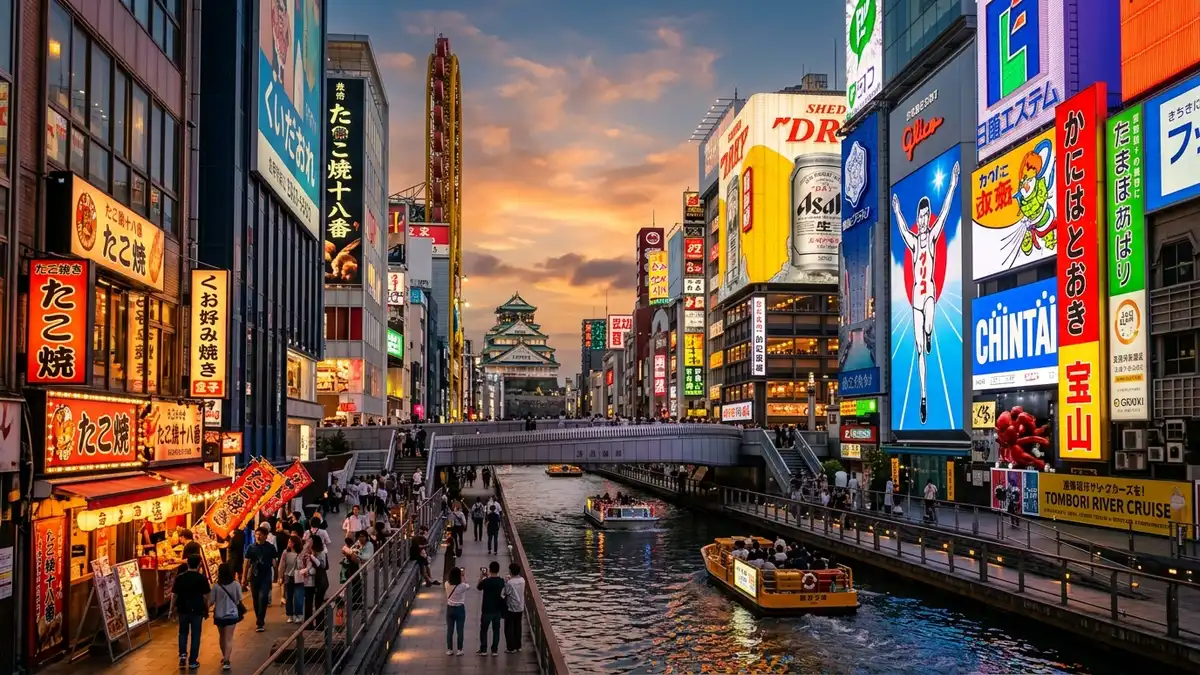
Osaka's reputation as Japan's kitchen is completely earned. Dotonbori, the neon-drenched canal district, is ground zero for takoyaki (octopus balls), okonomiyaki (savory pancakes), and kushikatsu (deep-fried skewers) — street food that locals take genuinely seriously. The Kansai region has a warmth and directness that can feel refreshingly different from other parts of Japan, and visitors tend to notice it immediately. Beyond the food, Osaka Castle is a genuine landmark worth your time, and the city sits perfectly between Kyoto and Nara, making day trips almost effortless.
From Kansai International Airport (KIX), the Haruka Express train connects directly to central Osaka and Kyoto, making it one of the smoother airport-to-city arrivals in Asia. If you're flying into Itami (ITM), which handles domestic connections, the city center is even closer.
Timing matters enormously on this route. Late March to early April brings cherry blossom season, which is genuinely magical but also genuinely crowded — book flights and accommodation as far out as possible if that's your window. July and August are peak summer, hot and humid but full of festivals. For a sweeter deal and thinner crowds, shoulder seasons like November, when autumn foliage colors Kyoto's temples, or late January and February can be excellent choices.
On fares, a roundtrip under $700 from Boston is a real find — standard pricing runs $1,000 to $1,400 or more. Japan Airlines and ANA are the premium carriers on this route and consistently rank among the best long-haul experiences in economy class, with solid meal service and comfortable cabins. Korean Air routing through Seoul is another strong option worth checking. Booking three to six months ahead gives you the best shot at lower fares, and it's worth comparing connections through Tokyo or Seoul, as routing through a different hub can sometimes unlock meaningfully cheaper tickets.
The one tip that genuinely changes the trip: get an IC card (like an ICOCA in the Kansai region) as soon as you arrive. It works on trains, subways, and buses across Osaka, Kyoto, and beyond, and eliminates the friction of buying individual tickets at every stop. Small thing, enormous difference.