


Route Briefing: Chicago to Crete
Few routes from Chicago reward the effort quite like the long haul to Heraklion, the gateway to Crete. Yes, you're looking at around fourteen and a half hours of travel with a connection, but the payoff is Greece's largest and most layered island — a place where ancient Minoan palaces sit within driving distance of turquoise coves and tavernas serving some of the finest olive oil on earth. This isn't a quick beach hop. It's a proper adventure.
From O'Hare, your best path runs through the heart of Europe. Lufthansa via Frankfurt, Austrian Airlines via Vienna, and Swiss International Air Lines via Zurich consistently offer the most competitive fares on this routing, and connecting through those hubs tends to keep prices in check. A genuinely good deal lands under $700 roundtrip — not impossible if you plan ahead. Standard fares drift into the $1,000 to $1,400 range, so timing your booking matters enormously. For summer travel, start searching four to six months out. Heraklion draws serious crowds from June through August, and fares reflect that demand quickly.
Heraklion's airport sits close to the city, making arrival refreshingly straightforward. Public buses connect the airport to the city center, and taxis are readily available if you're arriving with luggage and want a direct transfer.
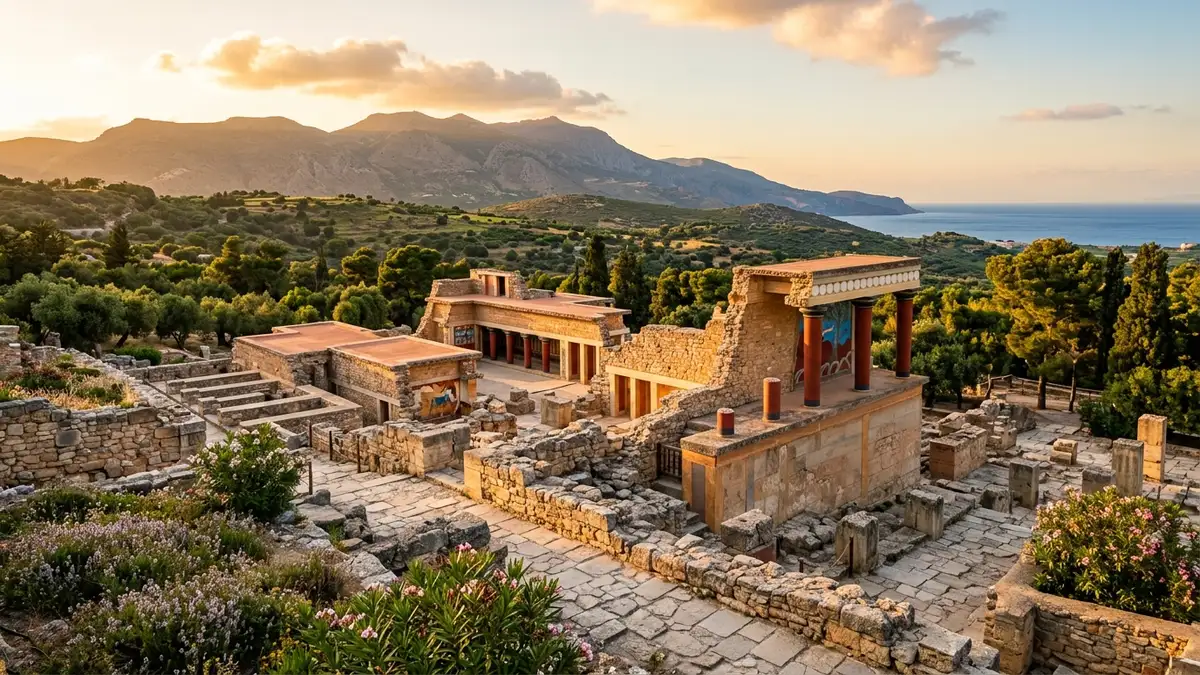
Once you're on the ground, the island opens up in every direction. The Palace of Knossos, just outside Heraklion, is one of Europe's most significant archaeological sites — the ceremonial heart of the Minoan civilization that flourished here over three thousand years ago. It's genuinely unlike anything else in the Mediterranean. Venture west and the Samaria Gorge offers one of the continent's great hiking experiences, a dramatic sixteen-kilometer trek through the White Mountains down to the Libyan Sea. The coastal villages of the Chania region have a distinct Venetian character, with a harbor that looks almost too beautiful to be real.
Cretan food deserves its own conversation. The island's cuisine leans heavily on local olive oil, fresh vegetables, slow-cooked lamb, and seafood pulled from surrounding waters. Eating well here is easy and affordable compared to most European destinations.
If you have flexibility on timing, shoulder season — May or September — is arguably the sweet spot. Temperatures are warm, the sea is swimmable, crowds thin out noticeably, and prices for both flights and accommodation drop. You'll also find locals more relaxed and restaurants less frantic, which changes the whole texture of the experience. Book your flights early, stay a little longer than feels necessary, and let Crete do the rest.