


Route Briefing: Seattle to Crete
Getting yourself from Seattle to Crete takes commitment — roughly 17 and a half hours in the air with two stops — but the moment you step onto Greece's largest island, you'll understand immediately why people make this journey every summer. This isn't a trip you take halfway; it's one you plan properly, and the reward is proportional to the effort.
The route typically connects through major European hubs, with Lufthansa via Frankfurt, KLM via Amsterdam, and British Airways via London being your most reliable options for finding competitive fares. Connecting through these cities actually works in your favor, since the competition between carriers on transatlantic legs keeps prices honest. A solid roundtrip deal comes in under $900, while standard fares run $1,200 to $1,600 or more — so the spread is significant enough to make smart booking genuinely worthwhile. Lock in your tickets four to six months before a summer departure. Crete draws enormous crowds from June through August, and the good fares evaporate fast.
You'll land at Heraklion International Airport, which sits conveniently close to the city itself. From there, taxis and buses connect you quickly to the capital and to the broader island road network, making it easy to start exploring without losing half a day to logistics.
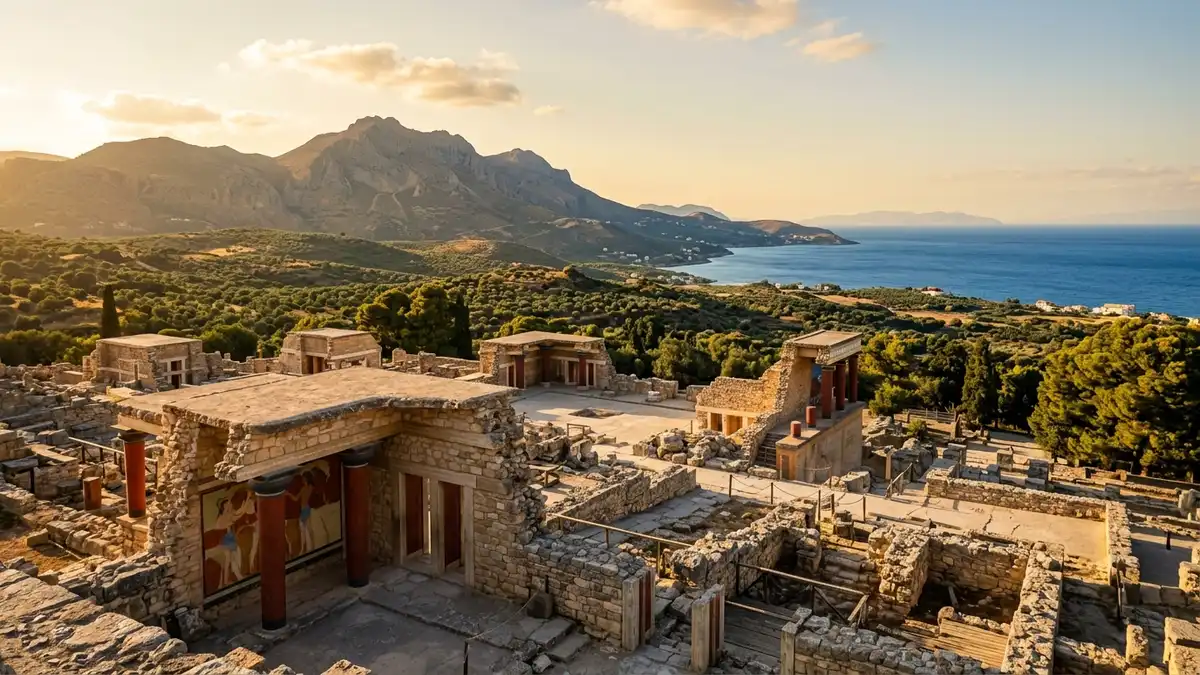
And there is so much to explore. Crete carries the weight of Europe's oldest civilization — the Minoan palace at Knossos, just outside Heraklion, is genuinely one of the most extraordinary archaeological sites on the continent, with frescoes and architecture that predate classical Greece by more than a thousand years. Beyond history, the island's physical drama is relentless: the Samaria Gorge cuts through the White Mountains in a walk that rewards the effort with scenery that feels almost cinematic. The beaches range from the famous pink-sand shores of Elafonisi to quieter coves along the eastern coast.
The food alone justifies the airfare. Cretan cuisine is widely regarded as one of the purest expressions of the Mediterranean diet — olive oil, fresh vegetables, local cheeses like graviera and mizithra, slow-cooked lamb, and seafood pulled from the surrounding sea. Eating well here is effortless and affordable.
The one tip worth burning into your memory: consider timing your trip for late May or early September. The weather is still warm and genuinely beautiful, the crowds thin noticeably, prices on accommodation drop, and you get the island in a more relaxed, authentic mood. You'll also find it easier to snag those sub-$900 fares outside the peak summer window. Crete in shoulder season is, for many travelers, the better version of the trip entirely.