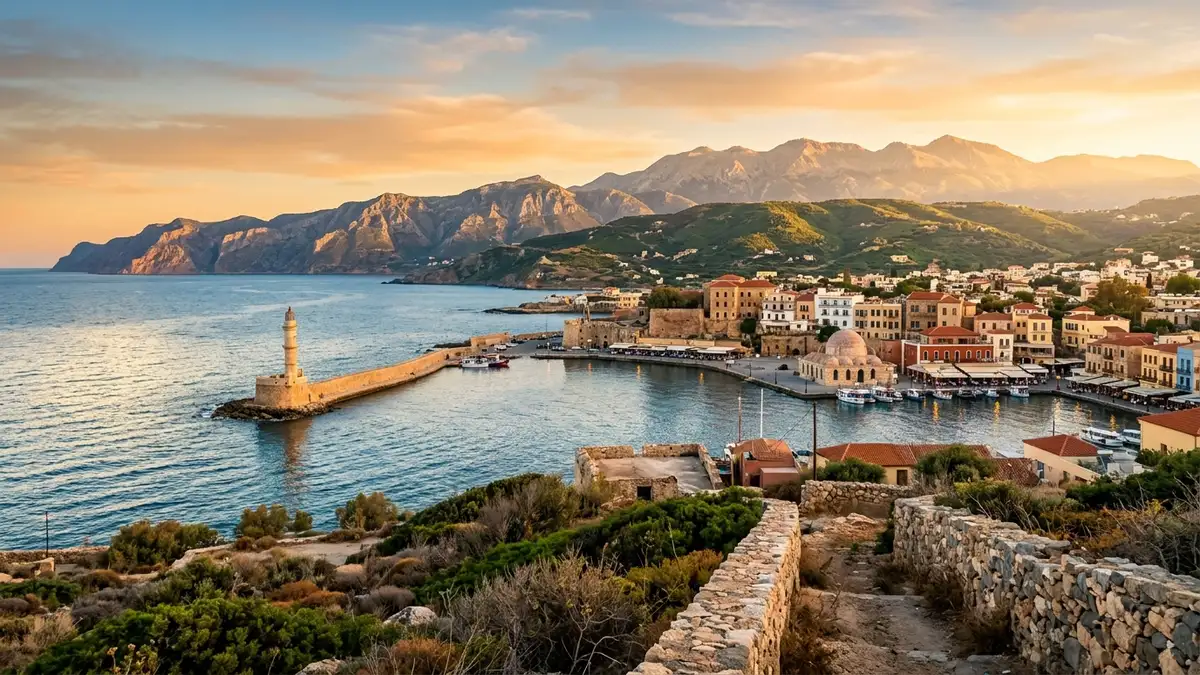



Route Briefing: Los Angeles to Crete
Getting yourself from Los Angeles to Crete is genuinely one of those journeys where the effort pays off the moment you step outside the airport and smell the thyme-scented air rolling off the hills. Yes, you're looking at around seventeen and a half hours of travel with one or two stops, but this is Greece's largest island — home to Europe's oldest civilization, some of the most dramatic gorges on the continent, and a food culture that will quietly ruin every other Mediterranean meal you eat for the rest of your life. That's worth a long-haul flight.
The most reliable way to get here from LAX is through a major European hub. Lufthansa via Frankfurt, British Airways via London, and Air France via Paris are your strongest options, and routing through one of these cities typically gives you the best balance of price and reasonable layover times. A roundtrip under $700 is a genuinely good deal on this route — standard fares tend to run between $1,000 and $1,400 or more, so when you see something below that threshold, treat it seriously. The key is timing: book four to six months ahead if you're targeting summer travel. Fares start climbing noticeably after April, and Crete in June, July, and August draws visitors from across Europe who book early and book often.
You'll land at Heraklion International Airport, which sits conveniently close to the city itself. From there, taxis and buses connect you to the city center without much fuss, and the island's road network makes renting a car a genuinely worthwhile investment if you plan to explore beyond the main towns.
And you should absolutely explore beyond the main towns. The Minoan palace at Knossos, just outside Heraklion, is one of the most significant archaeological sites in the entire Mediterranean world — walking through it feels like touching something genuinely ancient. The Samaria Gorge in the island's west is one of Europe's longest gorges and rewards the hike with scenery that doesn't look quite real. The coastal villages along the south shore move at a pace that will recalibrate your nervous system within about forty-eight hours.
If you want the island at its most alive, June and early September hit a sweet spot — warm enough for the beaches, slightly less crowded than the peak July and August rush, and easier on your accommodation budget. That shoulder-season timing is perhaps the single most useful adjustment you can make to this trip, saving you money while actually improving the experience. Crete rewards the traveler who shows up just slightly off the beaten schedule.