


Route Briefing: Dallas to Aruba
If you've been dreaming of trading Texas heat for a different kind of warmth — one that comes with turquoise water and a cold drink in your hand — the DFW to Aruba route is one of the most rewarding escapes you can book out of Dallas. At around five and a half hours with one stop, you're not committing to an exhausting travel day, and when you land at Queen Beatrix International Airport, the island's famously gentle trade winds greet you almost immediately. That alone tells you this place is different.
Aruba sits just outside the hurricane belt, which is the island's not-so-secret superpower. While much of the Caribbean braces for storms between June and November, Aruba stays reliably sunny and breezy year-round. That makes this a genuinely flexible destination — you're not locked into peak season the way you might be elsewhere. That said, December through April draws the biggest crowds and commands the highest prices, so if your schedule allows, traveling outside that window can save you real money without sacrificing the weather.
Speaking of savings, a roundtrip fare under $450 is the benchmark to chase on this route. Standard pricing climbs to $700 or more, so the difference is significant. American Airlines, United, and Delta all serve this route, which gives you healthy competition to work with. Book two to four months out and steer well clear of the Christmas and New Year window — prices spike sharply during those weeks and the island gets noticeably busier.
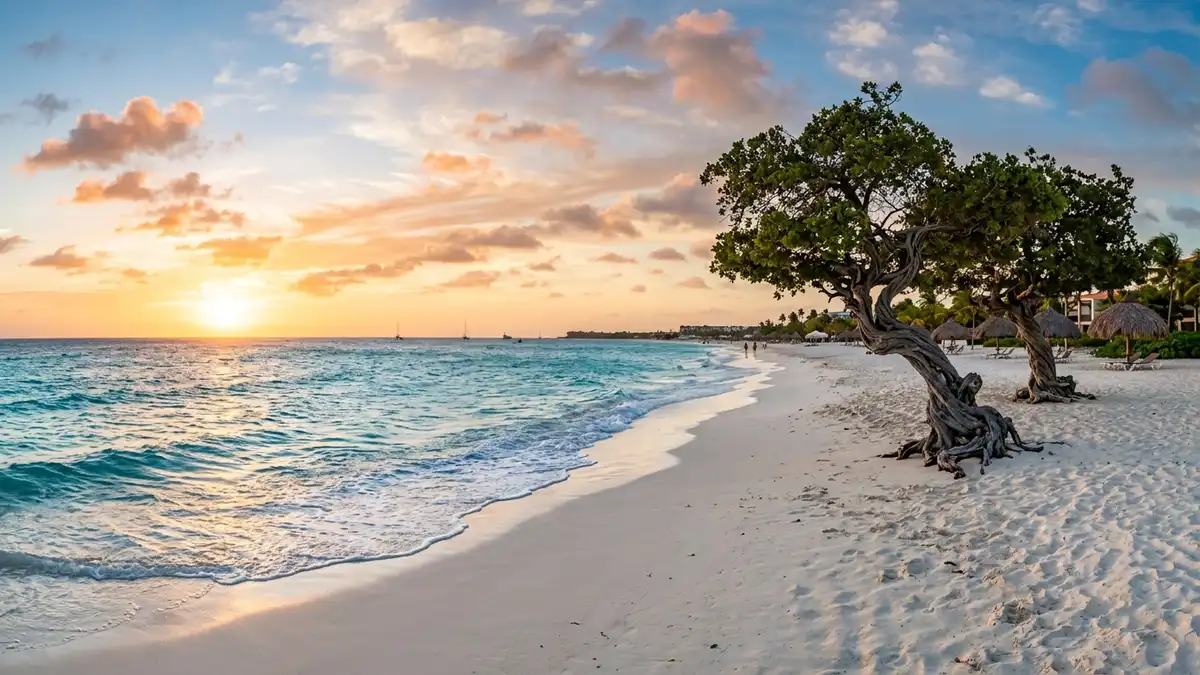
Once you're on the ground, the island is compact and easy to navigate. Renting a car gives you the freedom to explore beyond the main resort strip and discover quieter stretches of coastline on the wilder northern and eastern sides of the island. Eagle Beach and Palm Beach are the headline acts for good reason — the sand is powdery white and the water is calm and impossibly clear — but venturing out rewards you with dramatic rocky coastlines, the famous Natural Pool, and the rugged Arikok National Park.
Aruba's food scene reflects its genuinely multicultural character, blending Dutch, South American, and Caribbean influences into something distinct. Fresh seafood is everywhere, and the local dish of keshi yena — a stuffed, baked cheese dish with deep Dutch-colonial roots — is worth seeking out at least once.
The one tip that consistently makes a difference: book your accommodation away from the main hotel strip if you want a more local, less resort-packaged experience. You'll often pay less, eat better, and feel more connected to what makes Aruba genuinely special rather than just generically tropical.