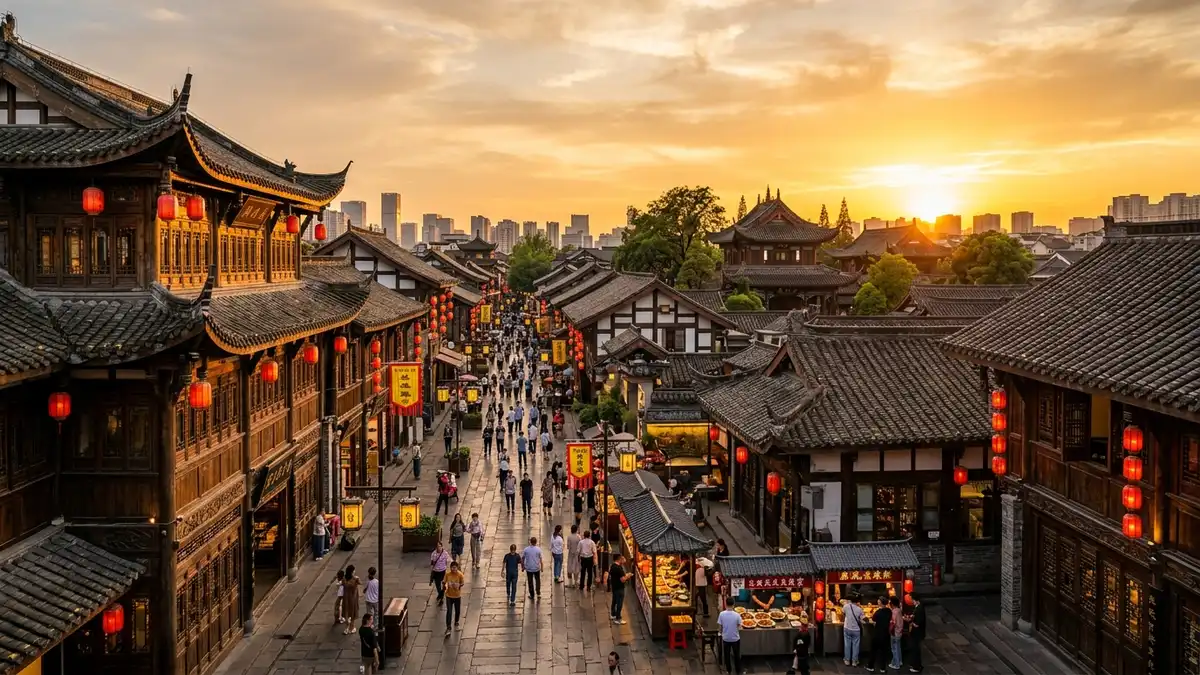



Route Briefing: Dallas to Chengdu
There's a reason seasoned Asia travelers keep coming back to Chengdu — it's one of those cities that genuinely surprises you. From Dallas, you're looking at roughly 14 and a half hours in the air with one stop, typically connecting through Beijing, Shanghai, or San Francisco. Air China, United, and American Airlines all serve this route, and if you're strategic about it, you can land a roundtrip fare under $700. Standard pricing runs $1,000 to $1,400 or more, so booking two to four months ahead is your best move. Connecting through San Francisco on United or through a Chinese hub on Air China often unlocks the most competitive pricing, so it's worth comparing both options before you commit.
Chengdu sits at the heart of Sichuan province and operates at its own unhurried pace — a striking contrast to the frenetic energy of Beijing or Shanghai. The city is famous for its giant panda breeding research base, where you can watch the animals in a lush, naturalistic setting during morning feeding hours when they're most active. Beyond the pandas, Chengdu rewards slow exploration. Ancient teahouses line the canals of Jinli and Kuanzhai Alley, where locals spend entire afternoons playing mahjong and sipping jasmine tea — a cultural ritual worth joining rather than just photographing.
Then there's the food. Sichuan cuisine is arguably the most exciting regional cooking in all of China, built on the numbing heat of Sichuan peppercorns and dried chilies. Hotpot is the local obsession, and eating it here, surrounded by locals, is a completely different experience from anything you'll find abroad. Mapo tofu and dan dan noodles are equally essential. Budget travelers will be thrilled — street food and local restaurants are genuinely affordable.
From Chengdu Tianfu International Airport, the metro system connects you to the city center efficiently and cheaply, making it easy to skip expensive taxis on arrival. The city itself is very navigable, and many attractions are clustered in ways that reward walking.
Timing matters here. June through August is peak season, bringing crowds and higher fares. Chinese New Year, typically falling in late January or February, is spectacular culturally but extremely busy — book well in advance if you want to experience the festivities. For the sweet spot of pleasant weather, thinner crowds, and lower prices, aim for late September through November. Chengdu's basin geography means it can be overcast frequently, but that rarely dampens the experience. This is a city built for lingering, and once you arrive, you'll understand exactly why.