


Route Briefing: Dallas to Riyadh
There's something quietly thrilling about a route that feels genuinely frontier — and Dallas to Riyadh is exactly that. Saudi Arabia only opened its doors to leisure tourism relatively recently, which means you're landing in a capital city that's simultaneously ancient and furiously reinventing itself. For curious travelers willing to make the journey, the timing has never been better, and the fares can make it surprisingly accessible.
The flight runs around 16 and a half hours with one stop, typically routing through Doha or Dubai. That layover isn't just a logistical necessity — it's actually your friend. Booking through Qatar Airways via Doha or Emirates via Dubai frequently unlocks fares well under $900 roundtrip, a genuinely strong deal for a transcontinental haul of this distance. Saudia also serves the route and is worth comparing. The sweet spot for booking is two to four months out, and if you can avoid peak travel windows — June through August and the December-January holiday stretch — you'll find both better prices and a more comfortable Riyadh climate.
That climate point matters more here than almost anywhere. Riyadh sits in the heart of the Arabian Peninsula, and summer temperatures are genuinely extreme. Spring and autumn are the golden windows: warm, manageable, and ideal for the outdoor experiences that make this city so compelling right now.
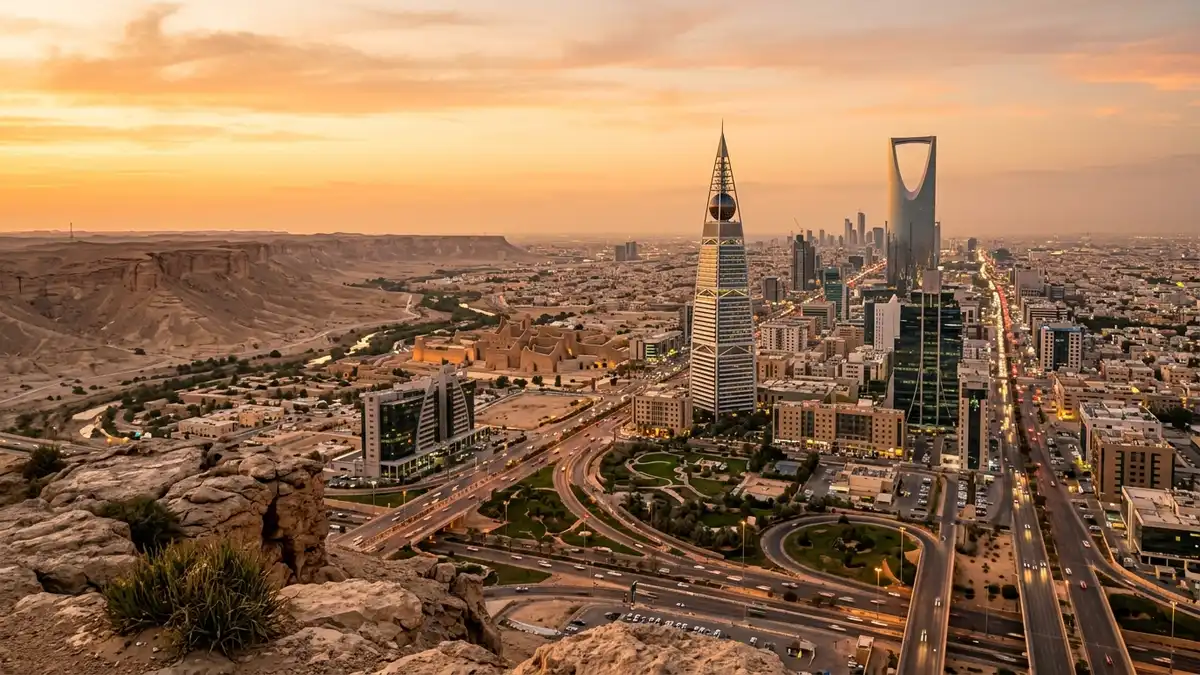
Chief among those is the Edge of the World — a dramatic escarpment northwest of the city where the plateau simply drops away into an endless desert horizon. It's one of those landscapes that photographs can't fully prepare you for. Closer to the city, the UNESCO-listed Diriyah district offers a different kind of wonder: the mud-brick ruins of the original Saudi capital, beautifully restored and atmospheric in the late afternoon light. Back in the modern city, the skyline along King Fahd Road signals just how rapidly Riyadh is transforming.
King Khalid International Airport sits north of the city center, and taxis and ride-hailing apps are the practical way to reach your accommodation. The city is spread out and not walkable in the traditional sense, so having a transport plan from the moment you land saves friction.
One tip worth holding onto: Riyadh's restaurant scene has expanded dramatically, and the local Saudi cuisine — slow-cooked lamb, fragrant rice dishes, fresh flatbreads — is deeply satisfying and often found at modest prices in neighborhood spots away from the hotel dining rooms. Eating where locals eat will stretch your budget and give you a far more honest read on this city than the polished tourist trail alone ever could.