


Route Briefing: Denver to Jeddah
Denver to Jeddah is one of those routes that feels genuinely epic — crossing continents, time zones, and cultures in a single journey. At around 18 hours and 30 minutes with one stop, it's a long haul, but the payoff is landing in one of the Arab world's most layered and fascinating cities, a place most Western travelers have barely scratched the surface of discovering.
Connecting through Istanbul, Doha, or Dubai with Turkish Airlines, Qatar Airways, or Emirates gives you not just competitive pricing but some of the most comfortable economy cabins in the sky — these carriers consistently punch well above their weight on long-haul comfort. Aim to snag a roundtrip fare under $900, which represents genuine value for this distance. Standard pricing climbs past $1,300, so booking two to four months ahead is your best lever for savings. The most important timing advice, though, is to pay close attention to the Islamic calendar. Both Hajj season — typically falling around June and July — and the Ramadan period send prices surging dramatically while also placing enormous pressure on the city's infrastructure. Plan around these windows and you'll have a smoother, cheaper, and frankly more relaxed experience.
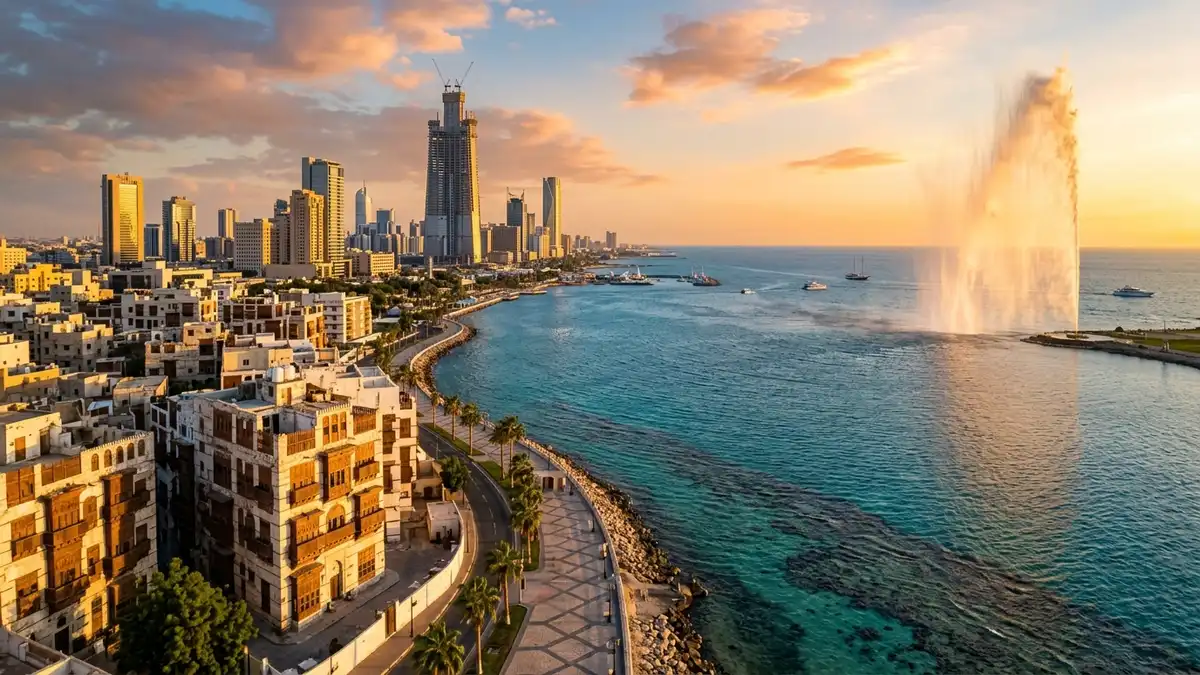
Jeddah itself rewards curiosity. The old city district of Al-Balad is a UNESCO World Heritage Site, a dense labyrinth of coral-stone buildings with intricately carved wooden balconies called Rawasheen that have shaded these streets for centuries. Walking through it feels like stepping into a living museum, and it's genuinely unlike anywhere else in the region. Beyond the historic quarter, Jeddah sits right on the Red Sea, which means world-class diving and snorkeling access to some of the most biodiverse reef systems on the planet. The Corniche waterfront promenade stretches for miles along the coast and is a beloved gathering spot for locals, especially in the evenings when the city comes alive after the heat of the day softens.
Saudi cuisine is something visitors often underestimate. Dishes like Kabsa — fragrant slow-cooked rice with meat and spices — are deeply satisfying, and Jeddah's coastal position means fresh seafood is woven throughout the local food culture. The city also has a notably cosmopolitan energy compared to other Saudi cities, shaped by centuries of welcoming pilgrims and traders from across the world.
One genuinely useful tip: Saudi Arabia operates on a different weekly rhythm, with Friday being the primary day of rest. Plan your sightseeing schedule accordingly, as some attractions and businesses adjust their hours significantly around prayer times and the weekend. Arriving with that awareness means you'll move through the city with ease rather than frustration — and you'll have far more room to simply enjoy one of the Middle East's most underrated destinations.