


Route Briefing: Dubai to Nairobi
There's something almost poetic about flying from one of the world's most modern cities into one of Africa's most wildly alive ones. The Dubai to Nairobi route covers roughly 3,500 kilometres in about five and a half hours direct, with Emirates, Kenya Airways, and flydubai all serving it year-round — meaning you have genuine flexibility on timing and price. If you catch a good deal, you're looking at under $500 roundtrip, which for a safari gateway is frankly remarkable. Standard fares creep above $800, so this is a route where smart booking genuinely pays off.
To land that lower fare, aim to book six to eight weeks ahead and lean into mid-week travel. Avoiding Kenyan school holiday periods can shave another 15 to 20 percent off the price — a saving worth redirecting toward a game drive or two.
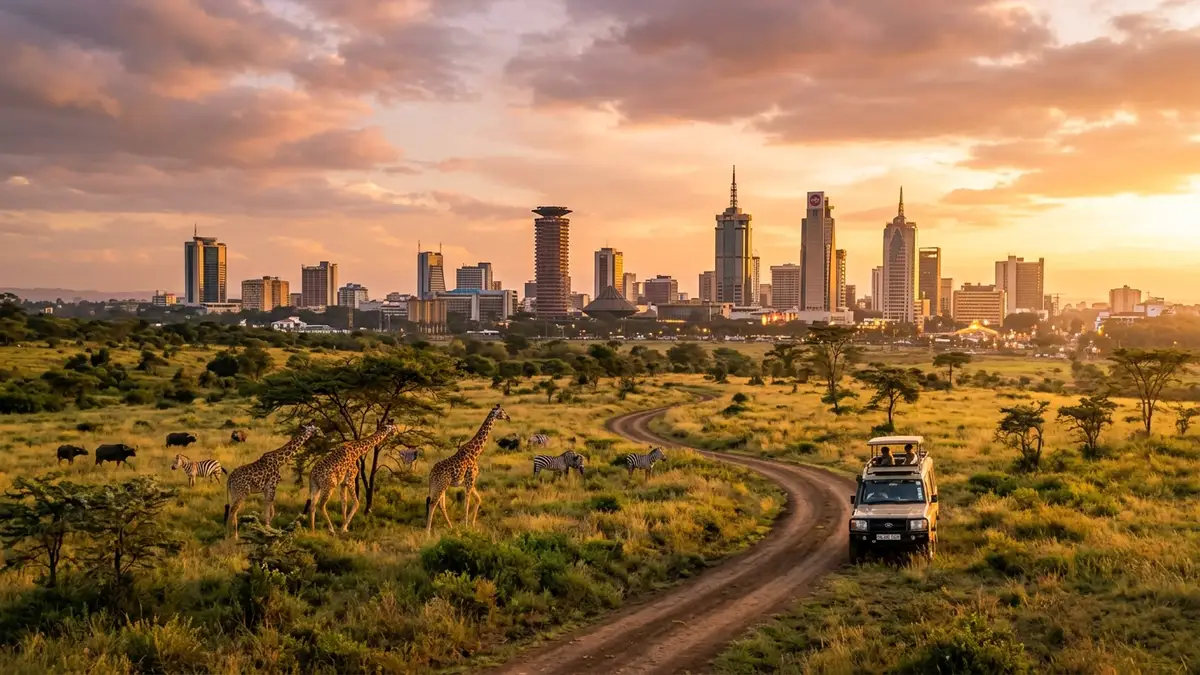
Nairobi itself tends to surprise first-timers. It's a genuinely cosmopolitan city with a buzzing food scene, strong coffee culture (Kenya produces world-class beans), and a creative energy that's easy to underestimate. But the real draw is what surrounds it. Nairobi National Park sits practically on the city's doorstep — you can watch lions against a skyline backdrop, which is one of those experiences that sounds implausible until you're actually there. The Giraffe Centre offers something more intimate, letting you feed Rothschild giraffes up close, and it's a favourite for good reason. For those with more time, the Maasai Mara is accessible from Nairobi and ranks among the greatest wildlife spectacles on the planet, particularly during the Great Migration.
From Jomo Kenyatta International Airport, taxis and ride-hailing apps are the most practical way into the city centre. The journey can vary significantly depending on traffic, and Nairobi's roads during peak hours are notoriously congested, so factor that into your plans if you have an onward connection or a timed booking.
Timing matters enormously on this route. July through August is peak season for the Great Migration and draws the highest visitor numbers — book everything well in advance if that's your window. December through January is another busy period, coinciding with the dry season and school holidays. If you prefer quieter parks and lower prices, the shoulder months can offer excellent wildlife viewing with fewer crowds.
One tip that genuinely elevates the trip: if your budget allows, even a single night at a Mara camp rather than rushing back to Nairobi the same day transforms the experience entirely. The difference between a day visit and waking up inside the wilderness is something no fare saving can quite replicate.