


Route Briefing: Dubai to Split
Few routes capture the imagination quite like Dubai to Split — swapping the gleaming desert skyline of the Gulf for the sun-bleached limestone streets of the Dalmatian Coast. It's a journey between two worlds that couldn't feel more different, and that contrast is exactly what makes it so rewarding.
The flight runs around nine and a half hours with one stop, typically connecting through Frankfurt, Istanbul, or Vienna depending on whether you're flying with Lufthansa, Turkish Airlines, or Emirates. None of these are bad layover cities, and if you time it right, a long connection can even become a mini stopover worth exploring. On the fare side, anything under $500 roundtrip is genuinely excellent value for this route — standard pricing tends to climb above $800, so keeping an eye on FlightKitten alerts is well worth your while. Book four to six months ahead if you're targeting summer, because Split fills up fast and the deals evaporate even faster.
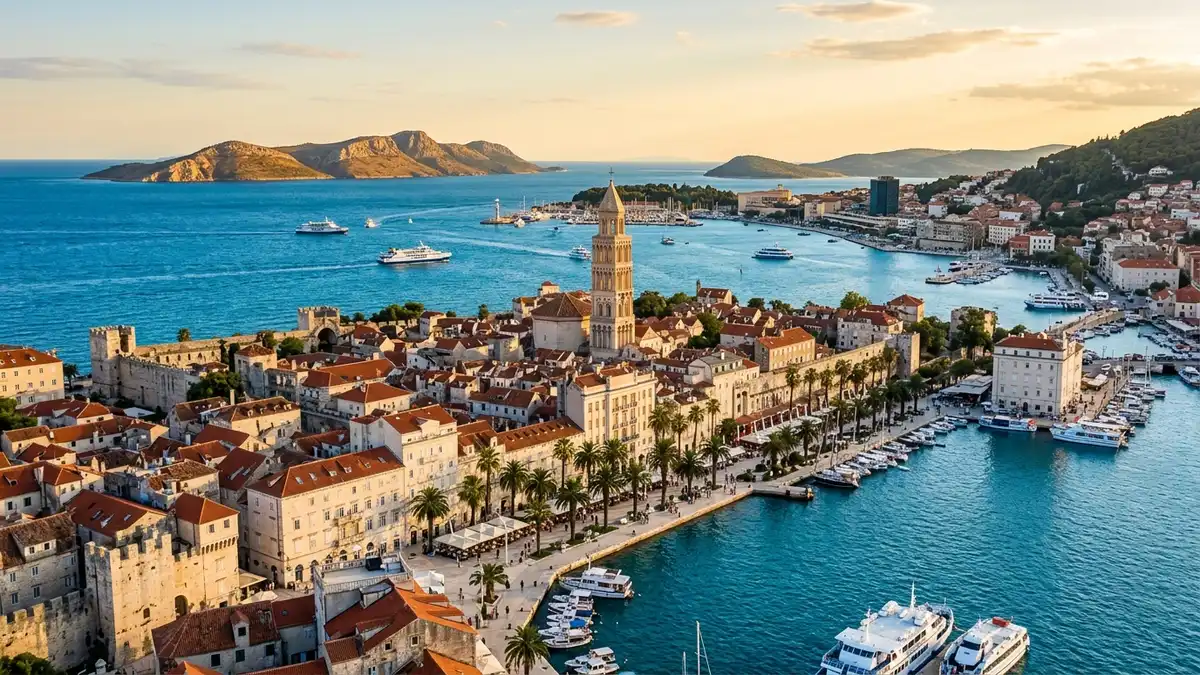
Split itself is one of those rare places that defies easy description. The old town isn't built around a Roman palace — it literally is one. Emperor Diocletian's fourth-century retirement complex became the living, breathing heart of the city, its ancient walls now sheltering cafés, apartments, and narrow marble lanes polished smooth by centuries of footfall. You can wander from a Roman mausoleum to a waterfront promenade in under five minutes, and the locals make it feel entirely natural. The Riva, the palm-lined seafront, is where everyone gravitates at golden hour, and the energy is relaxed but electric.
From Split, the Adriatic opens up beautifully. Regular ferries connect the city to islands like Brač, Hvar, and Vis, making it the perfect base for island-hopping without the logistical headache of planning everything in advance. The ferry terminal sits right in the city centre, which is one of Split's great practical gifts to travellers.
Getting from Split Airport into the city is straightforward — a bus service runs regularly into the centre, and the journey is short enough that you won't lose much of your first day to transit. Taxis and rideshares are also available if you're arriving with heavy luggage or late at night.
Peak season runs June through August, when the weather is reliably hot and the islands are buzzing. If you can shift your trip to late May or September, you'll find noticeably fewer crowds, lower accommodation prices, and temperatures that are still genuinely warm for swimming. That shoulder-season sweet spot is the insider move on this route — and it's one that makes the whole experience feel a little more like the Dalmatia the locals actually love.