


Route Briefing: Dubai to Venice
There are few flight routes in the world that feel quite as dramatic as lifting off from one of the planet's great modern metropolises and landing, roughly seven and a half hours later, in a city that hasn't changed its bones in six centuries. Dubai to Venice is exactly that kind of journey — and at under $500 roundtrip when you catch a good deal, it's one of the more rewarding bargains in European travel.
Emirates is the natural first choice on this route, given its hub at DXB and its reputation for comfort even in economy, but flydubai and Lufthansa are worth checking too, particularly if flexibility on travel dates gives you room to play with pricing. The sweet spot for booking is two to four months ahead of your trip, and if you can fly midweek rather than on weekends, you'll often find meaningfully lower fares. Avoiding Italian public holidays is another quiet trick that can make a real difference to what you pay.
Venice Marco Polo Airport sits on the mainland, and from there you have a genuinely memorable arrival option: the Alilaguna water bus, which carries you across the lagoon directly into the city by boat. After seven and a half hours in the air, arriving by water rather than by road sets the tone perfectly. Vaporetto water buses then become your primary way of moving around once you're in — Venice has no cars, no taxis in the conventional sense, just canals and footpaths.
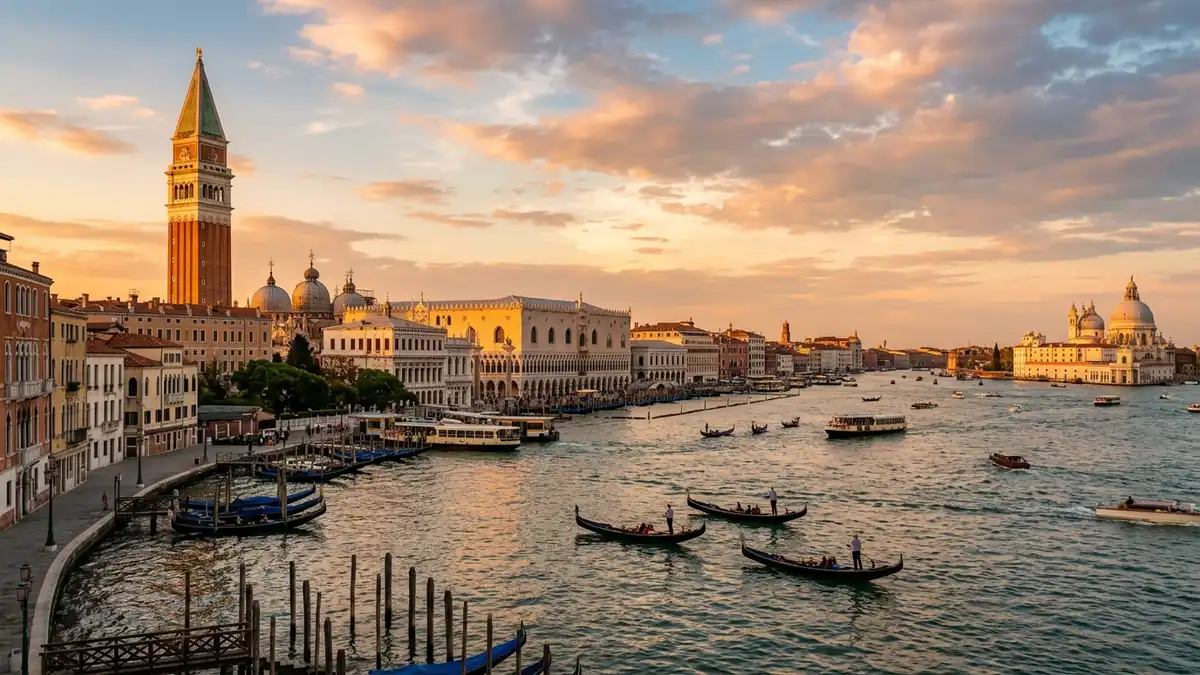
The city itself rewards slow exploration above almost anything else. Piazza San Marco and the Basilica are essential, as is the Doge's Palace, but Venice's real magic tends to reveal itself in the quieter sestieri away from the main tourist drag — neighbourhoods where laundry hangs between medieval buildings and locals actually live. The Rialto Bridge and the Grand Canal are genuinely as beautiful as advertised. Venetian cuisine leans heavily on seafood and the lagoon's produce, and a simple plate of cicchetti — the local small bites — with a glass of local wine is one of the great affordable pleasures of the city.
Peak season runs June through August, when crowds are at their densest and prices follow. Spring, particularly April and May, offers a compelling alternative: mild weather, fewer visitors, and a city that feels more like itself. November through February is quieter still, and while acqua alta flooding can affect low-lying areas in autumn and winter, many travellers find the misty, atmospheric Venice of the off-season more haunting and memorable than the summer version.
The single best experience-enhancing tip: get up early. Venice before 8am, when the cruise ship crowds haven't yet arrived, is a completely different city — serene, golden, and almost entirely yours.