


Route Briefing: Dublin to Crete
There's something quietly thrilling about trading Dublin's grey skies for the blazing light of Crete, and once you've made the journey, you'll understand why Irish travellers keep coming back. At around five and a half hours with a connection — often through Athens or a UK hub — it's a manageable trip for a destination that genuinely rewards the effort. If you can snag a roundtrip fare under €350, you're doing well; standard pricing creeps above €550, so keeping an eye on Ryanair, Aer Lingus, and easyJet is well worth your time.
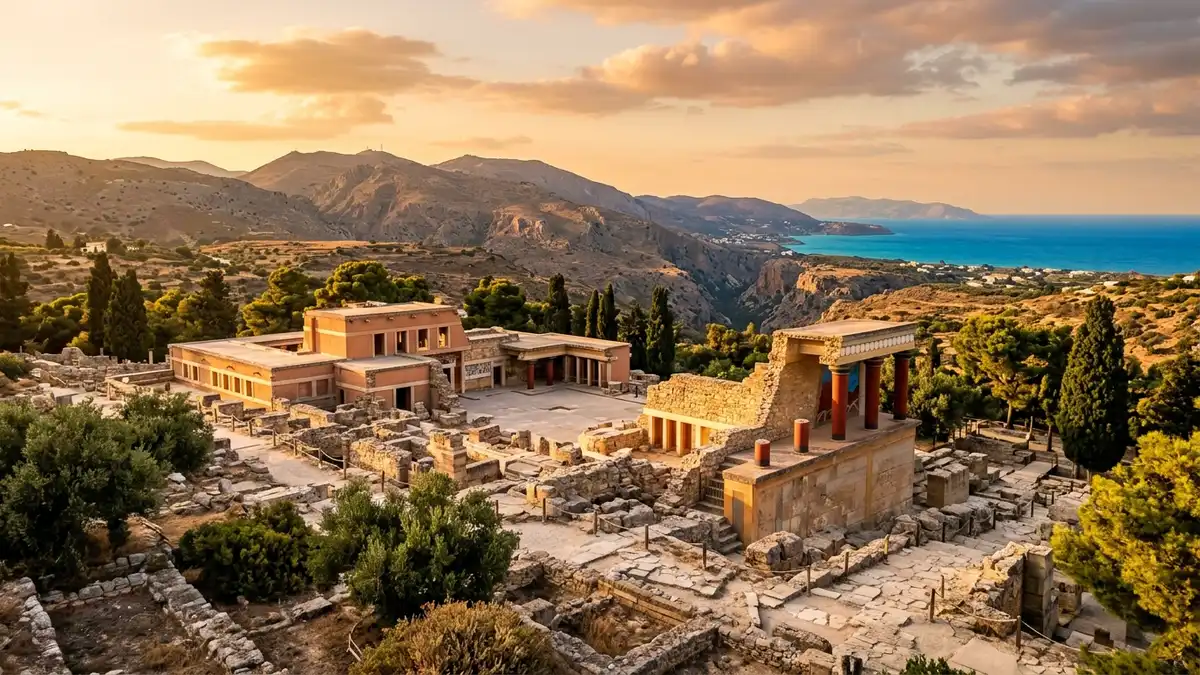
Heraklion is your arrival point, and it drops you straight into the heart of Cretan life. The city's Venetian harbour, the imposing Koules fortress at its entrance, and the labyrinthine old town give you plenty to absorb before you've even thought about leaving the capital. But the real draw of Crete is how much it rewards those who venture further. The Palace of Knossos, just a short distance from Heraklion, is one of Europe's most significant archaeological sites — the ceremonial centre of the ancient Minoan civilisation, and genuinely unlike anything else on the continent. Further west, the Samaria Gorge offers one of the most dramatic walks in all of Greece, cutting through the White Mountains down to the Libyan Sea.
Then there's the food. Cretan cuisine is considered among the healthiest and most distinctive in the Mediterranean — olive oil produced on the island, fresh seafood, slow-cooked lamb, and local cheeses like graviera that you won't easily forget. Eating well here doesn't require spending much, which is a welcome bonus.
From Heraklion Airport, public buses connect to the city centre reliably and cheaply, making it easy to get your bearings without immediately needing a taxi or hire car — though renting a car later in your trip is genuinely the best way to reach the island's more remote beaches and villages.
Timing matters on this route. Peak season runs June through August, when the island is at its most vibrant but also its most crowded and expensive. The sweet spot for most travellers is late May or September — warm enough to swim, quieter on the ground, and noticeably easier on the wallet. Because this route is heavily seasonal and popular with Irish holidaymakers, booking three to five months ahead for summer travel is not just sensible, it's almost essential. Connecting via Athens can sometimes unlock better fares than waiting for direct seasonal options, so it's worth checking both routing options before you commit.
Crete isn't a destination you rush. Give it at least a week, and it will give you back something that feels genuinely restorative.