


Route Briefing: Dublin to Seychelles
There are dream destinations, and then there is the Seychelles — an archipelago so absurdly beautiful it almost feels fictional. Trading Dublin's grey skies for granite boulder beaches and turquoise Indian Ocean waters is one of travel's great transformations, and while the journey from Dublin to Mahé takes around 16 and a half hours with a stop, every minute in the air is worth it the moment you step off the plane into that warm, salt-tinged breeze.
Getting there from Dublin means connecting through a hub, and the most competitive options typically route you through Dubai or Abu Dhabi with Emirates or Etihad Airways — both carriers known for comfortable long-haul service that takes some of the sting out of the distance. Kenya Airways via Nairobi is another solid option worth checking. A good deal on this route comes in under $900 roundtrip, while standard fares push well past $1,400, so the gap between a savvy booking and a last-minute scramble is significant. Give yourself a three-to-six month runway before your travel dates to lock in the better prices — this route has limited options and fares climb fast once seats start filling.
Mahé is the main island and home to Seychelles International Airport, which sits close to the capital Victoria — one of the world's smallest capital cities and genuinely charming for a wander. From the airport, taxis are readily available for onward travel around the island, and if you're heading to one of the other islands like Praslin or La Digue, ferry services and domestic flights connect them to Mahé.
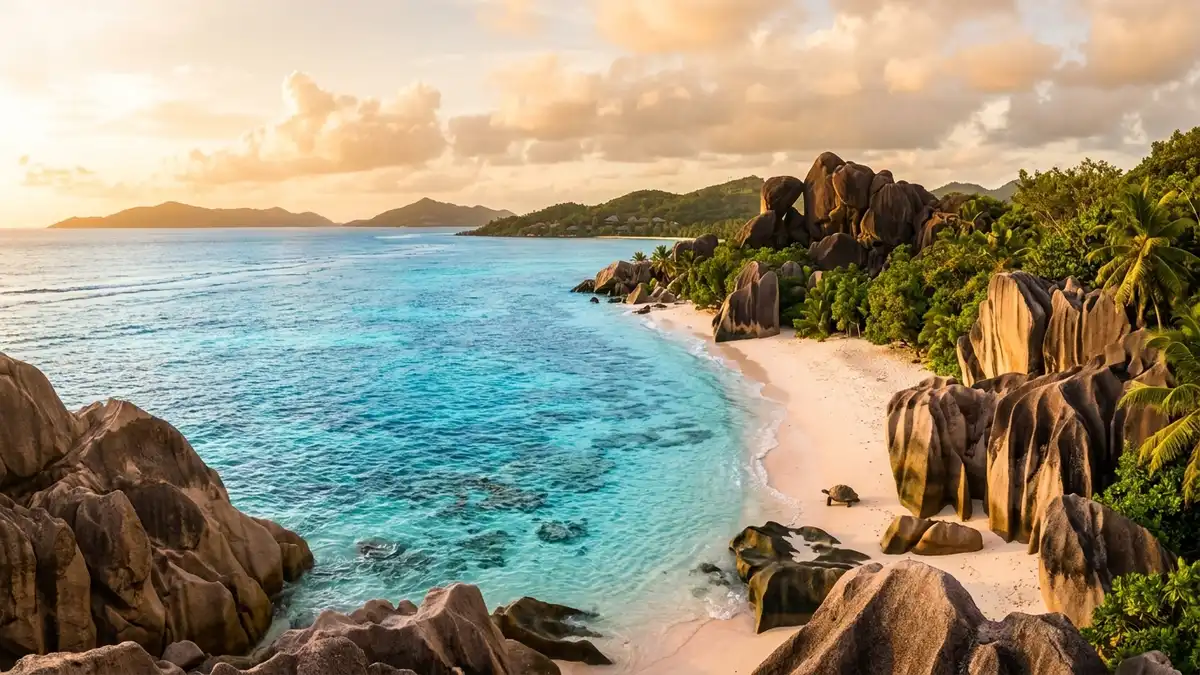
The Seychelles rewards visitors with experiences that are genuinely rare. Vallée de Mai on Praslin is a UNESCO World Heritage Site where the extraordinary coco de mer palm grows — a prehistoric-feeling forest that feels like stepping into another era. La Digue's Anse Source d'Argent beach, framed by those iconic pink granite boulders, is among the most photographed coastlines on earth, and rightly so. Giant Aldabra tortoises roam freely on several islands, and the marine life is extraordinary for snorkelling and diving.
Timing matters here. The peak seasons run December through January and again July through August, when the weather is at its most reliably pleasant and prices reflect that popularity. If you can travel in the shoulder months — April, May, or October — you'll find fewer crowds and potentially softer prices, though the Seychelles is genuinely a year-round destination.
One tip that makes a real difference: book your inter-island transport and accommodation well ahead of your flights. The smaller islands have limited capacity, and the best spots disappear long before the flights do.