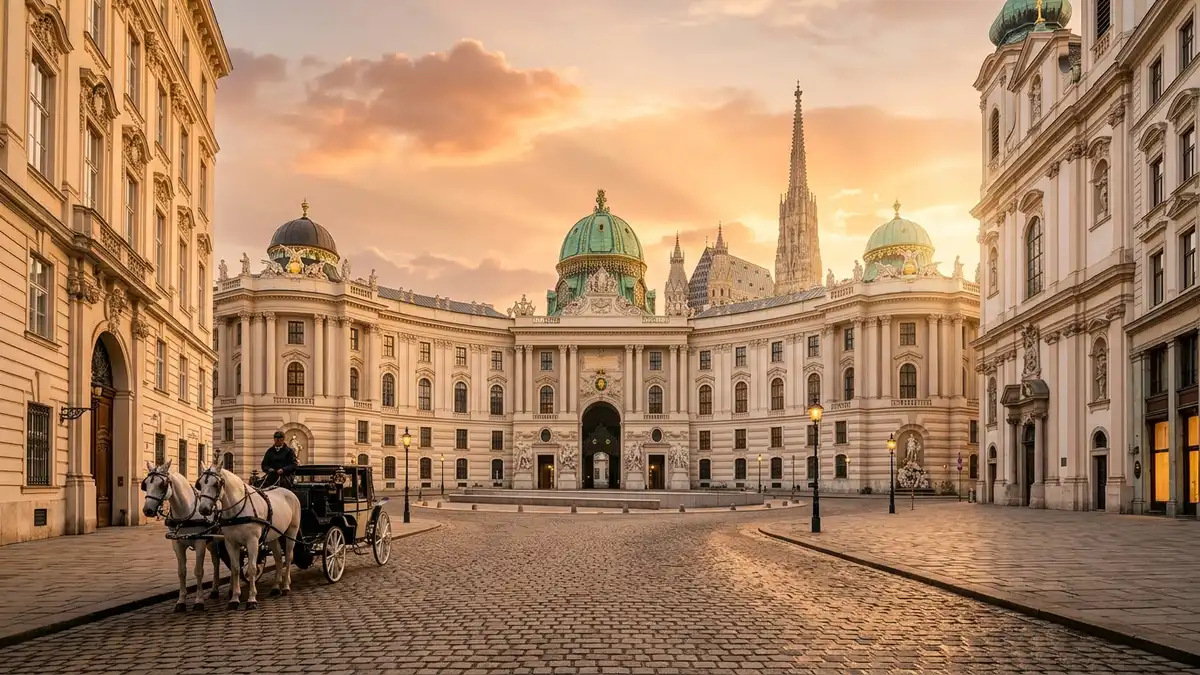



Route Briefing: Dublin to Vienna
Just over three hours separates Dublin's damp Atlantic air from one of Europe's most magnificent imperial cities, and that short hop makes Vienna one of the most rewarding weekend escapes you can book from Ireland. Ryanair, Austrian Airlines, and Aer Lingus all serve the route, which means genuine competition keeps fares honest — snag a roundtrip under €150 and you've done very well indeed. Standard fares creep above €250, so timing your booking matters. Aim to lock in tickets six to ten weeks before you travel, choose a Tuesday or Wednesday departure, and steer clear of Irish school holiday windows. That combination alone can shave a meaningful chunk off the price.
Vienna rewards you the moment you land. The city sits in the heart of Central Europe with a confidence that only centuries of empire can produce. The Habsburg legacy is everywhere — in the vast Schönbrunn Palace and its manicured gardens, in the ornate Hofburg complex that once anchored an empire stretching across a continent, and in the Ringstrasse boulevard lined with monumental buildings that feel almost theatrical in their grandeur. The Kunsthistorisches Museum holds one of the great art collections in the world, and the Vienna State Opera is a pilgrimage site for anyone who takes classical music seriously. Even if you don't catch a performance, the building itself is worth lingering outside.
The coffee house culture here is genuinely its own thing — not a trend, but a centuries-old institution. Sitting in a traditional Viennese café with a melange and a slice of Sachertorte, reading a newspaper on one of those wooden holders, is an experience that feels unhurried and deeply civilised. The city consistently ranks among the most livable in the world, and you feel that ease as a visitor too.
Getting from Vienna International Airport into the city centre is straightforward. The City Airport Train, known as the CAT, connects the airport directly to Wien Mitte station in the city centre in around sixteen minutes. Regular S-Bahn trains offer a slower but cheaper alternative on the same corridor. The U-Bahn metro system then puts virtually every major sight within easy reach.
Timing your visit wisely makes a real difference. June through August brings the crowds and the warmest weather, but Vienna in late autumn or winter has its own magic — Christmas markets, concert season in full swing, and far fewer tourists competing for café tables. Spring is quietly excellent too, with the palace gardens coming into bloom and shoulder-season prices still in play. Whenever you go, budget at least three full days. Vienna is a city that genuinely repays slow, unhurried exploration.