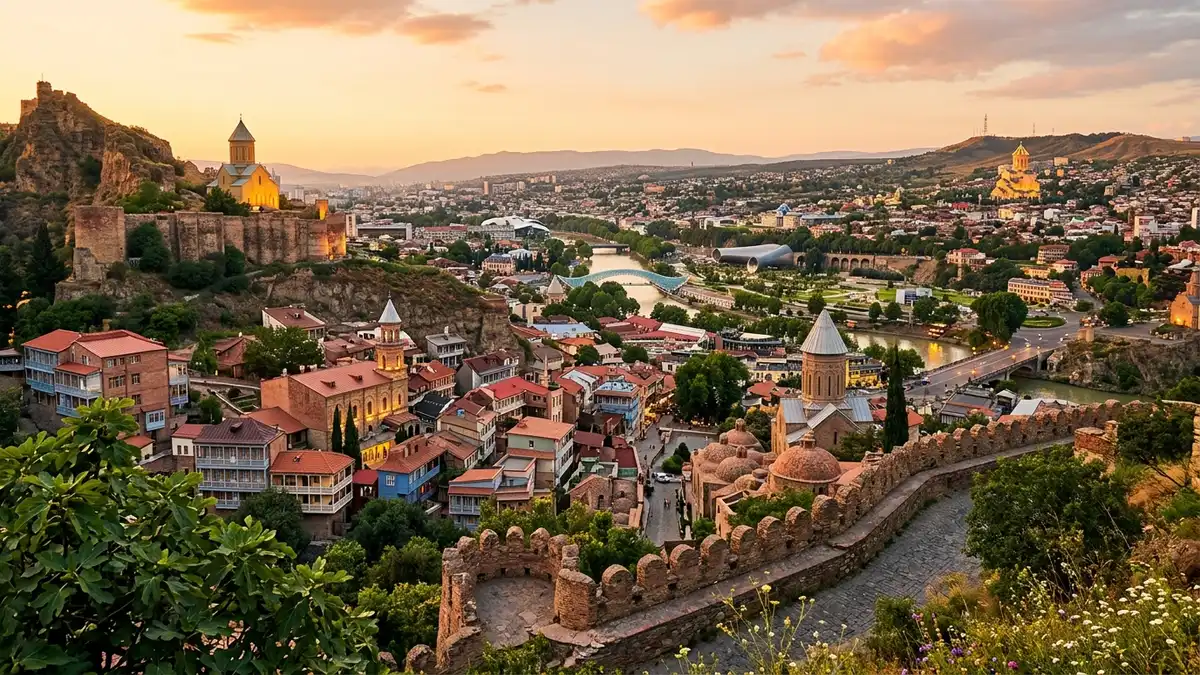



Route Briefing: Frankfurt to Tbilisi
Five and a half hours from Frankfurt and you land somewhere that genuinely feels like nowhere else on earth. Tbilisi sits at one of history's great crossroads, where centuries of Persian, Ottoman, Russian, and European influence have layered themselves onto a city that somehow absorbed it all and came out entirely its own. For travellers tired of European capitals that feel increasingly interchangeable, this route is a revelation.
Georgian Airways operates this corridor directly, and when fares dip below $350 roundtrip, it represents exceptional value for a destination this distinctive. Standard pricing climbs above $600, so the booking window matters — aim to secure tickets six to eight weeks out. If direct fares look steep, check connections through Istanbul or Vienna, which can occasionally undercut the nonstop options significantly.
Arriving at Tbilisi International Airport, you have reliable options into the city centre including a train service that connects the airport to the main railway station, making it straightforward to reach the old town without the uncertainty of negotiating a taxi fare after a long flight.
The old town, Abanotubani, is where most visitors fall in love with Tbilisi. The neighbourhood takes its name from the natural sulfur baths that have drawn people here for centuries — a soak in one of the bathhouses is genuinely one of travel's more memorable experiences, not a tourist gimmick. Above the old town, Narikala Fortress watches over the city from a rocky ridge, and the walking is worth every step for the views across the Mtkvari River. Georgian Orthodox churches appear around almost every corner, many of them still active and quietly magnificent.
Then there's the wine. Georgia is widely considered one of the oldest wine-producing regions in the world, and the traditional qvevri method — fermenting wine in clay vessels buried underground — produces amber wines unlike anything you'll find in a European supermarket. Pair that with Georgian cuisine, which leans heavily on walnut sauces, fresh herbs, and the cheese-filled bread known as khachapuri, and you have a food culture that rewards every meal.
Peak season runs June through August when the weather is warm and the city is lively, but spring and autumn offer a compelling alternative — milder temperatures, fewer crowds, and the kind of unhurried atmosphere that lets a city actually reveal itself to you. Tbilisi in October, with the grape harvest in full swing across the surrounding Kakheti wine region, is particularly special.
The one tip worth underlining: Georgia remains genuinely affordable by European standards, so the real savings aren't just in the airfare. Your money stretches considerably once you're on the ground, which makes finding that sub-$350 roundtrip fare feel even more worthwhile.