


Route Briefing: Frankfurt to Venice
Just under two hours from Frankfurt and you're stepping into one of the most extraordinary cities ever built — Venice doesn't ease you in gently, it hits you all at once. That's the magic of this route. One moment you're at FRA grabbing a coffee, and before your afternoon has even peaked, you're watching gondolas glide beneath ancient stone bridges. For a city this singular, the journey couldn't be more effortless.
Lufthansa, Eurowings, and Ryanair all serve this route year-round, which keeps competition healthy and prices honest. A roundtrip under $200 is genuinely achievable if you time it right — book six to ten weeks ahead and consider flying on a Tuesday or Wednesday, where you can typically shave ten to fifteen percent off compared to weekend departures. Standard fares creep above $350, so a little planning goes a long way on a route this short.
On arrival at Venice Marco Polo Airport, the most memorable transfer option is the Alilaguna water bus, which carries you directly into the city across the lagoon. It takes longer than a land taxi to Piazzale Roma, but arriving by water is your first proper introduction to how Venice actually works — everything moves by boat. If you're in a hurry, land buses and taxis connect to the edge of the city quickly, but don't rob yourself of that first approach across the water if you can help it.
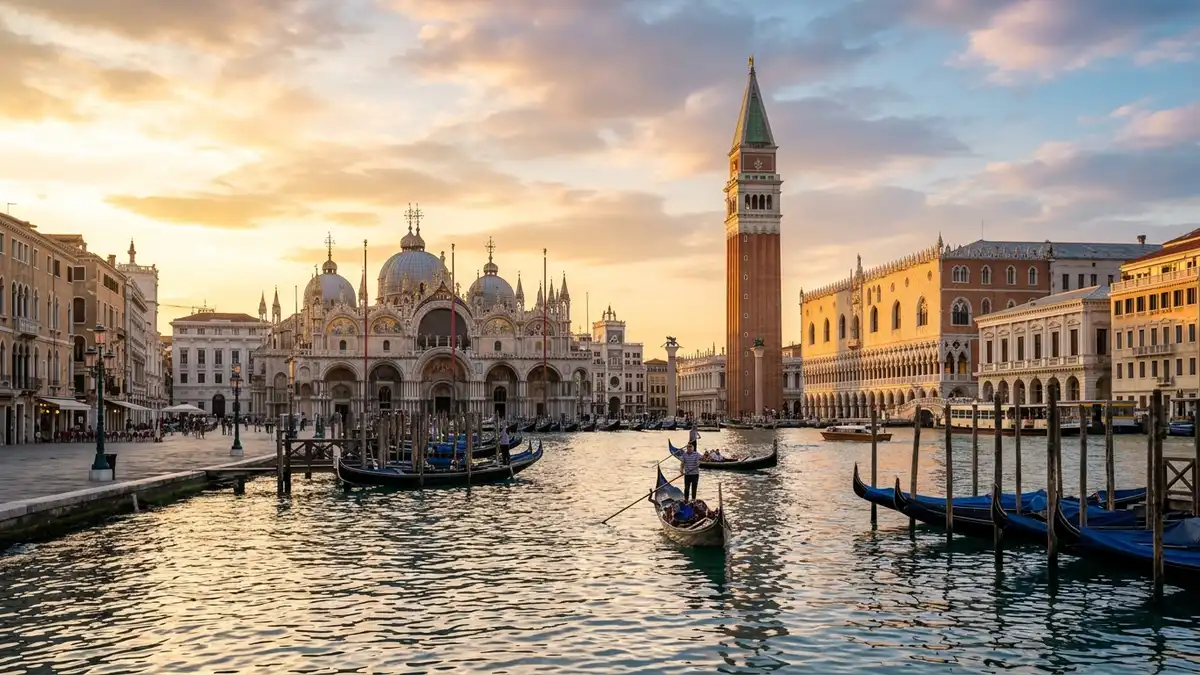
Venice rewards visitors who linger beyond Piazza San Marco, though the square itself — flanked by the Basilica and the Doge's Palace — is genuinely unmissable. Wander into the quieter sestieri like Cannaregio or Dorsoduro and you'll find a city that still belongs to its residents, full of neighbourhood bars serving cicchetti, the Venetian answer to tapas, washed down with a small glass of wine called an ombra. The Accademia gallery holds one of Italy's finest collections of Venetian Renaissance painting, and the Rialto Market is a vivid, fragrant morning experience that no guidebook can quite prepare you for.
Timing matters enormously here. June through August is peak season — crowds are dense, prices spike, and the summer heat can be intense in a city with no shade and no breeze between narrow alleyways. Spring and autumn are genuinely the sweet spots: mild weather, softer light, and a city that breathes a little easier. Winter brings atmospheric fog rolling off the lagoon and the occasional acqua alta flooding, which is surreal rather than ruinous if you come prepared with waterproof boots.
The one tip worth burning into your memory: buy a multi-day vaporetto pass as soon as you arrive. The vaporetto water buses are your metro system here, and a pass pays for itself quickly while giving you the freedom to hop on and off across the islands without watching the meter.