


Route Briefing: Houston to Chiang Mai
Getting from Houston to Chiang Mai takes commitment — around 20 and a half hours in the air with two stops along the way — but the payoff is one of Southeast Asia's most rewarding destinations, and a city that genuinely earns every hour of that journey. This isn't a route for the impatient, but for travelers who arrive in Northern Thailand's cultural capital and immediately feel the cool mountain air and smell incense drifting from ancient temple courtyards, the long haul fades quickly from memory.
EVA Air, Thai Airways, and Cathay Pacific are your most reliable carriers on this route, typically routing you through Taipei or Bangkok before the final leg into Chiang Mai. Connections through Bangkok's Suvarnabhumi Airport are especially common and often competitively priced, and if you have a longer layover, Bangkok itself is worth a few hours of exploration. Fares under $900 roundtrip represent a genuinely good deal here — standard pricing runs $1,200 to $1,600 or more — so set fare alerts and be ready to move when something drops. Booking three to five months ahead gives you the best shot at those lower fares.
Timing matters enormously for this destination. November through February is Chiang Mai's cool season, when temperatures are pleasant, skies are clear, and the city is at its most beautiful. This is peak season for good reason, and late December draws particular crowds, so book early if the holidays are calling you north. The flip side: shoulder season travel in October or March can offer thinner crowds and softer prices, though the famous smoky haze from agricultural burning typically affects the region in March and April, which is worth factoring in.
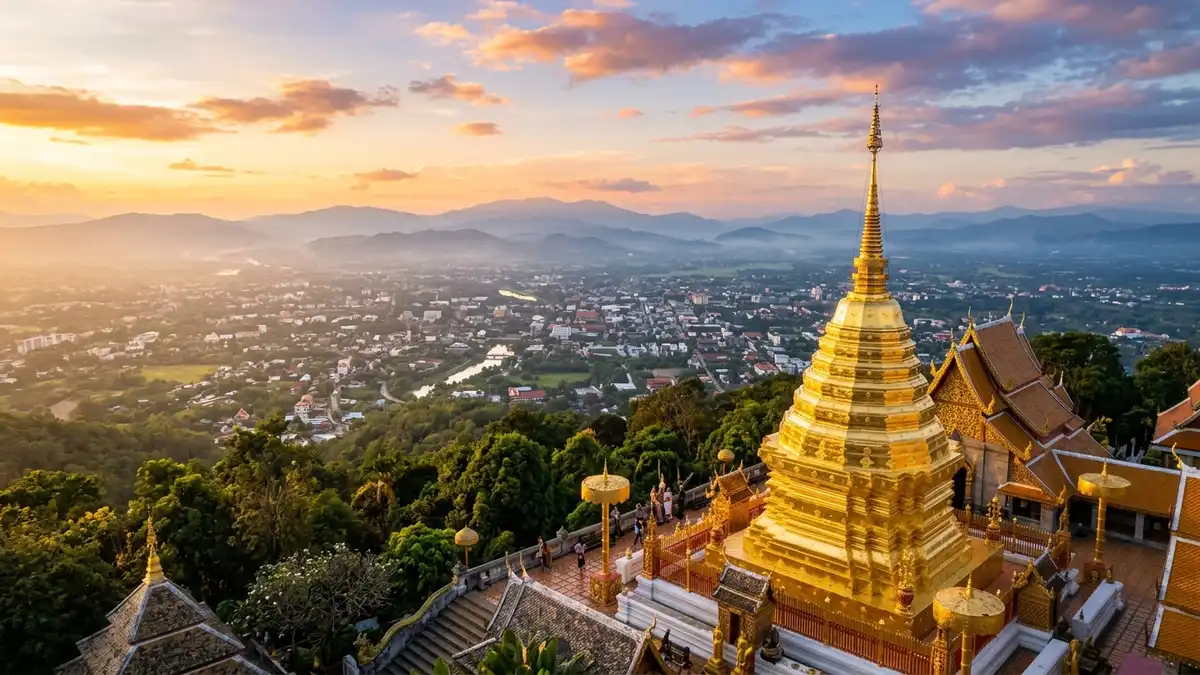
Once you land at Chiang Mai International Airport, the city center is only a few kilometers away, making taxis and ride-hailing apps a quick and affordable transfer option. The city itself rewards slow exploration — over 300 temples are scattered across the old city and surrounding neighborhoods, with Doi Suthep temple perched in the mountains above town offering sweeping views over the entire valley. The Sunday Walking Street and Night Bazaar markets are essential evening experiences, packed with local food, handcrafted goods, and the kind of street-food energy that makes Thai cities so addictive.
One tip that genuinely enhances the experience: base yourself inside or just outside the old city's moat for your first few nights. Everything becomes walkable, you'll stumble across temples at every turn, and the neighborhood's rhythm — monks at dawn, markets at dusk — gives you an authentic feel for the city that outlying hotels simply can't match.