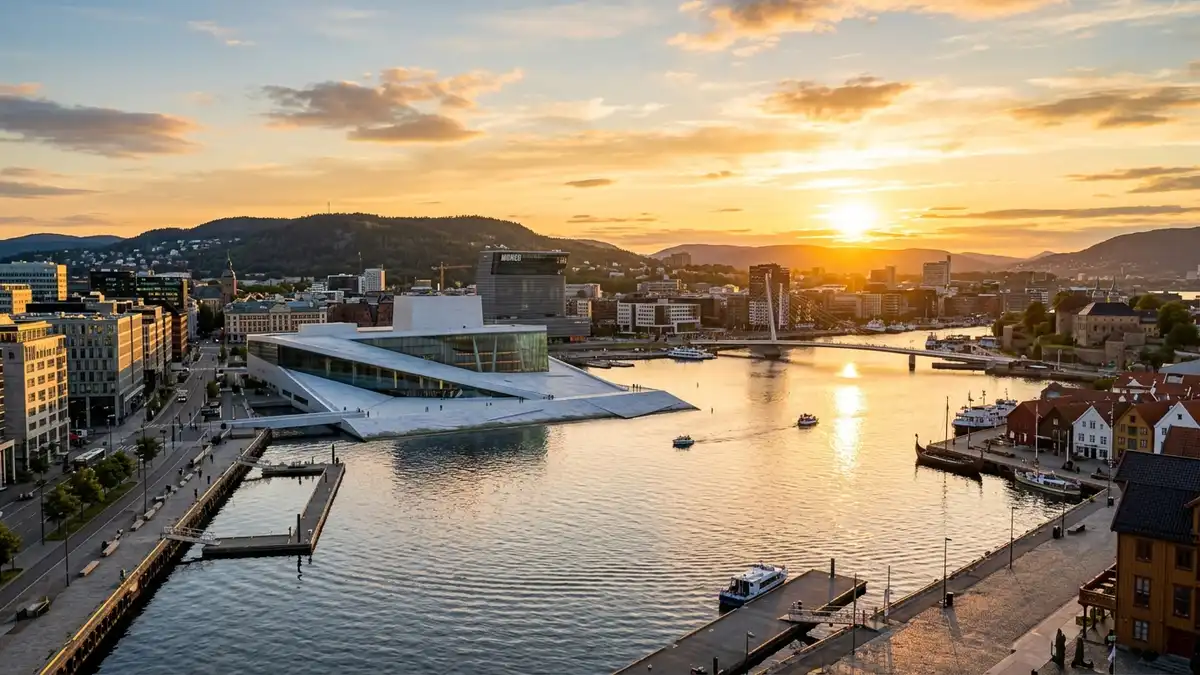



Route Briefing: Houston to Oslo
Houston to Oslo is one of those transatlantic routes that rewards the curious traveler willing to venture beyond the usual European capitals. At around ten and a half hours with a connection, it's a manageable journey that deposits you into one of Scandinavia's most compelling cities — a place where Viking longships sit minutes away from cutting-edge contemporary architecture and some of the world's most thoughtful museum curation.
Oslo earns its reputation as an outdoor city. Even within the city limits, forests and fjord waters are genuinely accessible, and Norwegians treat this as a basic fact of life rather than a weekend luxury. In summer, the light is almost surreal — long golden evenings that stretch well past ten o'clock, giving you hours of exploration that other destinations simply can't offer. June through August is peak season for good reason, but it comes with a price. Roundtrip fares from IAH can climb well above a thousand dollars during those months, so if summer is your window, start searching three to six months out and set fare alerts now. A good deal on this route lands under seven hundred dollars roundtrip, which does happen — particularly in shoulder seasons like May or September when the city is still beautiful and noticeably less crowded.
SAS, United, and Lufthansa are your main carriers out of Houston, and connecting through Copenhagen or Frankfurt frequently unlocks better pricing than trying to piece together a more direct path. Copenhagen connections via SAS in particular can feel almost seamless given how naturally that hub feeds into Oslo.
On arrival at Oslo Airport Gardermoen, the Airport Express train — locally called the Flytoget — runs frequently into Oslo Central Station and takes roughly twenty minutes. It's fast, reliable, and genuinely one of the more pleasant airport-to-city transfers in Europe. Worth every krone after a long transatlantic flight.
Once you're in the city, the Viking Ship Museum on the Bygdøy peninsula is not optional — the preserved vessels there are breathtaking in a way that photographs simply don't capture. The Munch Museum and the waterfront Aker Brygge area round out a city that balances heritage and modernity with unusual grace. Norwegian food culture has evolved dramatically in recent decades, and Oslo's dining scene reflects that, with a strong emphasis on local seafood and seasonal ingredients.
One genuinely useful tip: Oslo is expensive by almost any standard, so building a realistic daily budget before you arrive will save you real stress. That said, many of the city's greatest pleasures — the waterfront, the forests, the architecture — cost nothing at all.