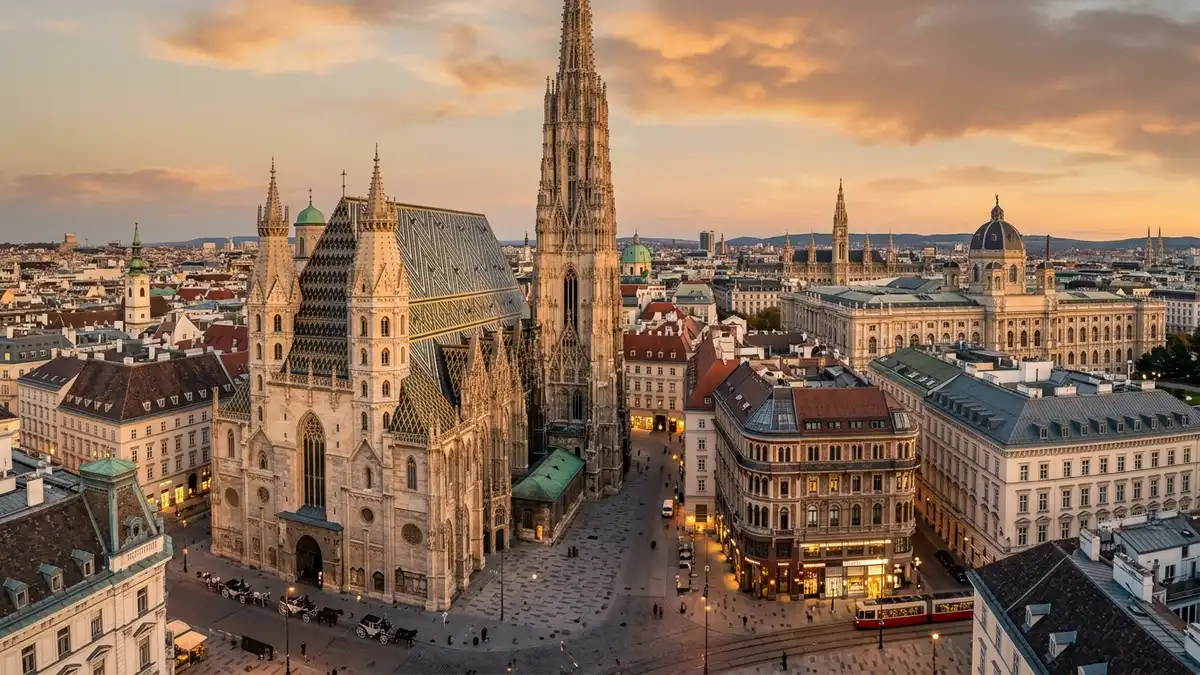



Route Briefing: Houston to Vienna
Few cities in the world carry themselves with quite the same effortless grandeur as Vienna, and flying there from Houston is more straightforward than most Texans realize. Lufthansa, Austrian Airlines, and United all serve this route year-round, with total travel time around eleven and a half hours including a connection — most commonly through Frankfurt or Munich. Those European hub connections tend to offer the most competitive pricing and the smoothest layover experience, so when you're comparing options, prioritize those routing choices.
On fares, the sweet spot is anything under $700 roundtrip, which represents genuine value for a transatlantic journey to one of Europe's most celebrated capitals. Standard pricing climbs above a thousand dollars, so booking three to six months ahead is your best defense against paying full price. Vienna rewards the planner.
The city itself is almost unfairly beautiful. The Habsburg dynasty spent centuries turning it into a showcase of imperial ambition, and the results are staggering — the Schönbrunn and Belvedere palaces, the Ringstrasse boulevard lined with monumental architecture, the Vienna State Opera, and the Kunsthistorisches Museum with one of the finest art collections on the continent. Walking the first district feels like wandering through a living museum, except the coffee houses are real and the Sachertorte is better than you've imagined.
Speaking of coffee houses, Vienna's café culture is genuinely its own institution — UNESCO recognized it as intangible cultural heritage. Sitting for an hour over a melange and a newspaper is not laziness here; it's tradition. Lean into it.
For getting into the city from Vienna International Airport, the City Airport Train, known as the CAT, connects directly to Wien Mitte station in the city center in roughly sixteen minutes, making arrival refreshingly painless after a long transatlantic journey.
Timing matters here. June through August is peak season, when the city fills with tourists and outdoor concerts animate the parks and palace courtyards. It's magnificent but busy. If you can travel in late spring or early autumn, you'll find the weather still pleasant, the crowds noticeably thinner, and hotel rates friendlier. Winter has its own magic — Vienna's Christmas markets are among the most atmospheric in Europe, and the classical music calendar is at its richest.
The one tip worth repeating to every first-timer: buy a multi-day transit pass immediately upon arrival. Vienna's U-Bahn, trams, and buses are excellent, and the city is compact enough that you'll rarely need a taxi. Save the money for an opera ticket instead — even standing room at the State Opera is an experience worth crossing an ocean for.