


Route Briefing: Las Vegas to London
Trading the neon desert of Las Vegas for the fog-soaked grandeur of London is one of those travel decisions that feels immediately right the moment you land. This is a route that connects two of the world's most iconic cities — one built on spectacle and reinvention, the other on centuries of accumulated history — and the contrast alone makes the journey worthwhile.
The flight runs around 10 hours and 30 minutes with a connection, typically routing through major hubs like Dallas, New York, or Chicago. British Airways, Virgin Atlantic, and American Airlines all serve this route year-round, and that competition works in your favor. A genuinely good deal comes in under $600 roundtrip, while standard fares tend to sit north of $900 — so there's real money to be saved if you plan ahead. Booking three to six months in advance gives you the best shot at those lower fares, and it's worth checking whether connecting through different hubs changes the price significantly, because it often does.
London rewards you the moment you clear customs. Whether you arrive at Heathrow or Gatwick, getting into the city is straightforward and relatively affordable by public transport. The Heathrow Express whisks you to Paddington Station in about 15 minutes, while the Underground's Piccadilly line offers a slower but cheaper alternative that drops you right into the heart of the city. From Gatwick, the Gatwick Express runs directly to Victoria Station.
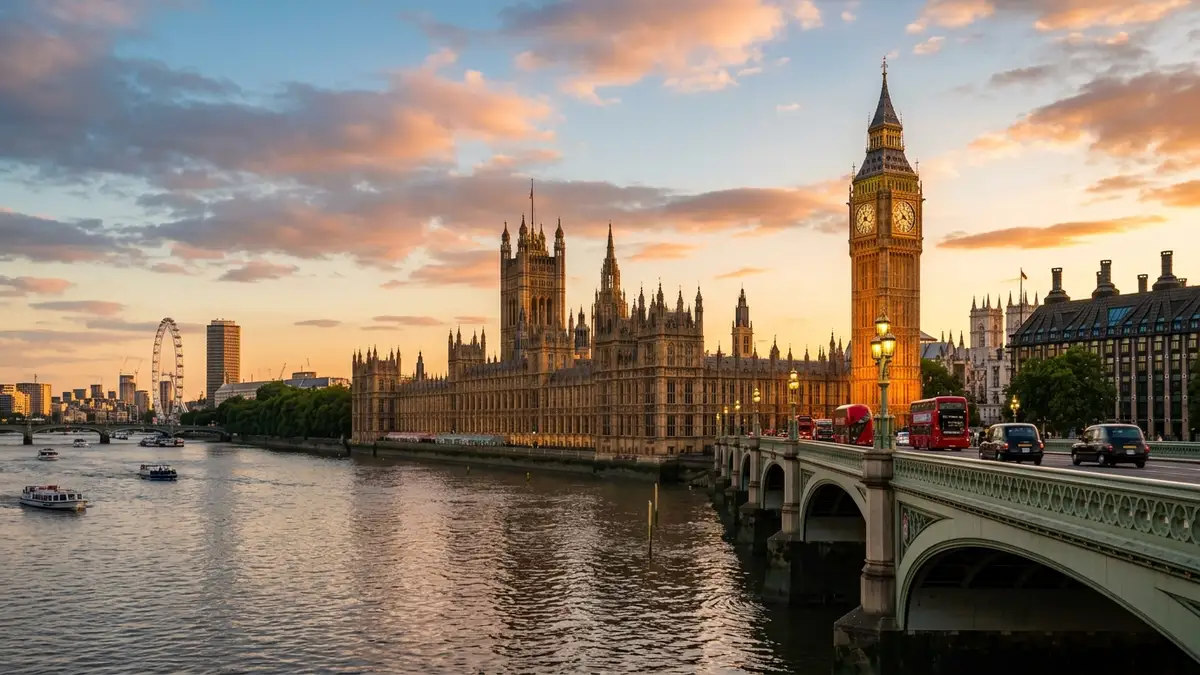
Once you're in, London operates on a scale that takes a few days to fully absorb. The British Museum alone could consume an entire afternoon — it houses one of the world's great collections of human history, and entry is free. Westminster, the Tower of London, the South Bank, and the sprawling green spaces of Hyde Park and Regent's Park give the city a breathing room that surprises first-time visitors. The West End theatre scene is world-class, and a night at a proper London pub — dark wood, real ale, and conversation that spills onto the pavement — is as essential as any landmark.
Peak season runs June through August when the city is alive with tourists and long daylight hours, but shoulder seasons like April, May, and September offer milder crowds and often softer prices. London in autumn has a particular charm — the parks turn golden and the cultural calendar fills up again after summer.
One tip worth keeping in mind: an Oyster card or a contactless bank card will handle all your London transport needs seamlessly, from the Tube to buses, and it's almost always cheaper than buying individual tickets. Load it up on arrival and the city becomes remarkably easy to navigate.