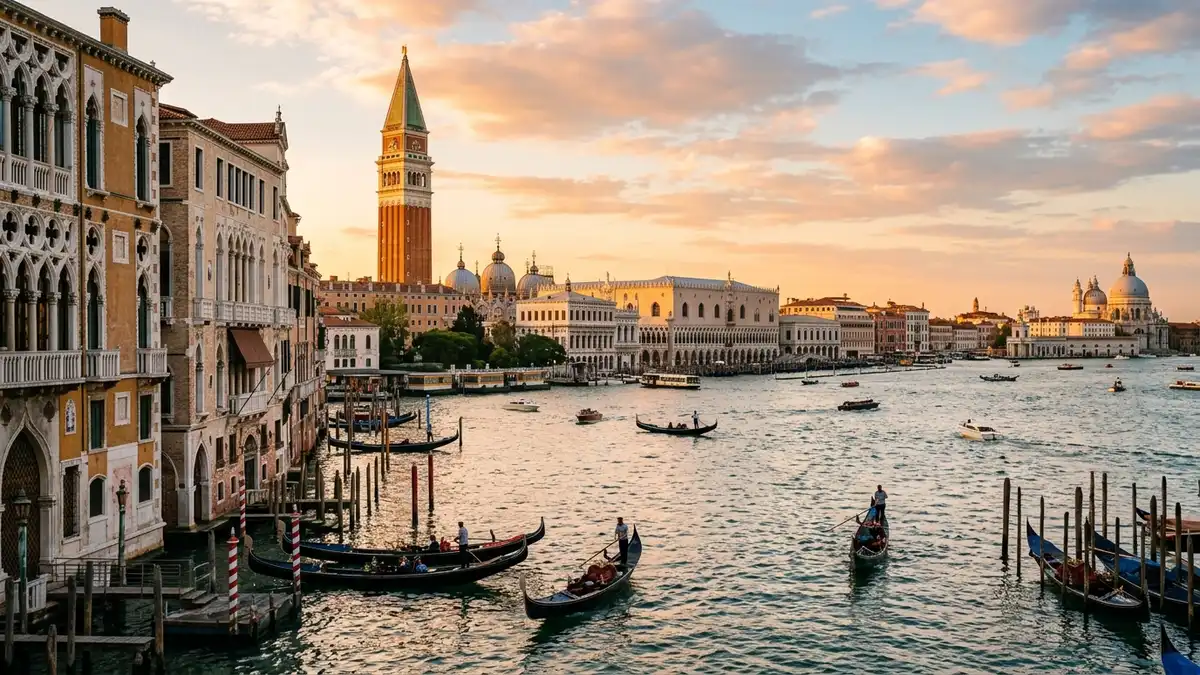



Route Briefing: Las Vegas to Venice
There are few travel decisions as rewarding as trading the neon desert of Las Vegas for the shimmering waterways of Venice — two cities that couldn't be more different, yet both utterly unlike anywhere else on earth. This route runs roughly 13 and a half hours with one stop, and while that's a commitment, landing in a city that has no roads, no cars, and no parallel anywhere in the world makes every hour worthwhile.
From Las Vegas, your best options connect through Frankfurt, Zurich, or Vienna, with Lufthansa, Swiss International Air Lines, and Austrian Airlines consistently offering the strongest combination of price and reliability on this corridor. A genuinely good deal lands under $700 roundtrip — and they do exist — while standard fares typically run between $1,000 and $1,400 or more. The key is timing your search well. Book four to six months ahead if you're targeting summer travel, because fares to Venice spike sharply once June arrives and the city fills with visitors from around the world.
Speaking of summer — June through August is peak season, and Venice earns every bit of that attention. The light on the lagoon in the long Italian evenings is something photographers chase for years. That said, shoulder season in April, May, or September offers a noticeably quieter, more intimate version of the city, with pleasant temperatures and fewer crowds pressing through the narrow calli around Piazza San Marco and the Rialto Bridge.
When you land at Marco Polo Airport, the most atmospheric arrival option is the water taxi or the public Alilaguna ferry service into the city — both travel directly across the lagoon and deposit you into Venice proper, which sets the tone for everything that follows. It costs more than a land transfer to Piazzale Roma, but arriving by water for the first time is an experience worth paying for.
Once you're in, resist the urge to stick to the main tourist corridors. Venice rewards wandering. Get lost in the Dorsoduro or Cannaregio neighborhoods, visit the Basilica di Santa Maria Gloriosa dei Frari, and take a vaporetto out to the islands of Murano and Burano for glassblowing traditions and wildly colorful houses. The Doge's Palace and St. Mark's Basilica are unmissable, but the city's real magic lives in the quieter moments — a canal at dawn, a local bacaro with cicchetti and a small glass of wine, the sound of oars on still water.
One practical tip that pays dividends: buy a multi-day vaporetto pass as soon as you arrive. The water buses are Venice's public transit system, and a pass gives you unlimited travel across the entire network, including routes out to the islands. It saves money and opens up the whole lagoon.