


Route Briefing: Las Vegas to Vienna
Few routes capture the imagination quite like trading the neon excess of Las Vegas for the gilded grandeur of Vienna — two cities that understand spectacle, just in very different centuries. This is a journey worth planning carefully, and the good news is that with the right timing, it doesn't have to break the bank.
The flight runs around 13 hours and 30 minutes with one stop, typically connecting through European hubs like Frankfurt, Munich, or Zurich. That routing through Central European airports is actually worth seeking out deliberately — fares connecting through those hubs tend to undercut routes that loop through major East Coast cities, and you'll often find yourself on Austrian Airlines or Lufthansa for the transatlantic leg, both of which offer a solid economy experience. A roundtrip under $700 is genuinely achievable if you book three to six months ahead; standard pricing climbs to $1,000–$1,400 or more, so early planning pays off here.
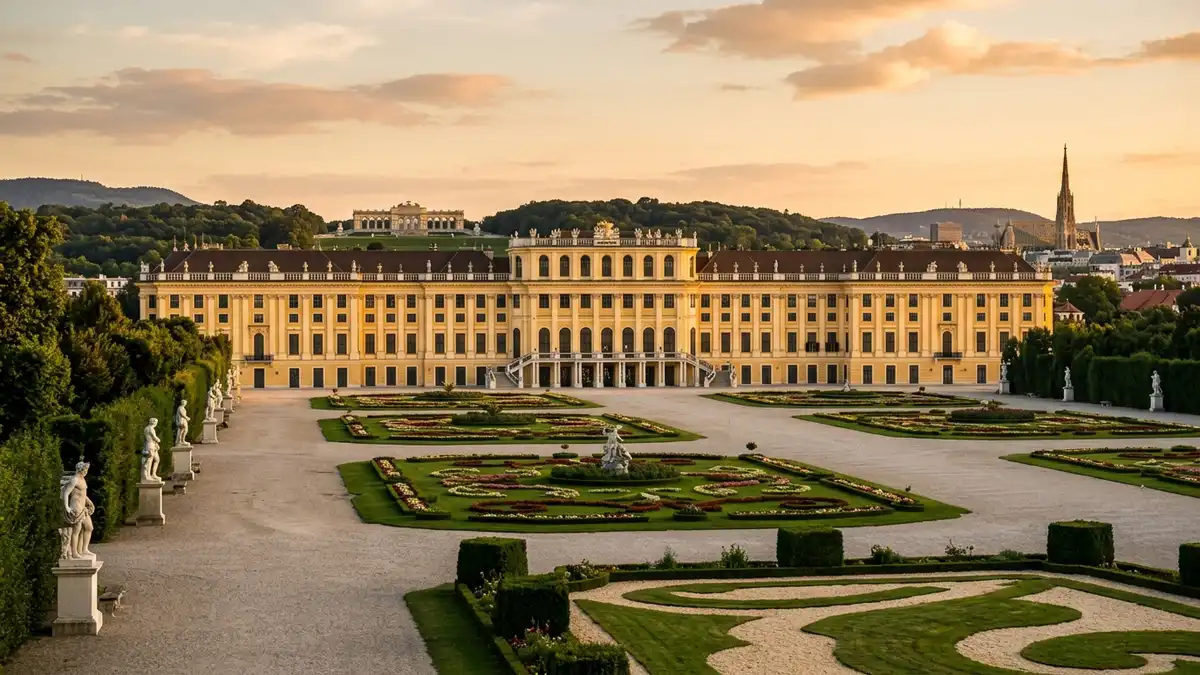
Vienna rewards the traveler who slows down. The Habsburg legacy is everywhere — the Schönbrunn and Hofburg palaces aren't just photo opportunities, they're immersive windows into centuries of European power. The Kunsthistorisches Museum holds one of the great art collections on the continent, and the Vienna State Opera is the kind of place where even a standing-room ticket feels like a privilege. Classical music isn't a tourist gimmick here; it's woven into the city's daily identity.
Then there's the coffee house culture, which UNESCO has recognized as an intangible cultural heritage. Viennese cafés are designed for lingering — order a Melange, ask for a slice of Sachertorte, and watch the city move at its own unhurried pace. It's a genuinely restorative contrast to the relentless energy you've just left behind in Las Vegas.
Getting from Vienna International Airport into the city is straightforward. The City Airport Train, known as the CAT, runs directly to Wien Mitte station in the city center in about 16 minutes, while the S-Bahn offers a slower but cheaper alternative on the same corridor. Both are reliable and well-signed in English.
Peak season runs June through August when the city is warm and festival-heavy, but Vienna in winter has its own magic — Christmas markets, concert season in full swing, and significantly fewer crowds. If your schedule allows flexibility, shoulder seasons in spring or early autumn offer the best balance of good weather and manageable tourism. Whenever you go, book that flight early, aim for a European hub connection, and give yourself at least five or six days. Vienna is not a city you want to rush.