


Route Briefing: London to Delhi
Few routes from London carry quite the same sense of anticipation as the flight to Delhi. At around eight and a half hours direct, it's a manageable overnight journey that deposits you into one of the world's most layered, chaotic, and utterly captivating cities. Air India, British Airways, and Virgin Atlantic all serve the route year-round, and if you time your booking right — ideally two to four months ahead — you can land a roundtrip fare under six hundred dollars, which represents genuinely good value for a direct intercontinental flight. Standard fares creep above nine hundred, so that advance planning really does pay off.
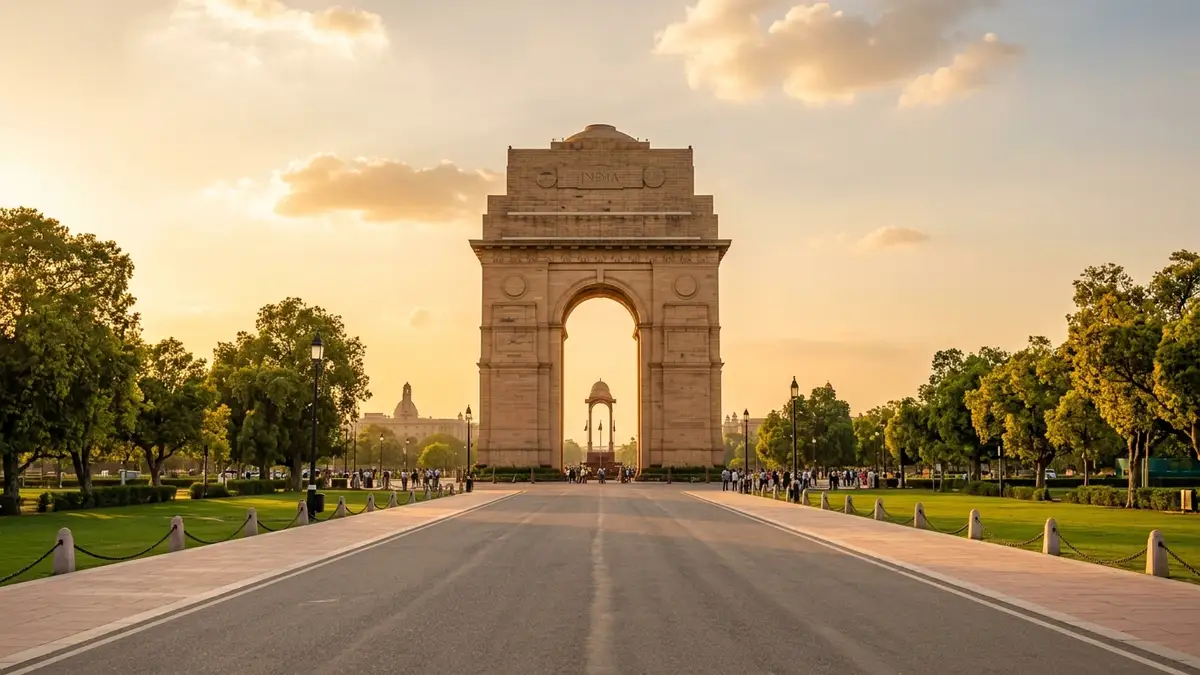
Delhi rewards the curious traveller like few other capitals. The city is essentially several cities stacked on top of one another across millennia. Old Delhi, the Mughal heart of the place, is a sensory overload in the best possible way — the lanes around the Jama Masjid and Chandni Chowk are dense with spice merchants, street food vendors, and the kind of architectural grandeur that stops you mid-stride. The Red Fort, a UNESCO World Heritage Site, anchors the old city and gives you an immediate sense of the imperial ambition that shaped this place. Meanwhile, the wide boulevards and colonial-era buildings of New Delhi, designed under British rule, offer a completely different visual register. Humayun's Tomb and the Qutb Minar complex add further depth to what is already an extraordinary concentration of monuments.
The food alone justifies the journey. Delhi's street food culture — chaat, parathas, kebabs — is among the most celebrated in the subcontinent, and the city's restaurants span every regional Indian cuisine you can think of.
From Indira Gandhi International Airport, the Delhi Metro's Airport Express line connects directly to the city centre quickly and affordably, making it one of the more straightforward airport arrivals in South Asia. Skip the unlicensed taxi touts and use the prepaid taxi counters or app-based ride services instead.
Timing matters here. October through January is peak season, when Delhi's notoriously brutal summer heat has finally broken and the city is alive with weddings, festivals, and pleasant temperatures. Summer school holidays from June to August also drive demand. If you want lower fares, fly mid-week and steer clear of Diwali and other major festival windows, when prices can jump significantly. The one genuinely transformative tip: build in at least a day or two beyond the obvious monuments to simply wander. Delhi's neighbourhood markets, its coffee-house culture in areas like Hauz Khas, and its sheer human energy are experiences no itinerary can fully capture in advance.