


Route Briefing: London to Penang
Penang has a way of getting under your skin in the best possible sense — a place where centuries of Chinese, Indian, Malay, and colonial British history have collided to create something genuinely unlike anywhere else on earth. And from London, it's more accessible than most people realise.
The journey runs around 13 hours 30 minutes with a stop, and the routing options are actually part of the appeal. Malaysia Airlines connecting through Kuala Lumpur is a natural choice, essentially delivering you into the heart of the country before the short onward hop to Penang. Qatar Airways and Emirates routing through their respective Middle Eastern hubs are equally popular and frequently competitive on price. A good deal sits under $700 roundtrip — well worth hunting for — while standard fares tend to push past $1,000. Book three to six months out and you'll give yourself the best chance of landing the lower end of that range.
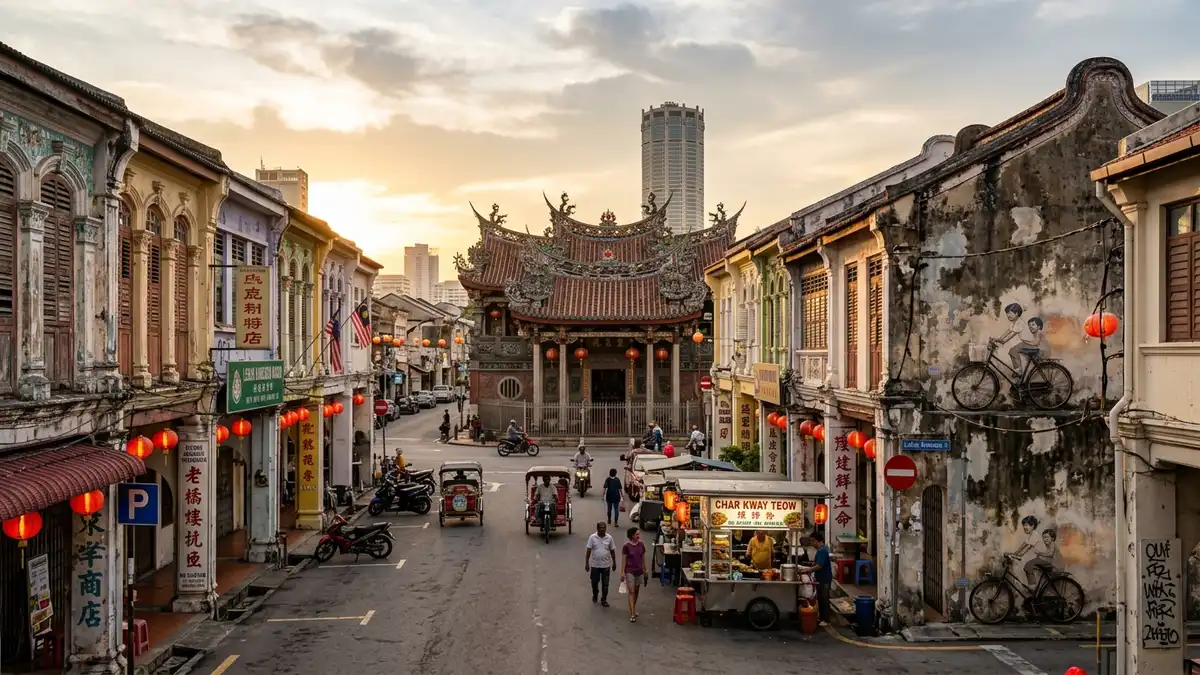
Georgetown, Penang's UNESCO-listed capital, is the reason most people make the trip, and it earns every bit of that reputation. The old town is a living, breathing museum of shophouse architecture, clan jetties, and Hindu temples sitting comfortably beside mosques and colonial buildings. But what really defines the city is the food. Penang's hawker culture is legendary across Southeast Asia — char kway teow, assam laksa, nasi kandar, cendol — and eating your way through the street stalls and coffee shops is genuinely one of the great culinary experiences the region has to offer. The street art scene that emerged in recent years adds another layer of texture to wandering the old town's narrow lanes.
From Penang International Airport, taxis and ride-hailing apps will get you into Georgetown comfortably, and the island is compact enough that you can cover a lot of ground without much effort once you're settled.
Timing matters here. June through August and December through January are peak periods, meaning higher fares and busier streets — though the festive atmosphere around Chinese New Year, which typically falls between late January and mid-February, is spectacular if you can handle the crowds. The shoulder months either side of peak season often offer a sweeter balance of decent weather, thinner crowds, and more breathing room on price.
The one tip worth burning into your memory: resist the urge to fill your days with organised tours. Penang rewards slow, aimless walking more than almost any city in Asia. Get lost in Georgetown's backstreets with no particular agenda, follow your nose toward whatever smells best, and let the city reveal itself at its own pace. That's when it really delivers.