


Route Briefing: Miami to Luxor
Few routes reward the effort of a long-haul journey quite like Miami to Luxor. Yes, you're looking at around 18 and a half hours of travel with two stops, but what's waiting on the other end is nothing short of extraordinary — a city that has been continuously inhabited for thousands of years and sits at the heart of ancient Egyptian civilization. This is the place where pharaohs were buried, where temples were raised to gods whose names we still know today, and where the sheer scale of human ambition carved into stone will genuinely stop you in your tracks.
Getting there typically means connecting through Cairo on EgyptAir, or routing through Doha with Qatar Airways or Istanbul with Turkish Airlines. All three are solid options, and shopping between them is worth your time. A roundtrip under $900 is a genuine deal on this route — standard fares run $1,300 to $1,800 or more — so booking three to five months ahead gives you the best shot at those lower prices. Luxor's airport is small and manageable, and the city center is close, making arrival refreshingly straightforward after such a long journey.
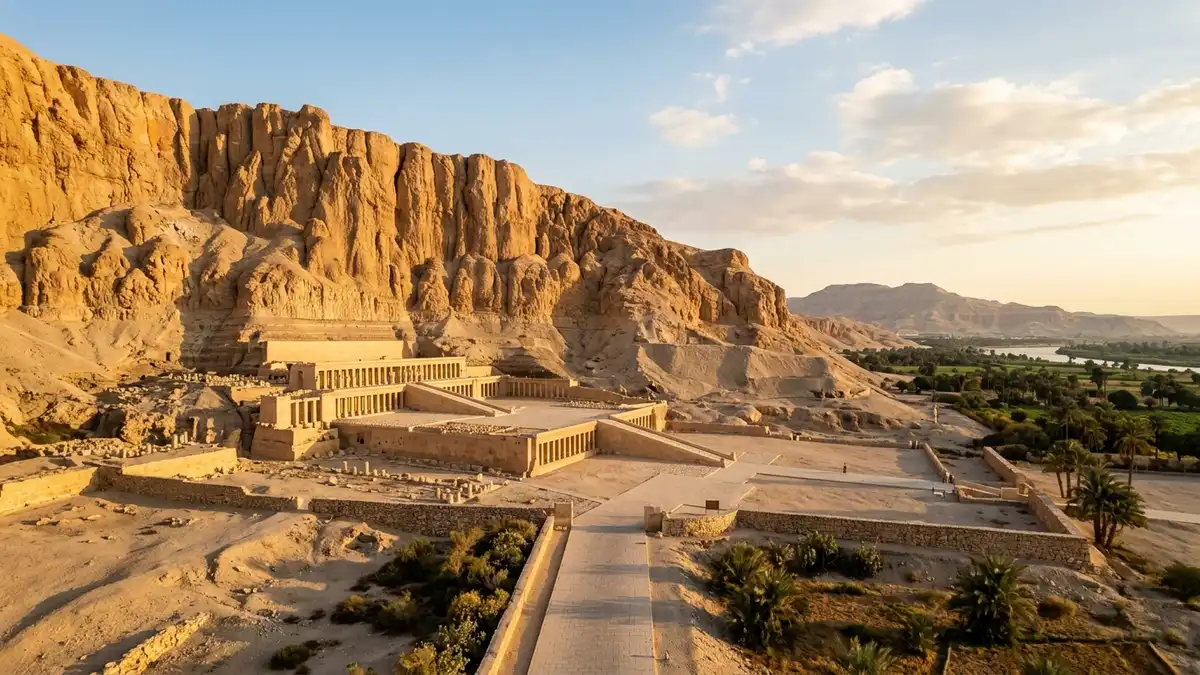
Timing matters enormously here. October through February is the sweet spot — temperatures are warm and comfortable rather than punishing, and the light in the early mornings and late afternoons turns the sandstone temples a deep, burnished gold that photographs can barely capture. Summer in Luxor is genuinely brutal heat, so unless you're specifically chasing lower crowds and can handle extreme temperatures, stick to the cooler months.
The experiences themselves are hard to overstate. The Valley of the Kings on the West Bank holds the tombs of New Kingdom pharaohs, including Tutankhamun, carved deep into the limestone cliffs. Karnak Temple complex on the East Bank is one of the largest religious structures ever built, and walking its hypostyle hall — a forest of towering carved columns — is the kind of moment that recalibrates your sense of history. The Temple of Luxor sits right in the city center, illuminated at night in a way that feels almost surreal.
One genuinely useful tip: hire a licensed local guide for at least your first full day. Beyond the historical context they provide, a good guide knows which tombs are currently open, how to avoid the worst of the midday crowds, and where to find an honest meal near the sites. It transforms the experience from sightseeing into something much closer to understanding. For a journey this long and this meaningful, that investment is well worth it.