


Route Briefing: Miami to Santorini
There are flights, and then there are flights that deliver you somewhere genuinely transformative. Miami to Santorini is firmly in the second category. Yes, you're looking at around fourteen and a half hours of travel with a connection, but the moment you descend toward that crescent-shaped caldera — the remnant of one of history's most powerful volcanic eruptions — every hour in the air makes complete sense.
The most common routing takes you through Athens, which is actually a bonus rather than an inconvenience. Aegean Airlines, Delta, and Lufthansa all serve this corridor, and connecting through Athens International keeps your options flexible and your costs manageable. Speaking of costs, this route rewards the patient planner. Lock in your tickets four to six months before a summer trip and you have a real shot at finding roundtrip fares under $900. Wait until spring, and you'll likely be paying $1,300 or more for the same seats. Santorini's popularity is not a secret, and the airlines know it.
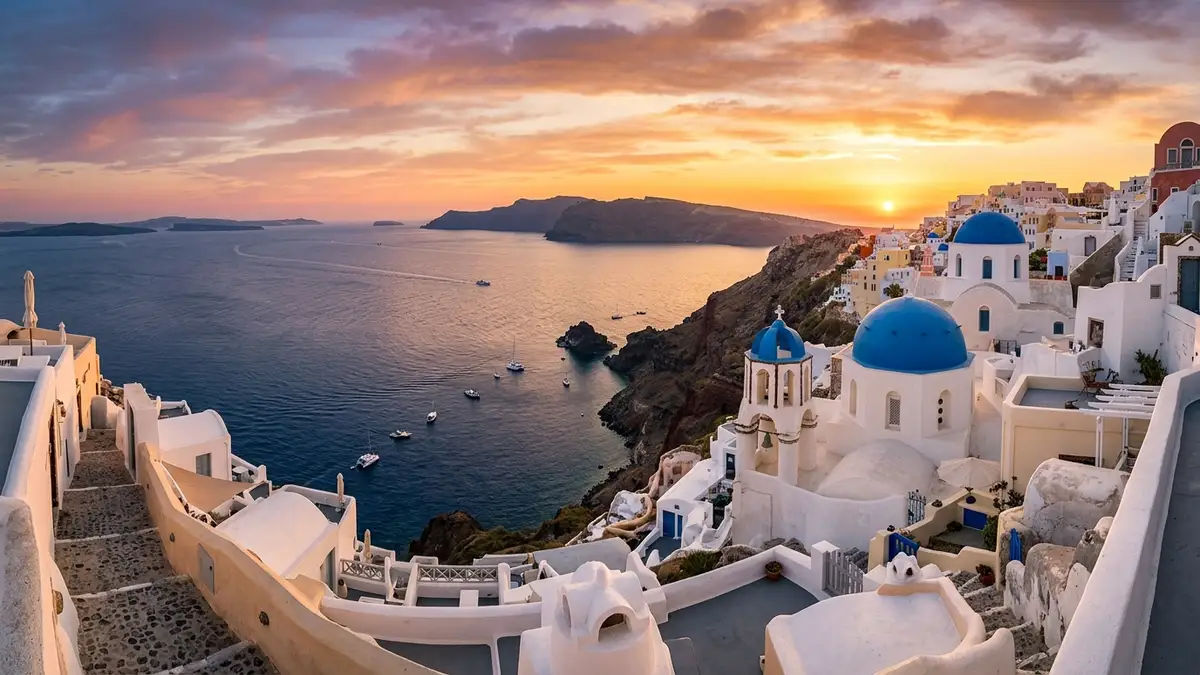
Once you land at Santorini's small airport, you'll find taxis and buses waiting to shuttle you toward the main towns. Fira, the island's capital, sits perched dramatically along the caldera rim, while Oia — pronounced roughly "ee-ah" — is the village that fills every travel magazine cover with its white-washed walls and blue-domed churches. The two are connected by a walking path along the cliff edge that is worth every step, especially in the cooler morning hours.
Peak season runs June through August, when the island is gloriously warm, the Aegean is swimmable, and the crowds are at their most intense. If you can travel in late May or September, you'll find the weather still excellent, the famous sunsets just as spectacular, and the atmosphere considerably more relaxed. Oia's sunset draws enormous crowds every evening in summer — arrive early or find a quieter vantage point elsewhere along the caldera to enjoy it without the jostling.
Beyond the views, Santorini delivers genuinely distinctive experiences: the volcanic black and red sand beaches on the island's southern and eastern coasts feel unlike anything in the Caribbean, and the local cuisine leans into fresh seafood, fava bean dishes, and wines made from grapes grown in volcanic soil — a flavor profile you simply won't find anywhere else. This is a route worth every cent of a well-timed fare.