


Route Briefing: New York to Hiroshima
Few routes carry as much emotional weight as the one connecting New York to Hiroshima. You're traveling from one of the world's most iconic cities to a place that transformed itself from the site of unimaginable tragedy into a living symbol of peace and human resilience — and that contrast alone makes the journey deeply worthwhile.
Getting there takes around 16 and a half hours with a connection, typically routed through Tokyo or Osaka. ANA and Japan Airlines are the standout carriers on this route, offering excellent service and smooth onward connections to Hiroshima's airport. United also operates this corridor if you prefer to stick with a familiar American carrier. A roundtrip fare under $900 is a genuine deal worth jumping on — standard pricing tends to run between $1,200 and $1,600 or more, so booking three to six months ahead gives you the best shot at those lower fares. Flying mid-week and steering clear of Japanese national holidays can shave a meaningful chunk off the price too.
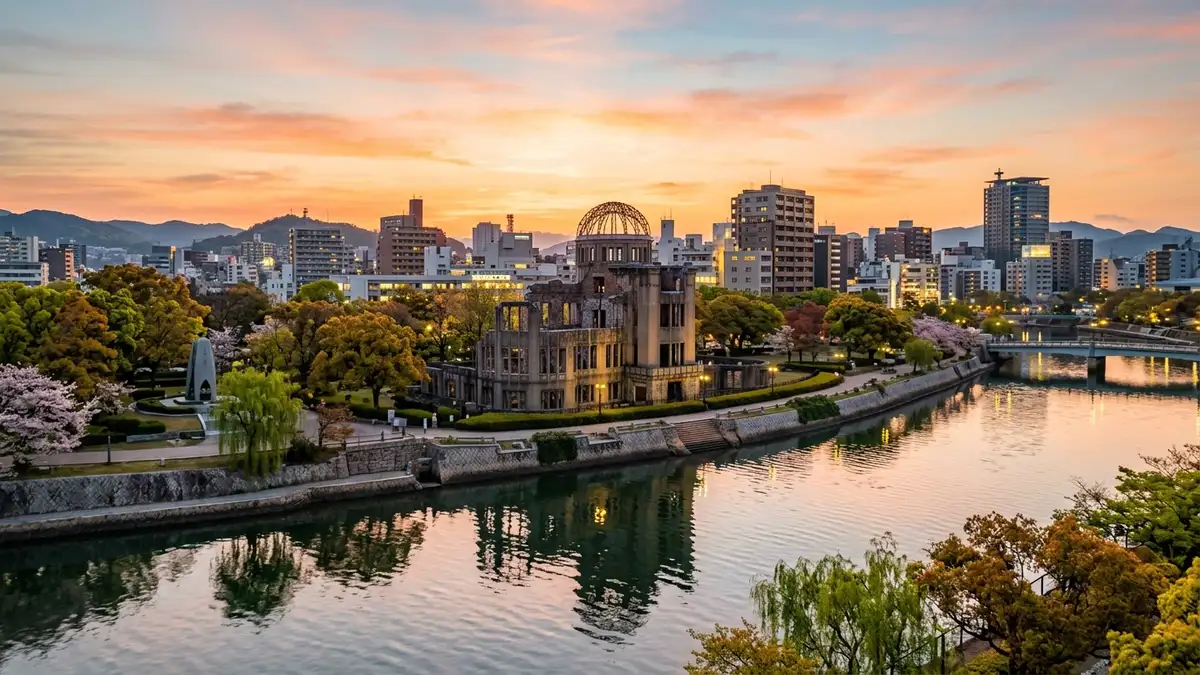
Hiroshima itself rewards visitors who come with open hearts. The Peace Memorial Park and Museum sit at the center of the city's identity, and no matter how much you've read about the atomic bombing, standing at the Genbaku Dome — the skeletal ruins preserved exactly as they were left — is a genuinely affecting experience. It's somber without being oppressive; the city around it is vibrant, friendly, and forward-looking.
From the airport, trains and buses connect you to the city center with reasonable efficiency, and Hiroshima's compact tram network makes getting around once you're there refreshingly simple. Don't skip Miyajima Island, a short ferry ride from the city, where the famous floating torii gate of Itsukushima Shrine rises from the sea at high tide in one of Japan's most photographed scenes. The island also has wild deer wandering freely among the visitors, which adds a surreal, charming quality to the whole experience.
On the food front, Hiroshima-style okonomiyaki is the dish you came for. Unlike the Osaka version, the local style layers ingredients — noodles, cabbage, egg, pork — rather than mixing them, and the result is deeply satisfying. The city has entire streets dedicated to it.
Timing-wise, late March to early April brings cherry blossoms and magical light, though crowds and prices peak accordingly. If you want a quieter, more affordable visit, autumn delivers beautiful foliage and comfortable temperatures without the same rush. Whenever you go, Hiroshima has a way of staying with you long after you leave.