


Route Briefing: Paris to Lima
Paris to Lima is one of those long-haul routes that genuinely rewards the effort. Yes, you're looking at around fourteen and a half hours in the air with a connection, but what waits on the other side is a city that has quietly become one of the most exciting food and culture destinations on the planet — and fares that, if you time things right, won't punish your wallet nearly as much as you'd expect.
Connecting through Madrid with Iberia or through Amsterdam with KLM tends to produce the sharpest prices, often dipping under $700 roundtrip if you book two to four months ahead. Air France is another solid option from Charles de Gaulle. Orly travellers will typically need to factor in a connection to CDG or route through one of those European hubs regardless, so build in enough layover time to breathe.
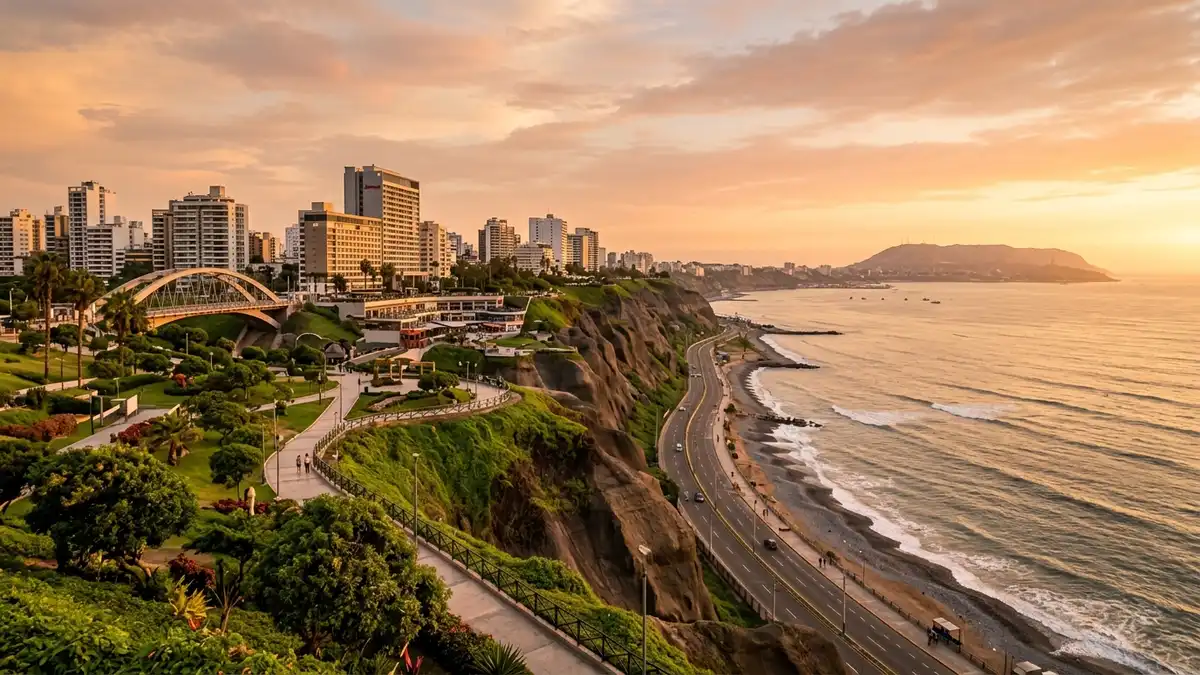
Lima itself is a city that surprises people. The Pacific coastline runs right along its western edge, and the Miraflores and Barranco neighbourhoods sit dramatically on cliffs above it — watching the sun drop into the ocean from those clifftops is genuinely one of South America's great free experiences. The colonial heart of the city, the Centro Histórico, is a UNESCO World Heritage Site, with the Plaza Mayor and its surrounding baroque architecture giving you a vivid sense of the city's Spanish colonial past layered over an even older Andean one.
But honestly, most people who fall hard for Lima do so through the food. This is the gastronomic capital of South America by almost any measure, and ceviche here — fresh fish cured in lime juice with chilli and red onion — is in a different league from anything you'll find elsewhere. The city's cuisine draws on Indigenous, Spanish, Japanese, and Chinese influences in ways that feel entirely natural rather than forced.
From Jorge Chávez International Airport, taxis and authorised ride services will get you into the main tourist districts, though it's worth arranging transport through your accommodation or using a clearly marked official taxi rank rather than accepting unsolicited offers inside the terminal.
Timing matters on this route. July and August are peak season, as are December and January, so fares climb and accommodation fills up. If you can travel in the shoulder months — think April to June or September to October — you'll find better prices and thinner crowds. Lima's coastal climate means overcast skies are common from June through October, a phenomenon locals call the garúa, but temperatures stay mild year-round, so don't let grey skies put you off.
The one tip worth repeating: book early, route through Madrid or Amsterdam, and give yourself at least four or five days in Lima before heading inland. The city earns it.