


Route Briefing: Paris to Macau
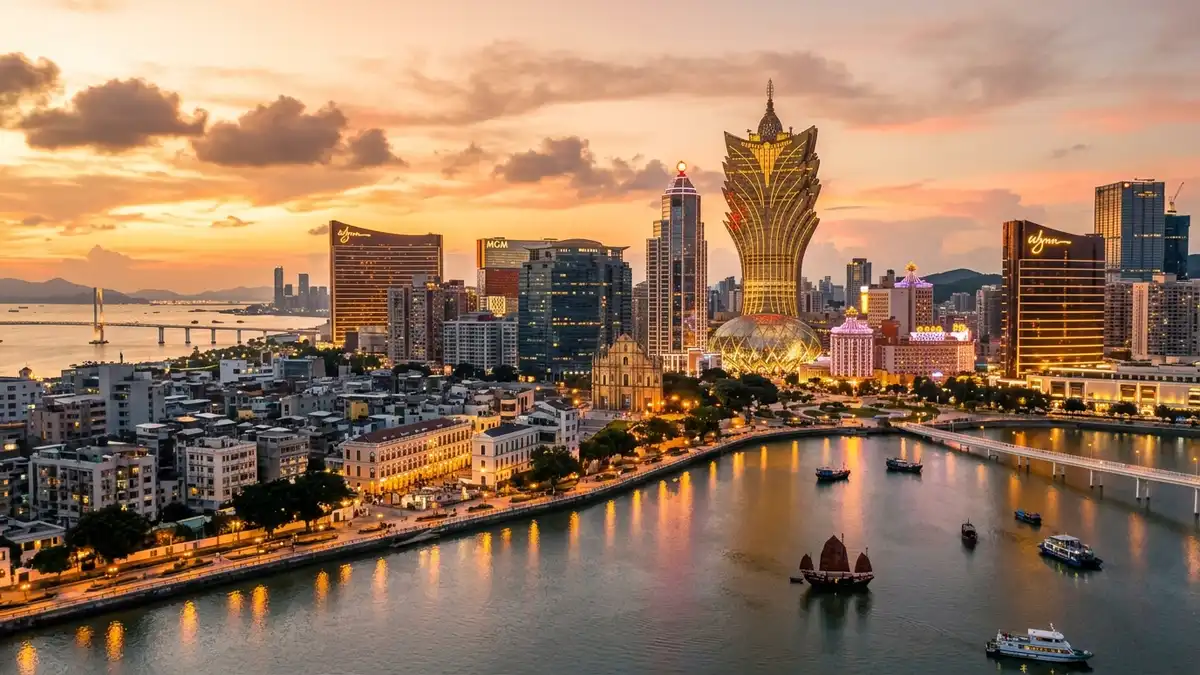
Flying from Paris to Macau is one of those journeys that genuinely rewards the effort. Yes, you're looking at around thirteen and a half hours in the air with a stop — most commonly through Hong Kong — but what awaits on the other side is one of the world's most fascinatingly contradictory destinations: a tiny peninsula where Portuguese cobblestones meet neon-lit casino towers, where Cantonese dim sum sits alongside bacalhau, and where a UNESCO-listed historic centre coexists with some of the highest-grossing gaming floors on the planet.
The route runs year-round, and Cathay Pacific and Air France are your most reliable options, both typically routing through Hong Kong before the short onward hop to Macau International Airport. Fares under $700 roundtrip represent genuinely good value for this journey — standard pricing tends to push well past $1,000 — so it's worth being strategic. Book two to four months ahead, and lean toward midweek departures, which can shave a meaningful amount off the ticket price compared to flying out on a Friday or Sunday.
Timing your visit matters more here than in most places. Chinese New Year, falling in January or February, transforms Macau into a spectacle of fireworks, dragon dances, and packed streets — extraordinary to witness, but accommodation prices spike sharply and the casinos are absolutely heaving. July and August are peak summer season, hot and humid but buzzing with energy. If you prefer a calmer pace and more comfortable temperatures, the cooler months from October through December are worth considering.
From the airport, ferries connect Macau to Hong Kong, and the city's casino resorts famously operate free shuttle buses from the ferry terminals and airport — a genuinely useful perk that makes getting around surprisingly painless even without pre-arranged transport.
Beyond the casinos, Macau's historic centre is the real soul of the place. The ruins of St. Paul's Cathedral, the Guia Fortress, and the atmospheric Senado Square all carry that distinctive blend of southern Chinese and Portuguese culture that you simply won't find anywhere else in Asia. The food scene reflects this beautifully — Macanese cuisine, a genuine fusion born from centuries of Portuguese colonial influence, is something you should seek out deliberately rather than defaulting to the international buffets inside the big resorts. Macau also punches well above its weight for Michelin-starred dining, so if food is a priority, do your research before you arrive.
The smartest tip for this route: if your Hong Kong layover is long enough, consider a brief stopover there before continuing to Macau. The two destinations complement each other perfectly, and the ferry crossing between them is short and scenic.