


Route Briefing: Paris to Málaga
Just two and a half hours from Paris and you're stepping off the plane into warm Andalusian sunshine — that's the quiet magic of the CDG or Orly to Málaga route. Vueling, Iberia, and Air France all serve it year-round, which means genuine competition keeps fares honest. Snag a roundtrip under $120 and you've done very well; standard pricing sits in the $200–$350 range, so it's worth being patient. Book six to ten weeks ahead, lean toward mid-week departures, and steer clear of Spanish public holidays, and you can realistically shave a meaningful chunk off the standard fare.
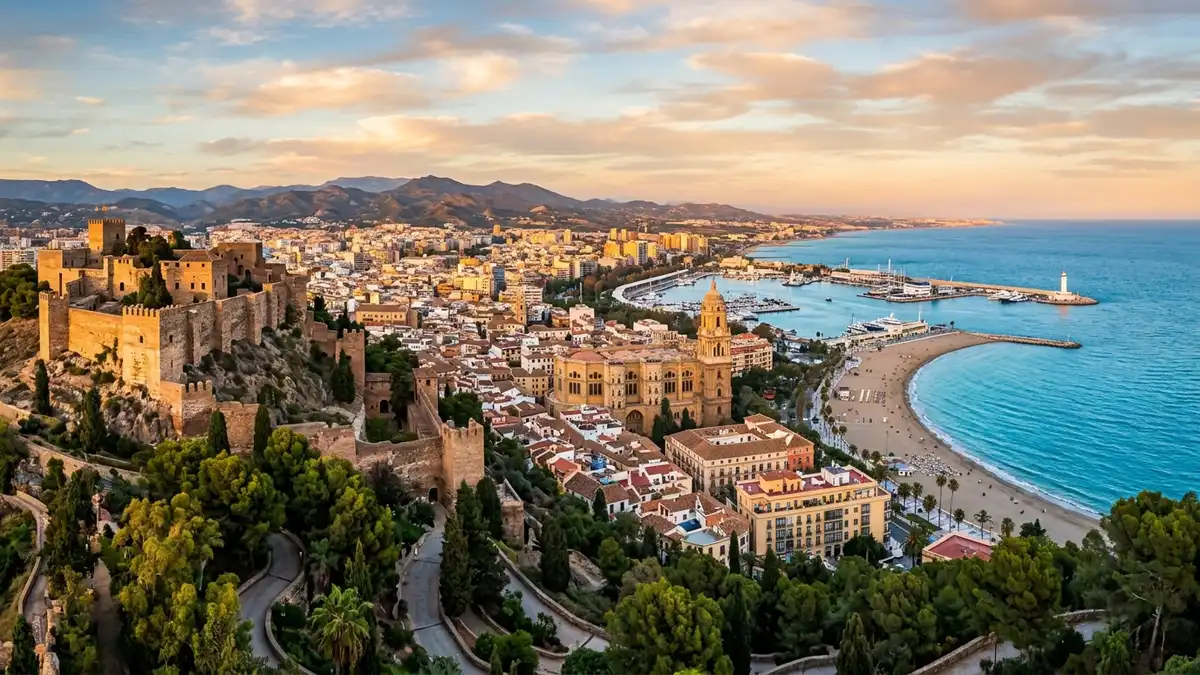
Málaga itself tends to surprise people who assume it's just a gateway to the Costa del Sol resort strip. Yes, the beaches are genuinely beautiful and the light has that particular Mediterranean quality that makes everything look slightly more cinematic than it should. But the city has real cultural weight. This is where Pablo Picasso was born, and the Museo Picasso Málaga, housed in a Renaissance palace in the old town, is one of the finest single-artist museums in Spain. The Alcazaba, the Moorish fortress rising above the port, is remarkably well-preserved and offers sweeping views over the city and the sea. Just above it sits the older Castillo de Gibralfaro, worth the climb for the panorama alone.
The food culture here is unpretentious and deeply satisfying. Málaga has its own distinct tapas traditions — espetos, the famous sardines grilled on skewers over open fires on the beach, are something you should eat at least once, ideally at a chiringuito right on the sand. The local sweet wine, made from Moscatel grapes grown in the surrounding hills, is worth seeking out too.
From Málaga Airport, the city centre is genuinely easy to reach. The Cercanías commuter train connects the airport directly to the city centre and the main María Zambrano station in around twelve minutes — it's cheap, reliable, and far less stressful than navigating a taxi during busy periods.
Timing matters here. June through August is peak season, the beaches are packed, and prices for flights and accommodation reflect that. If you can travel in May or September, you'll find the weather still excellent — warm enough for swimming — but the city noticeably calmer and more affordable. Spring also brings the city's famous Semana Santa processions, which are among the most atmospheric in Andalusia if that kind of cultural spectacle appeals to you. Winter is mild by northern European standards and the old town is genuinely pleasant to wander without summer crowds. For Parisians escaping grey skies, even a long weekend here in February can feel like a genuine reset.