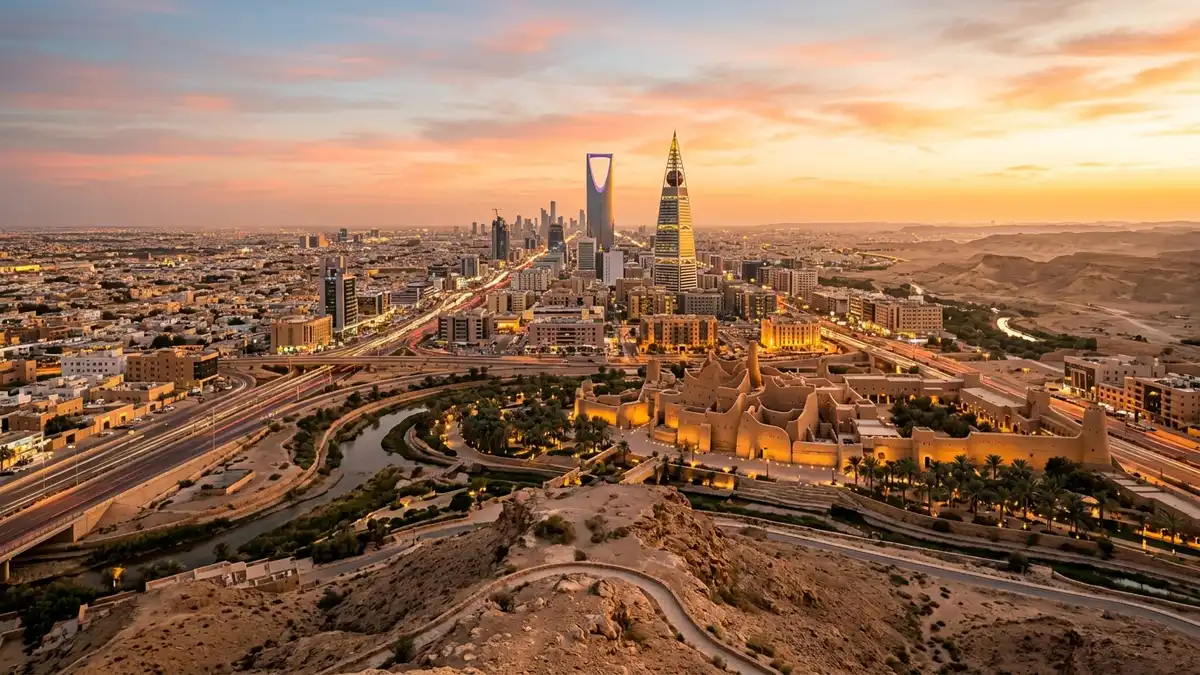



Route Briefing: Paris to Riyadh
Six and a half hours from Charles de Gaulle or Orly and you've traded Haussmann boulevards for a skyline that looks like it was designed by someone who genuinely believes the future arrived early. Riyadh is one of the most fascinating cities to visit right now precisely because it's mid-transformation — a place where ancient Arabian heritage and jaw-dropping modernity exist in genuine, sometimes startling, conversation with each other.
The route runs year-round, served by Air France, Saudia, and budget-friendly flynas, so you have real options depending on your priorities. A good roundtrip fare comes in under $600 if you time it right, while standard pricing sits above $900 — so the savings for a little planning are meaningful. Book six to eight weeks out and you'll be in the sweet spot. One firm piece of advice: steer well clear of Ramadan and Hajj periods. Prices spike sharply, seats disappear, and the city operates on a completely different rhythm that can catch first-time visitors off guard.
The best window to visit is outside those peak religious periods — the cooler months between October and March make exploring far more comfortable, since Riyadh summers are genuinely intense heat. June through August sees more travellers but the temperatures demand respect.
Once you land at King Khalid International Airport, the city centre is accessible by road, and Riyadh's metro system — one of the largest driverless metro networks in the world — has made getting around the city considerably easier and more affordable than relying solely on taxis or ride-hailing apps, though those are widely available too.
As for what to actually do: Edge of the World is the headline experience for good reason. This dramatic escarpment northwest of the city drops away into an almost incomprehensible expanse of desert — it's the kind of landscape that recalibrates your sense of scale. Diriyah, the ancestral home of the Saudi royal family and a UNESCO World Heritage Site, offers beautifully restored mud-brick architecture and a genuine window into the country's pre-oil history. The National Museum in the diplomatic quarter is excellent for context before you explore further.
The food scene rewards curiosity — look for traditional Saudi dishes like kabsa, the fragrant slow-cooked rice and meat dish that's essentially the national comfort food. Riyadh's restaurant landscape has expanded rapidly with the country's social reforms, so dining options are broader than many visitors expect.
The single best tip for this route: treat Riyadh as a base, not just a destination. Day trips into the surrounding desert reveal a landscape of extraordinary beauty, and having a local guide for the Edge of the World excursion transforms it from a scenic drive into something genuinely memorable. Arrange that before you fly — it books up.