


Route Briefing: Seattle to Baku
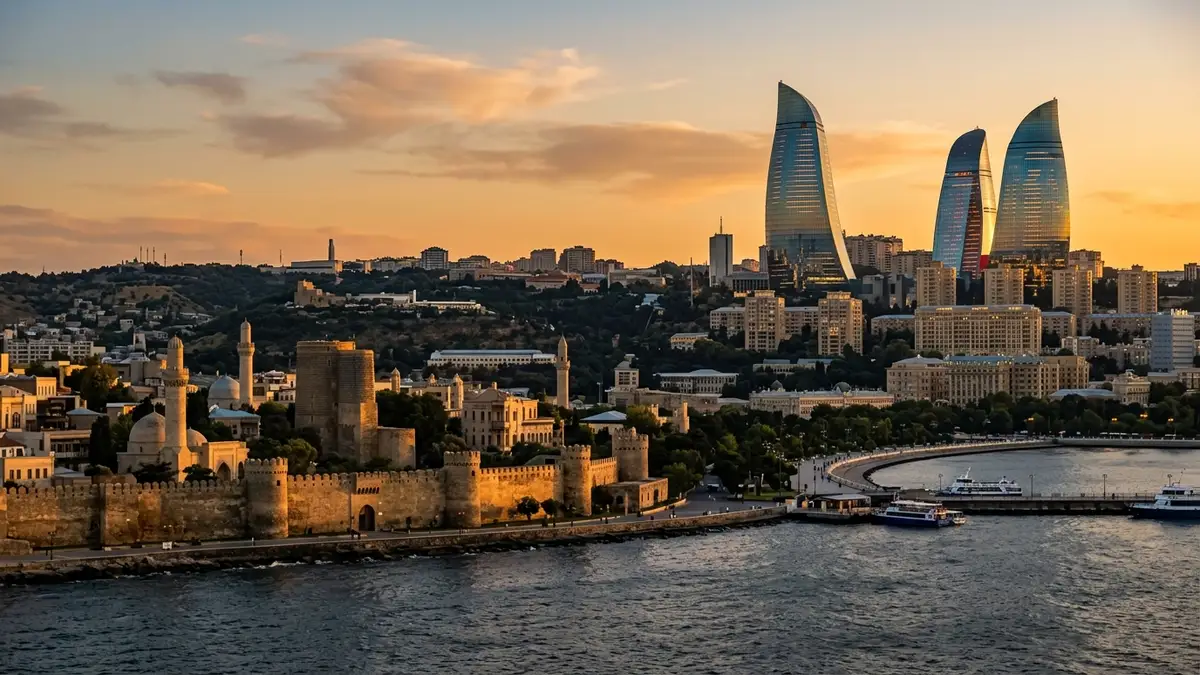
Few routes from the Pacific Northwest carry quite the sense of genuine discovery that Seattle to Baku does. You're trading the evergreen forests of the Cascades for the windswept shores of the Caspian Sea, arriving in a city that genuinely defies easy categorization — a place where a medieval walled old city sits in the shadow of three soaring flame-shaped towers that light up the skyline after dark. It's the kind of contrast that makes you feel like you've landed somewhere truly singular, and at under $900 roundtrip if you time it right, the value is hard to argue with.
The journey runs around nineteen and a half hours with one or two connections, typically routing through Istanbul, Frankfurt, or Dubai. Turkish Airlines and Lufthansa are the workhorses of this route, with Azerbaijan's own national carrier AZAL also in the mix. Turkish Airlines through Istanbul tends to offer the most flexible and competitive pricing, and booking two to four months out is genuinely the sweet spot — fares climb steeply once you're inside that window, especially heading into summer.
Baku's peak season runs June through August, when the Caspian waterfront promenade buzzes with life and the weather is warm and dry. That said, spring and early autumn are worth serious consideration — the crowds thin out, the light is softer, and the city's architectural drama feels more intimate when you're not sharing it with everyone else.
The old city, known as Icherisheher, is a UNESCO World Heritage Site and genuinely earns the designation. The narrow stone lanes, the Maiden Tower, and the Palace of the Shirvanshahs are all within walking distance of each other, and the whole area is compact enough to explore on foot over a leisurely afternoon. Beyond the walls, the modern boulevard along the Caspian is one of the more pleasant waterfront walks in the region, stretching for several kilometers with views back toward the city's skyline.
Azerbaijani cuisine is a highlight that often surprises first-time visitors — think slow-cooked lamb dishes, saffron-scented rice pilafs, and fresh herbs used with real generosity. The food culture sits at a crossroads of Persian, Turkish, and Caucasian influences, and eating well here doesn't require spending much at all.
From Heydar Aliyev International Airport, the city center is accessible by taxi, and it's worth arranging or confirming pricing before you get in the car. The one tip worth carrying with you: Baku rewards slow walkers. Resist the urge to rush between landmarks and instead let the old city's alleyways pull you somewhere unexpected. That's where the real texture of the place lives.