


Route Briefing: Sydney to Split
Few destinations justify a 23-plus hour journey quite like Split. This is a city where you can walk out of a Roman emperor's retirement palace — a structure nearly 1,700 years old — and stumble directly into a buzzing café terrace overlooking the Adriatic. That combination of living history and Mediterranean ease is genuinely rare, and for Australians willing to commit to the long haul, it delivers in a way that more obvious European capitals simply can't match.
Getting there from Sydney means settling in for a serious journey with at least two stops, but the good news is that the major carriers on this route — Qatar Airways, Emirates, and Lufthansa — are among the more comfortable options for long-haul economy travel. Routing through Doha, Dubai, or a European hub like Frankfurt or Amsterdam tends to produce the most competitive fares, and if you can land a roundtrip under $1,400, you're doing well. Standard pricing sits between $1,800 and $2,500 or more, so the savings on a good deal are meaningful. The key is timing: book four to six months ahead of a summer trip. Split is enormously popular between June and August, seats fill quickly, and prices climb steeply as the season approaches.
Split Airport sits on the outskirts of the city, and regular bus services connect the terminal to the main bus station near the waterfront, making arrival relatively straightforward without needing to budget for a taxi immediately.
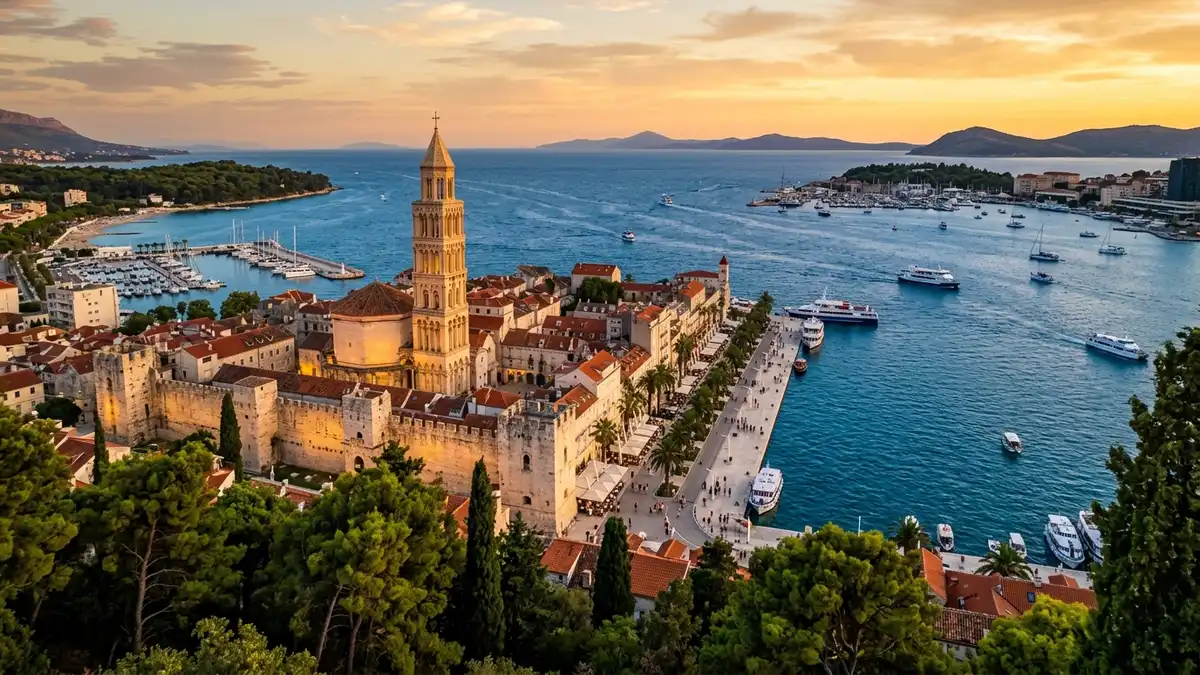
Once you're there, the old town inside Diocletian's Palace is the obvious starting point — but don't rush through it. The palace walls contain an entire neighbourhood of restaurants, bars, and apartments where locals actually live. Wander the narrow marble lanes at night when the day-trippers have thinned out and the atmosphere shifts into something genuinely magical. The Riva promenade along the waterfront is where Split's social life plays out in full, and it's a perfect place to recalibrate after the long flight.
Split also works brilliantly as a base for island-hopping. Ferries connect the city to Hvar, Brač, and Vis, each offering a different flavour of Dalmatian island life — from the lavender fields and nightlife of Hvar to the quieter, more rugged beauty of Vis.
The one tip worth taking seriously: consider arriving a few days before or after peak summer if your schedule allows. Late May and September offer warm water, far fewer crowds, and noticeably more breathing room in the old town — and often cheaper accommodation to match.