


Route Briefing: Toronto to Aruba
Five and a half hours from Toronto's grey skies to one of the sunniest, most reliably beautiful islands in the entire Caribbean — that's the deal Aruba offers, and it's hard to argue with the math. This is a direct route, meaning no layovers, no connections, no stress. You land, you exhale, and the warm trade winds do the rest.
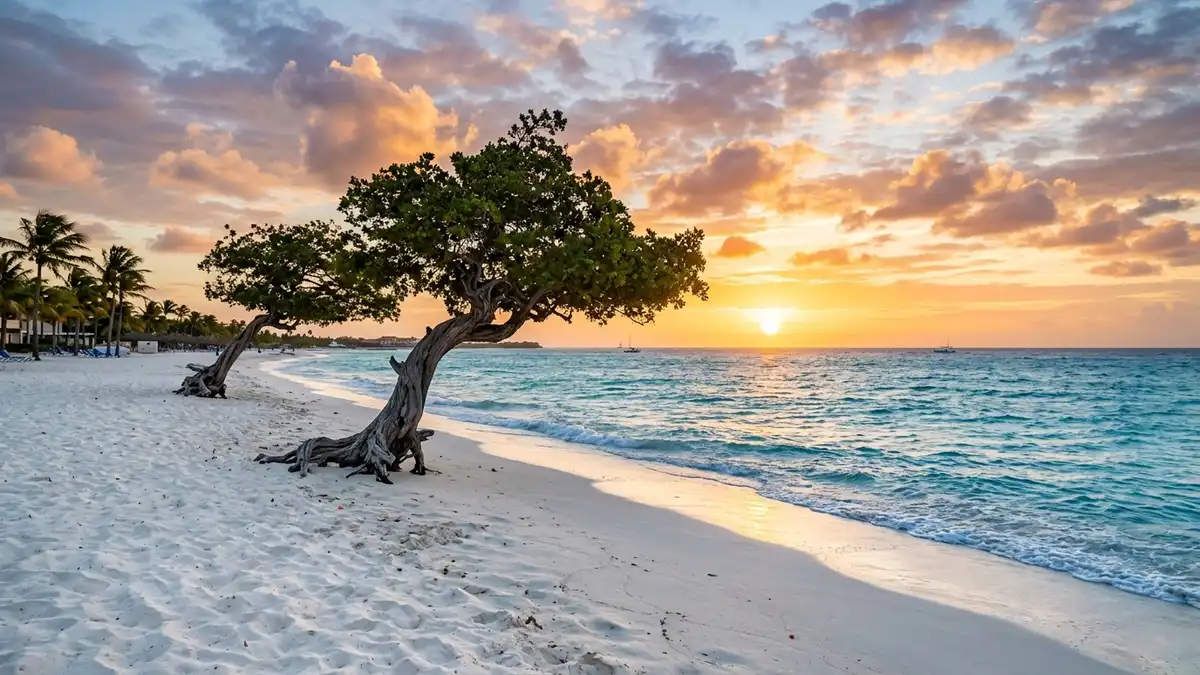
Aruba sits just outside the hurricane belt, which is genuinely rare in the Caribbean and makes it one of the few islands where "year-round sunshine" isn't just marketing copy. Those constant trade winds keep temperatures comfortable rather than oppressive, and the beaches — particularly along the western coast — are the kind of powdery white sand that looks almost too perfect to be real. Eagle Beach and Palm Beach are the two most famous stretches, and both live up to the reputation. The water is calm, clear, and an almost implausible shade of turquoise.
Beyond the beach, Aruba rewards a little exploration. The island's interior is surprisingly rugged and desert-like, with cacti, wild donkeys, and dramatic rock formations. The natural pool on the northeastern coast is a favourite for adventurous visitors, and the colourful Dutch colonial architecture in Oranjestad, the capital, makes for a genuinely charming afternoon wander. The food scene reflects the island's multicultural heritage — you'll find everything from fresh seafood to Indonesian-influenced dishes, a legacy of Dutch colonial history.
On the pricing side, a roundtrip fare under $500 from Toronto is a genuinely good deal on this route, while standard fares tend to run $750 and above. Air Canada, WestJet, and American Airlines all serve the route, so you have options. The sweet spot for booking is two to four months ahead, particularly if you're targeting the peak December-to-April window when Canadians are most desperate to escape winter. Christmas and March break are the two periods where prices spike most aggressively — if you can travel in early December or late April instead, you'll often find significantly better fares and thinner crowds.
The one tip worth burning into your memory: Aruba's off-season (roughly May through November) offers lower prices and quieter beaches without the weather gamble you'd face on other Caribbean islands. The trade winds keep things pleasant, and the island simply doesn't have the same storm risk that makes other destinations a roll of the dice in summer. For Canadians willing to travel outside the traditional winter escape window, it's one of the smartest value plays in the Caribbean.