


Route Briefing: Toronto to Lima
If you've been sleeping on Lima, consider this your wake-up call. The Peruvian capital has quietly become one of the most compelling city destinations in the Western Hemisphere, and from Toronto, you can get there in around eight and a half hours with one stop — a very manageable journey for everything waiting on the other side.
Air Canada, LATAM Airlines, and American Airlines all serve this route year-round, with connections typically routing through hubs like Miami or Bogotá. That connecting structure actually works in your favour: fares routed through those hubs can sometimes undercut what you'd expect to pay, and if you're flexible, a good deal lands under $500 roundtrip. Standard fares push past $750, so the gap between a smart booking and a lazy one is significant. Give yourself a two-to-four month runway before departure and you'll be in solid shape.
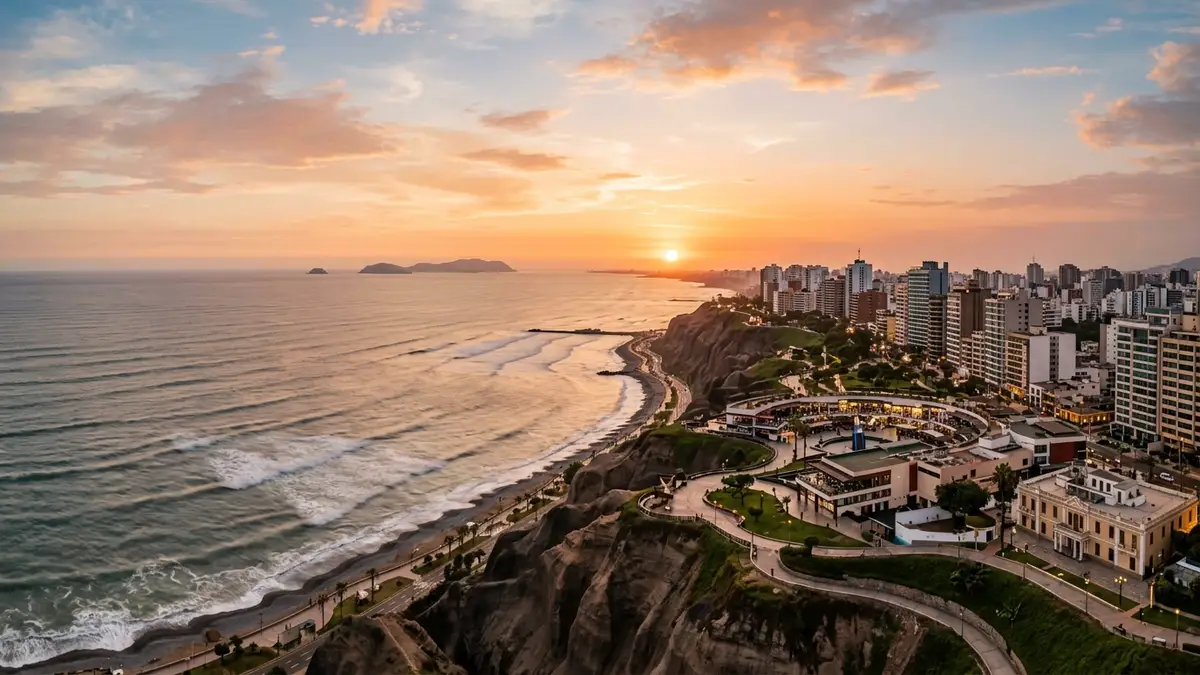
Lima rewards you immediately. The city sits on dramatic Pacific cliffs, and the Miraflores and Barranco neighbourhoods offer some of the most atmospheric urban walking in South America — colonial-era architecture giving way to bohemian streets, all with the Pacific stretching out below. Sunsets from the Malecón are genuinely spectacular and cost nothing.
Then there's the food, which deserves its own paragraph. Lima's culinary reputation isn't hype — it has produced some of the most celebrated restaurants on the planet and a street food culture that's equally serious. Ceviche here is a revelation: fresh fish cured in citrus with chili and red onion, served with corn and sweet potato. The city's cuisine blends Indigenous Andean ingredients with Japanese, Chinese, and Spanish influences in ways that feel completely natural. Budget travellers and splurgers alike eat extraordinarily well.
On arrival, the Jorge Chávez International Airport sits in the Callao district, a taxi or private transfer ride from the main tourist neighbourhoods. Agree on a fare before you get in, or use a reputable app-based service — standard advice that saves real hassle.
Timing matters here. June through August is Lima's winter, which sounds counterintuitive until you realize that's when the rest of Peru — Cusco, Machu Picchu, the Sacred Valley — is at its driest and most accessible. December through January is another peak window. If you want lower fares and thinner crowds, the shoulder months on either side of those peaks are your friend.
The one tip worth underlining: if Machu Picchu is on your list, book that separately and well in advance. Entry is timed and ticketed, and availability disappears faster than cheap flights do.