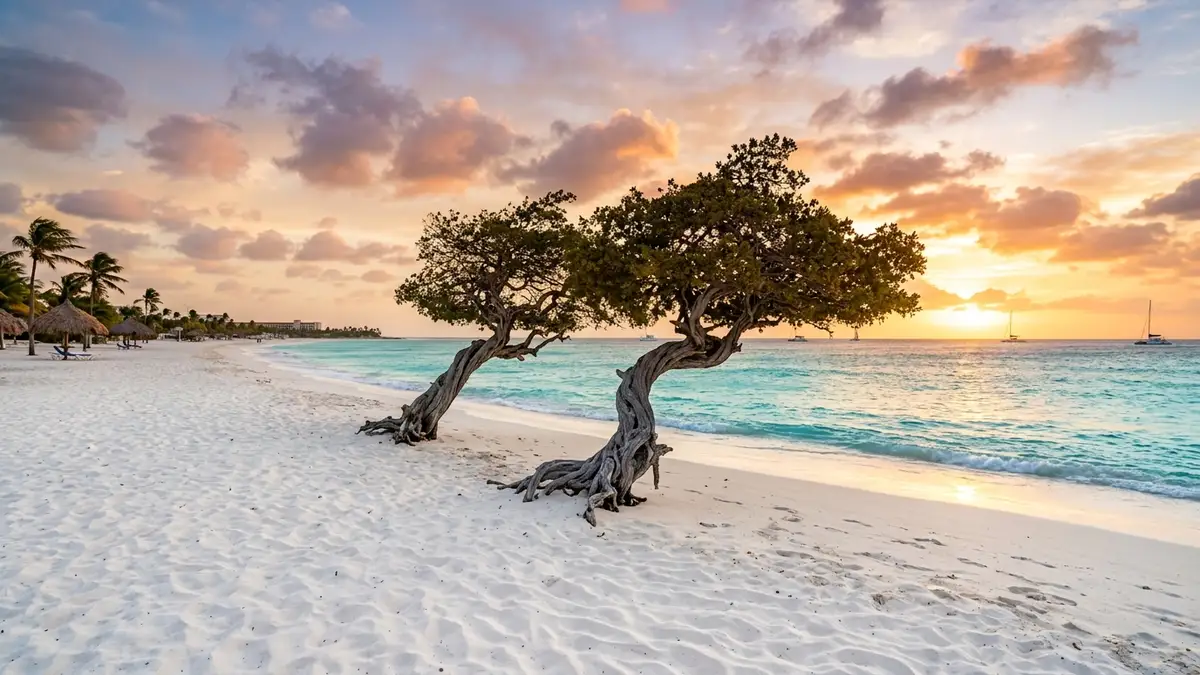



Route Briefing: Washington D.C. to Aruba
Less than five hours from the Washington area and you're stepping off the plane into one of the Caribbean's most reliably sunny destinations — that's the quiet magic of the D.C. to Aruba run. United, American, and JetBlue all serve this route year-round with direct flights clocking in at around four hours and forty-five minutes, which means you're not burning a full travel day to reach a place that genuinely earns the nickname "One Happy Island."
Aruba sits just outside the hurricane belt, which is a bigger deal than it sounds. While much of the Caribbean crosses its fingers from June through November, Aruba basks in steady trade winds and almost guaranteed sunshine regardless of when you show up. That said, the sweet spot for this route is December through April, when the island fills with travelers escaping northern winters — and when fares reflect that demand. If you're planning a holiday or Presidents' Day escape, book two to four months out and don't wait. Fares under $350 roundtrip represent a genuinely good deal here; the standard range runs $550 to $800 or more, so timing matters. Flying midweek and steering clear of holiday blackout periods can shave a meaningful chunk off that price.
Once you land at Queen Beatrix International Airport, you're already close to the action — the airport sits just outside Oranjestad, the colorful Dutch-influenced capital, and the main resort strip along Palm Beach is a short taxi or bus ride away. The island is compact and easy to navigate, which is part of its charm.
What you actually do here depends on your mood. Eagle Beach consistently ranks among the finest stretches of sand in the entire Caribbean — wide, uncrowded, and framed by the island's signature divi-divi trees bent permanently westward by the trade winds. The snorkeling and wreck diving are excellent, and the constant breeze makes watersports like windsurfing and kitesurfing genuinely world-class. If you want to see a wilder side of the island, the rugged Arikok National Park covers a significant portion of Aruba's interior and offers a striking contrast to the resort-lined coast.
The one tip worth holding onto: if you're visiting between May and November, you'll find the island noticeably quieter and prices across the board — flights, hotels, restaurants — considerably more forgiving. The weather remains excellent by most standards, and you'll share the beach with far fewer people. For D.C. travelers who can flex their schedule, the shoulder season is Aruba's best-kept secret.