


Route Briefing: Washington D.C. to Baku
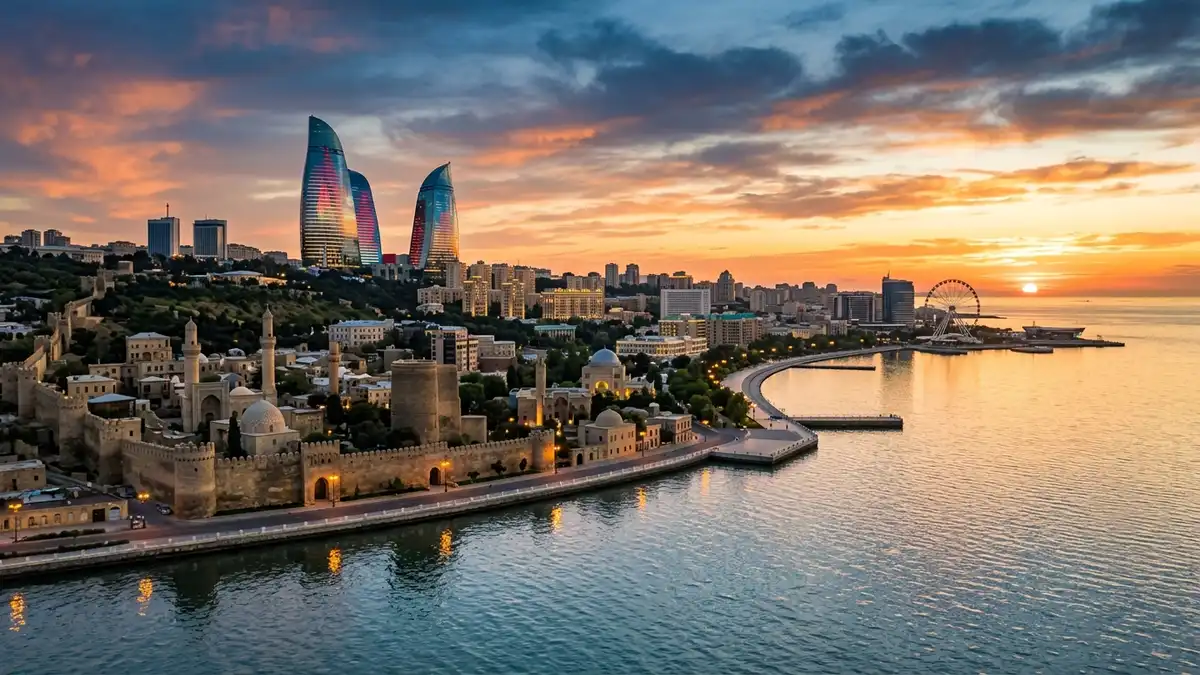
Few American travelers have Baku on their radar, which is precisely what makes this journey so rewarding. Yes, getting there from Washington takes the better part of a day — around seventeen and a half hours with one or two connections — but the city waiting at the end of that journey is unlike anywhere else you've encountered. Baku sits on the western shore of the Caspian Sea, a place where a medieval walled old city, Icherisheher, has been a UNESCO World Heritage Site for decades, and where the skyline is now dominated by the extraordinary Flame Towers, three soaring skyscrapers that illuminate the night in rippling fire-colored light. The contrast between these two worlds, ancient and aggressively modern, is genuinely thrilling to walk through.
Turkish Airlines and Lufthansa are your most reliable options out of IAD or DCA, routing through Istanbul or Frankfurt respectively. Azerbaijan Airlines also operates connections. If you have flexibility on which European hub you transit through, use it — comparing layover cities can meaningfully shift the price. A roundtrip under $900 represents a solid deal on this route; standard fares typically run between $1,200 and $1,800 or more. Book two to four months ahead to give yourself the best shot at the lower end of that range.
Timing matters here. June through August is peak season, when the Caspian waterfront promenade, the Bulvar, buzzes with locals and visitors alike and the weather is warm and sunny. Spring and autumn offer milder temperatures and thinner crowds if you prefer a quieter experience of the city.
On arrival at Heydar Aliyev International Airport, the city center is accessible by taxi and there is also a public bus connection, making it straightforward to get oriented without spending a fortune the moment you land.
Baku's food scene is one of its great underappreciated pleasures. Azerbaijani cuisine draws on Persian, Turkish, and Central Asian influences — think slow-cooked lamb dishes, pomegranate-laced sauces, and fragrant saffron rice preparations called plov. The old city is compact enough to explore entirely on foot, and beyond it, the modern boulevard along the Caspian is perfect for an evening stroll. The Maiden Tower, one of Baku's most iconic medieval structures, offers sweeping views over the city and the sea.
One genuinely useful tip: the Azerbaijani manat is the local currency, and while cards are increasingly accepted in hotels and larger restaurants, carrying some cash makes navigating markets and smaller establishments much easier. A little preparation there goes a long way toward a smoother, richer experience of this fascinating city.