


Route Briefing: Washington D.C. to Crete
There are some flight routes that feel like a genuine upgrade to your life, and Washington D.C. to Crete is absolutely one of them. You're trading the Potomac for the Aegean, Capitol Hill for ancient Minoan palaces, and the daily grind for one of the Mediterranean's most rewarding islands. The journey runs around 13 hours and 30 minutes with one stop, typically connecting through Frankfurt, Vienna, or Athens — all perfectly civilized layover cities in their own right. Lufthansa, United, and Austrian Airlines cover this route well, and if you can snag a roundtrip under $700, you're looking at a genuinely excellent deal. Standard fares climb to $1,000–$1,400 or more, so timing your booking matters. For summer travel, aim to lock in your tickets four to six months ahead — Crete draws serious crowds from June through August, and the fares reflect that demand.
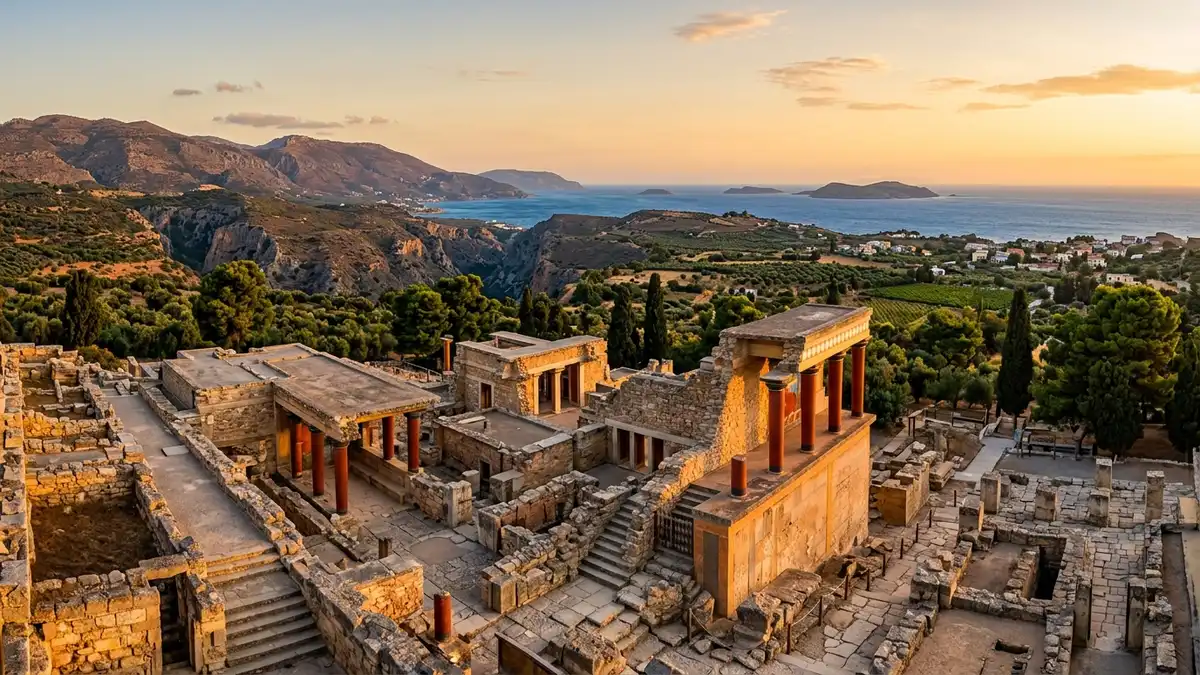
Heraklion is your likely arrival point, and the airport sits close enough to the city center that getting into town is straightforward and quick. From there, the island opens up in every direction. Crete isn't just a beach destination, though the beaches — particularly along the south coast — are genuinely spectacular. This is the birthplace of Europe's oldest advanced civilization, and the Palace of Knossos just outside Heraklion is one of the most extraordinary archaeological sites on the continent. Walking through a Bronze Age palace complex that's over 3,500 years old has a way of recalibrating your sense of history entirely.
The food alone justifies the airfare. Cretan cuisine is its own distinct tradition within Greek cooking — built around olive oil, wild greens, legumes, fresh seafood, and aged cheeses like graviera. Eat where locals eat, especially in smaller villages away from the main tourist strips, and you'll understand why the Cretan diet has been studied by nutritionists for decades.
If you want the island without the peak-season crowds and heat, late May and September are the sweet spots. The water is warm, the light is golden, the tavernas aren't overwhelmed, and you'll have a much easier time exploring the Samaria Gorge — one of Europe's longest and most dramatic canyon hikes — without queuing behind tour groups. That single experience, descending through towering limestone walls to the Libyan Sea, is worth building an entire trip around.
One practical tip worth remembering: rent a car. Crete is large and its best corners — hidden beaches, mountain villages, remote archaeological sites — are simply not accessible by bus. The freedom to pull over on a coastal road whenever the view demands it is, honestly, half the experience.