


Route Briefing: Washington D.C. to Riyadh
Flying from Washington D.C. to Riyadh is one of those routes that feels genuinely frontier — you're heading to a country that only opened its doors to leisure tourism relatively recently, and the sense of arriving somewhere still finding its footing as a destination adds a real charge to the journey. Expect around 14 and a half hours in the air with one stop, typically connecting through Doha or Dubai. Saudia, Qatar Airways, and Emirates all serve this route well, and here's a tip worth remembering: routing through Doha or Dubai tends to produce noticeably lower fares than connecting through European hubs. A strong roundtrip deal comes in under $900, while typical fares run between $1,200 and $1,800 or more — so the savings from choosing the right connection point can be meaningful.
Book two to four months out for the best pricing, and pay close attention to the Islamic calendar. Hajj and Umrah seasons drive significant fare spikes, and if your trip overlaps with those periods, you'll feel it in both ticket prices and hotel availability in the capital.
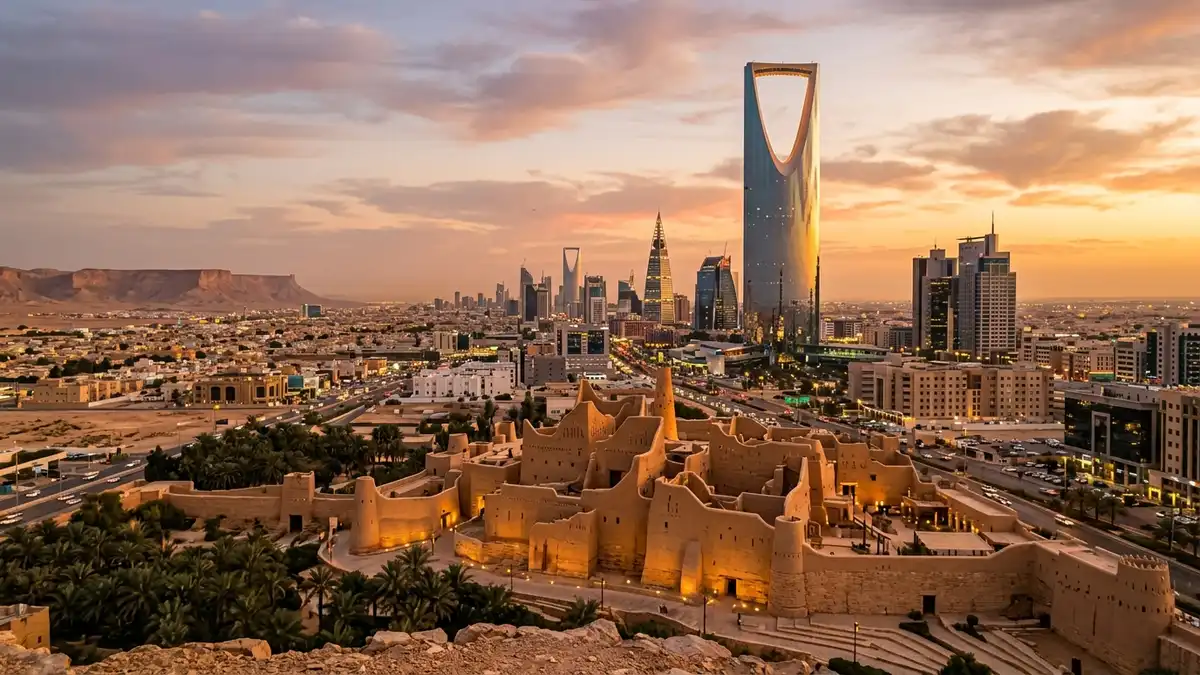
Riyadh itself is a city of striking contrasts — a sprawling, modern metropolis rising from the Arabian Peninsula's interior desert, where gleaming towers and ambitious megaprojects sit alongside ancient mud-brick heritage. The old quarter of Diriyah, a UNESCO World Heritage Site on the city's northwestern edge, is the ancestral home of the Saudi royal family and one of the most atmospheric places in the entire country. Spend an afternoon wandering its restored At-Turaif district and you'll understand why the Saudis are so proud of it.
For something more dramatic, the Edge of the World — a series of towering escarpments northwest of the city overlooking an almost incomprehensible expanse of flat desert — is the kind of landscape that genuinely stops you in your tracks. It requires a drive out of the city, ideally with a guide or a reliable 4x4, but it's unforgettable.
The city's food scene reflects its cosmopolitan population, with Saudi staples like kabsa — slow-cooked spiced rice with meat — sitting alongside Lebanese, Indian, and international options throughout the city. Riyadh is also a late-night city by nature; the heat means life happens after dark, so adjust your expectations and your schedule accordingly.
King Khalid International Airport sits north of the city center, and taxis and ride-hailing apps are the most practical way to reach your accommodation. Timing-wise, the cooler months between November and February offer the most comfortable conditions for exploring — Riyadh summers are brutally hot, and while December and January see higher demand, the weather makes it worth it. If you can travel in spring, you'll find a pleasant sweet spot of manageable crowds and agreeable temperatures.