


Route Briefing: Washington D.C. to Santiago
There's something quietly thrilling about boarding a flight in the American capital and landing in South America's most sophisticated city — two seats of power separated by a continent and a hemisphere, yet connected by a surprisingly accessible long-haul route. Washington to Santiago runs year-round, and with roundtrip fares occasionally dipping under $700, this is one of those South American routes where the price of admission doesn't have to match the ambition of the trip.
The journey clocks in around 13 and a half hours with a stop, typically connecting through Miami, Houston, or Bogotá. LATAM, American, and United all serve this route, and that competition works in your favor. Connecting through Miami or Houston tends to surface the most competitive pricing, so when you're searching, pay attention to the routing — it can make a real difference. Book two to four months out for the best fares, and avoid the December through February window if budget is your priority, since that's peak season on both ends: Southern Hemisphere summer collides with Northern Hemisphere holiday travel, pushing prices up sharply.
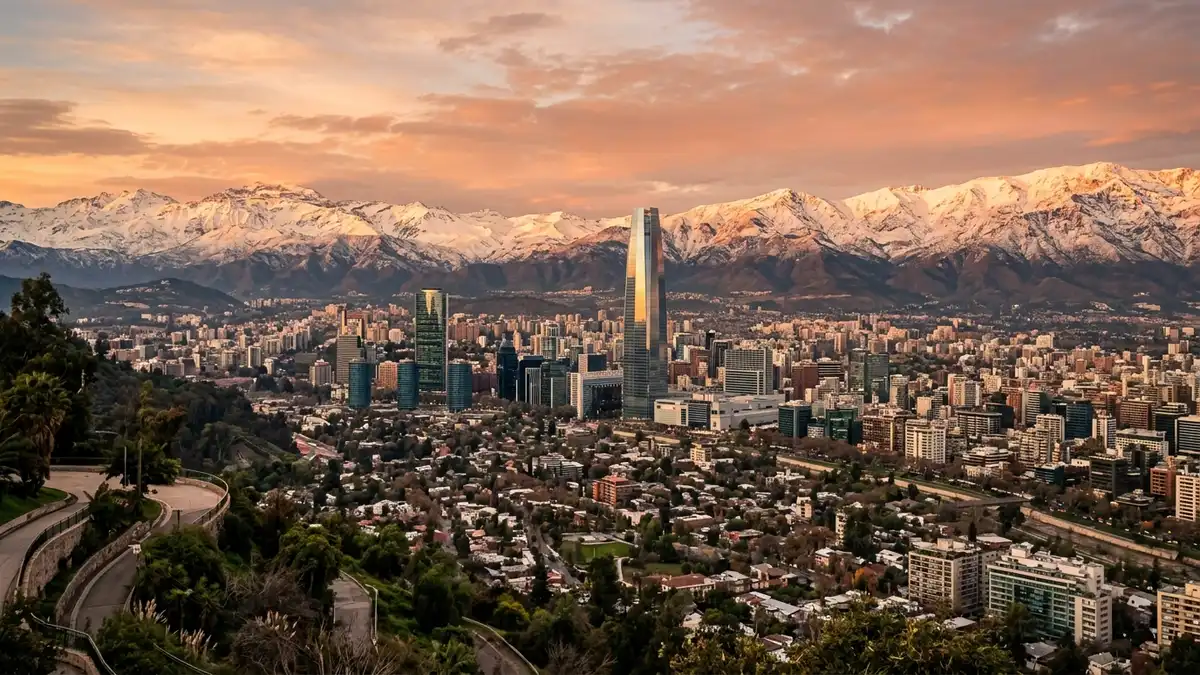
Santiago itself rewards the long flight immediately. The city sits in a valley cradled between the Andes to the east and coastal ranges to the west, and on a clear day the mountain backdrop is genuinely jaw-dropping — snow-capped peaks looming over a modern, buzzing metropolis. The Bellavista neighborhood is the place to start getting your bearings, full of restaurants, street art, and the kind of energy that tells you a city takes its nightlife seriously. Chilean cuisine leans heavily on fresh seafood, empanadas, and hearty stews, and the country's wine culture is world-class — the Maipo Valley vineyards are close enough to the city for a day trip.
From Arturo Merino Benítez International Airport, taxis and app-based ride services will get you into the city center reliably, and Santiago's metro system is clean, affordable, and well-organized once you're settled and ready to explore on your own terms.
The shoulder seasons — March through May and September through November — offer the sweet spot of mild weather, thinner crowds, and lower fares. Spring in Santiago (September to November) is particularly lovely, with the Andes still snow-dusted and the city's parks coming into bloom.
The one tip worth burning into your memory: if you have flexibility in your schedule, a side trip to Valparaíso, the colorful port city about 90 minutes away by bus or car, turns a good Santiago trip into a genuinely great one. It's the kind of place that makes you wish you'd booked a longer stay.