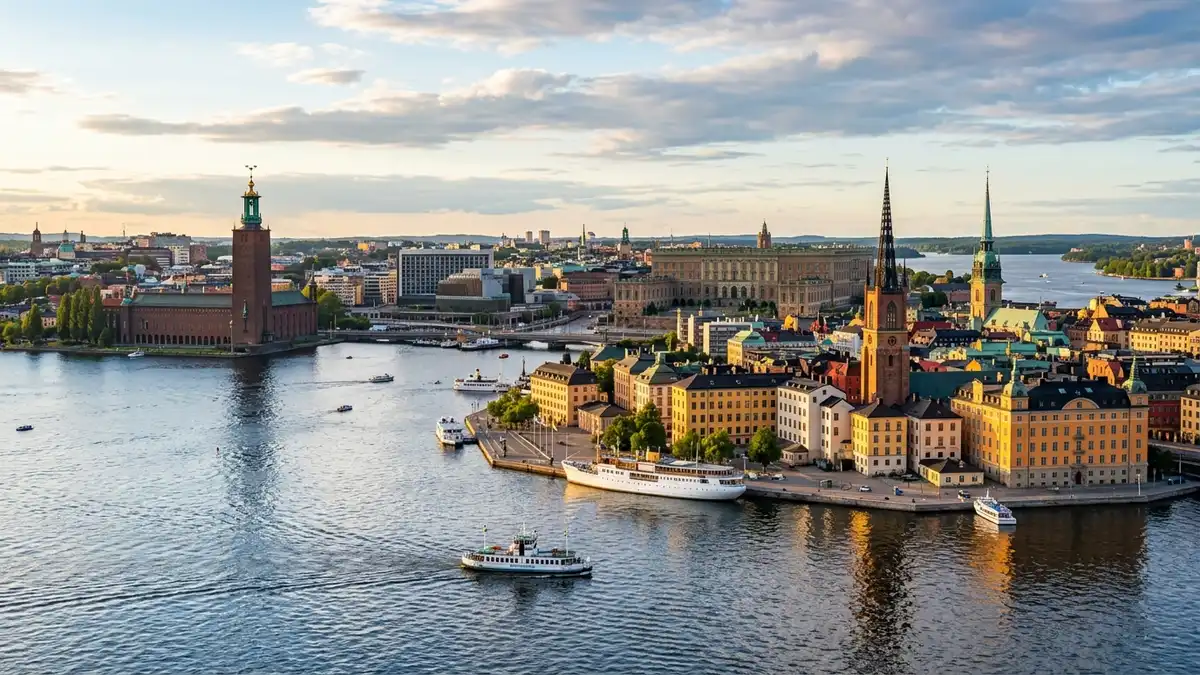



Route Briefing: Washington D.C. to Stockholm
Stockholm has a way of making you feel like you've stumbled into a city that got everything right — beautiful, functional, effortlessly cool, and genuinely welcoming. Flying from Washington D.C. to Arlanda Airport is a solid nine and a half hours with one stop, and honestly, that's a small price to pay for one of Europe's most underrated capitals.
The city earns its nickname, the Venice of the North, by spreading itself across fourteen islands where Lake Mälaren meets the Baltic Sea. Gamla Stan, the old town, is a medieval warren of amber and ochre buildings that somehow manages to feel lived-in rather than touristy. The Nobel Prize Museum sits right in its heart, and if you have any intellectual curiosity at all, it'll hold you for hours. But don't overlook what's underground — Stockholm's metro system is genuinely one of the world's great public art installations, with stations carved from bedrock and decorated by dozens of artists. Ride the blue line just to see it.
Swedish fika is non-negotiable. This is the cultural institution of stopping for coffee and something sweet — a cinnamon bun, a cardamom roll — and treating it as a genuine pause rather than a caffeine grab. Lean into it. It'll reset your whole pace of travel.
From Arlanda, the Arlanda Express train connects you to Stockholm Central Station in about twenty minutes, which is fast, reliable, and worth every krona if your time matters to you. Buses are cheaper if you're watching the budget closely.
On the fare side, a roundtrip under $650 is a genuinely good deal on this route — standard pricing runs $900 to well over $1,200. SAS is the natural choice given the destination, but United and Lufthansa both serve this route and are worth comparing. Connecting through Copenhagen or Frankfurt frequently beats other routing options on price, so don't fixate on one itinerary.
Summer — June through August — is peak season, and Stockholm in long Scandinavian daylight is something special, but book three to five months ahead or you'll pay dearly for the privilege. The shoulder seasons of late spring and early autumn offer thinner crowds, lower fares, and a city that still has plenty going on. Winter is cold and dark but atmospheric in its own way, especially around the holiday markets.
The one tip worth burning into your memory: Stockholm is expensive, but picnicking is a local art form. Grab provisions from a market hall, find a waterfront spot, and eat like a Stockholmer. You'll save money and have a better afternoon than most tourists manage.