


Route Briefing: Washington D.C. to Venice
There are cities you visit, and then there are cities that visit you — that lodge themselves somewhere behind your ribs and refuse to leave. Venice is firmly the latter, and the roughly ten-and-a-half hour journey from Washington D.C. makes it one of the more accessible European dream destinations for East Coast travelers willing to plan ahead.
Flights from IAD and DCA connect through major European hubs — Frankfurt, Munich, and Vienna are your best bets — with Lufthansa, United, and Austrian Airlines consistently offering the most competitive fares on this route. A roundtrip under $700 is genuinely achievable if you move early; book four to six months ahead of a summer trip, because fares climb steeply once June arrives and the crowds descend. If you have flexibility, shoulder season — late April through May, or September into early October — rewards you with softer prices, thinner crowds, and weather that's still warm enough to enjoy the city without the suffocating heat and humidity of August.
Landing at Marco Polo Airport, you'll immediately face Venice's most charming logistical quirk: there are no roads into the city. From the airport, water buses called vaporetti operate regular service into Venice proper, delivering you directly onto the Grand Canal with your luggage and your jaw already dropping. It's one of the great arrival experiences in world travel.
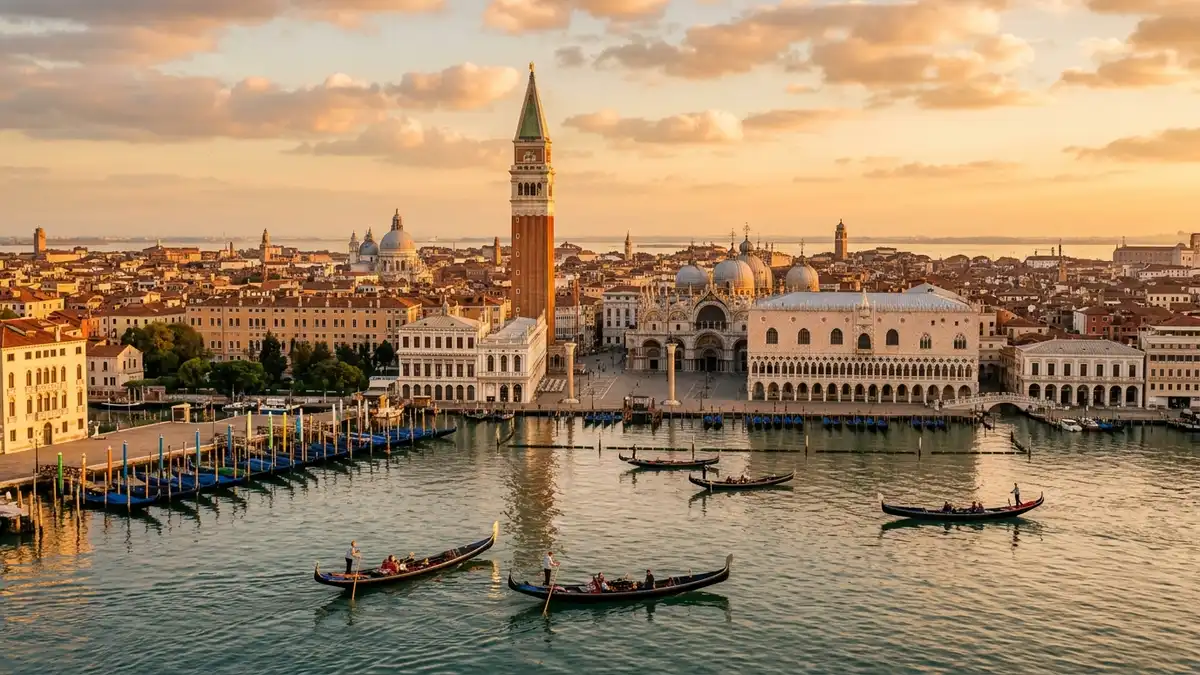
Once you're in, surrender to the labyrinth. Venice rewards wanderers who put the map away. Yes, Piazza San Marco and the Basilica are unmissable — the Byzantine mosaics inside are genuinely staggering — and the Doge's Palace next door offers a window into centuries of Venetian political power and artistic ambition. The Rialto Bridge and its surrounding market have anchored this city's commercial heart for centuries. But the real Venice lives in the quieter sestieri, the neighborhoods away from the main tourist drag, where locals still hang laundry between windows above narrow canals.
The single best money-saving tip for this trip: book your accommodation on the Venetian mainland in Mestre if budget is tight, but if you can stretch to staying on the island itself, even for a few nights, do it. The city transforms completely after the day-trippers leave, and experiencing Venice in the early morning or late evening — when the light turns golden on the water and the crowds have thinned — is worth every extra euro.