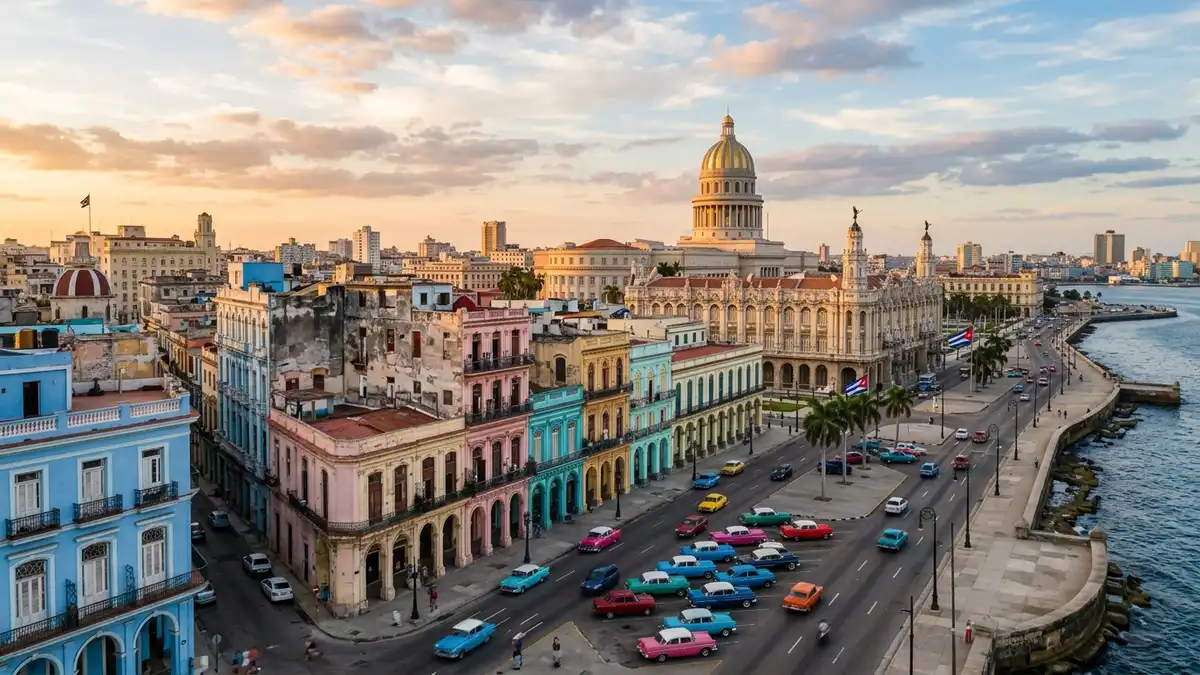



Route Briefing: Amsterdam to Havana
There are few cities on earth that feel as genuinely otherworldly as Havana, and the journey from Amsterdam to get there — roughly thirteen and a half hours with a connection through Madrid or Paris — is absolutely worth every minute in the air. This is a destination that rewards the effort, and for travellers who catch a good fare under $700 roundtrip, it represents one of the more extraordinary value propositions in long-haul travel.
Flying with KLM, Air France, or Iberia means you'll connect through well-serviced European hubs before touching down at José Martí International Airport, which sits just outside the city. From the airport, taxis are the most straightforward way to reach central Havana — agree on a fare before you get in, as this is standard practice and avoids any confusion on arrival.
Havana itself is unlike anywhere else in the Caribbean, or frankly anywhere else in the world. The city moves at its own rhythm — literally, given that salsa and son music seem to drift out of every doorway — and its streets are a living museum of mid-century architecture, pastel-painted facades, and the famous fleet of vintage American cars that have somehow kept rolling for decades. Walking the Malecón seafront at dusk, exploring the cobblestoned plazas of Old Havana, and simply sitting in a local square watching the city breathe are experiences that no amount of planning can fully prepare you for.
Timing matters on this route. December through January and July through August are peak periods, meaning higher fares and more competition for seats. The connecting flights via Madrid and Paris fill up faster than you might expect, so booking three to six months ahead is genuinely good advice rather than just a platitude. If your schedule has any flexibility, May and October are the sweet spots — shoulder season prices can drop noticeably, the crowds thin out, and the city feels a little more like it belongs to itself.
The single most useful tip for this trip: bring cash, ideally euros or Canadian dollars to exchange on arrival, as US dollars have historically attracted an unfavourable exchange rate. Cuba operates largely as a cash economy for visitors, so arriving prepared means you spend your first hours enjoying the city rather than hunting for solutions. Havana is the kind of place that gets under your skin fast — plan accordingly, because one visit rarely feels like enough.