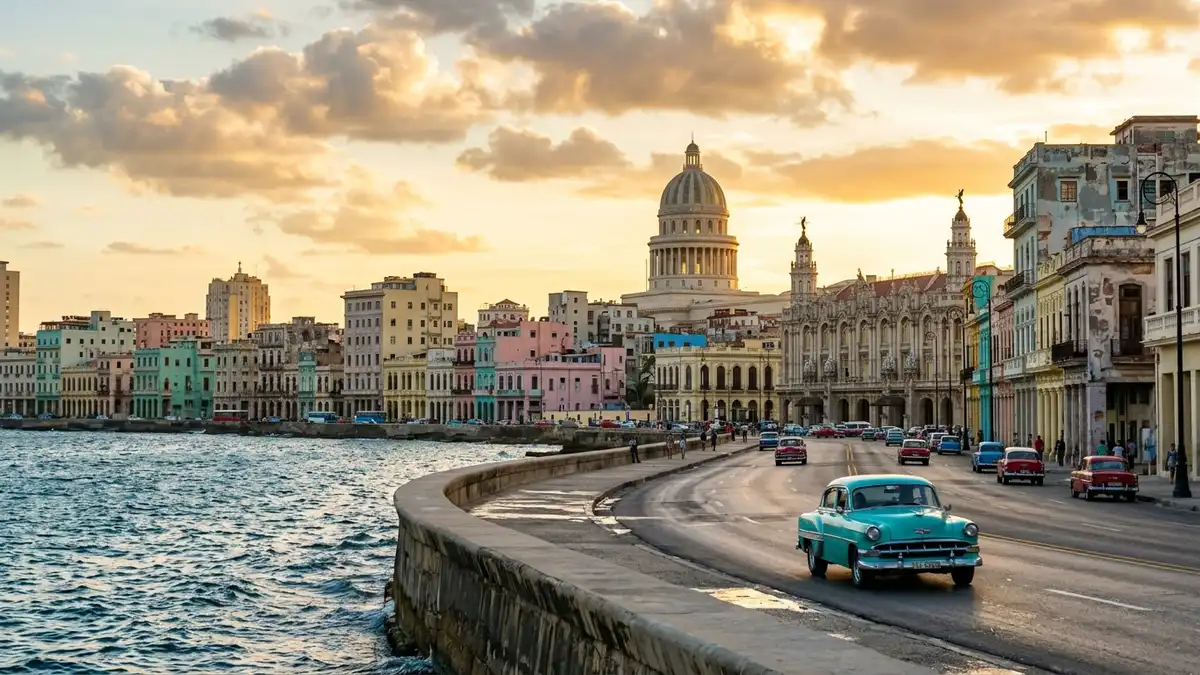



Route Briefing: Boston to Havana
Just three and a half hours from Boston's Logan Airport, Havana feels like stepping into a parallel universe — one where 1950s American cars cruise cobblestone streets, musicians play son cubano on every corner, and the Caribbean light turns everything golden by late afternoon. For a destination this culturally rich and geographically close, it's one of the most rewarding short-haul international routes you can fly from the Northeast.
American Airlines, JetBlue, and Southwest all operate this route year-round, which keeps competition healthy and fares reasonably accessible. A roundtrip under $350 is genuinely good value — grab it without hesitation. Standard fares typically run $500 to $700 or more, so timing your search matters. Book two to four months ahead and lean toward weekday departures, which tend to be cheaper than weekend flights. One important note before you buy anything: U.S. travel authorization requirements for Cuba can shift, so verify your eligibility and the current approved travel categories before purchasing a ticket. This isn't a formality to skim past.
Peak season runs December through January and again June through August, when Havana is busiest and fares climb accordingly. If your schedule allows, the shoulder months — think late spring or early fall — offer a quieter, more affordable experience. Humidity is real in summer, but Havana's energy never really dips.
Once you land at José Martí International Airport, taxis are the standard way into the city center, which sits a manageable distance from the terminal. Agree on a fare before you get in — metered expectations don't always apply here. Cuba operates a cash economy for tourists, so arrive with enough currency exchanged; U.S. credit and debit cards are largely unusable on the island, making this one of the most important practical preparations you can make before departure.
Havana itself rewards slow exploration. The crumbling grandeur of Old Havana, a UNESCO World Heritage Site, is best absorbed on foot — the baroque cathedral, the harbor fortresses, the plazas full of life at any hour. The Malecón seawall at sunset is one of those experiences that genuinely lives up to its reputation. Cuban cuisine centers on simple, satisfying staples — rice, black beans, roasted pork — and the rum and cigars are as good as advertised.
The single best tip for this route: bring more cash than you think you need, in small denominations, and treat every unexpected conversation as part of the itinerary. Havana gives generously to travelers who show up curious.