


Route Briefing: Seattle to Havana
Flying from Seattle to Havana is one of those routes that feels genuinely transformative — you board in the Pacific Northwest's grey drizzle and step off into a city that operates on its own logic, its own rhythm, and its own relationship with time. The journey runs around nine and a half hours with a connection, typically through a hub like Miami or New York, with American Airlines, JetBlue, and Southwest among your best options for this corridor. It's not a quick hop, but Havana is absolutely worth the travel day.
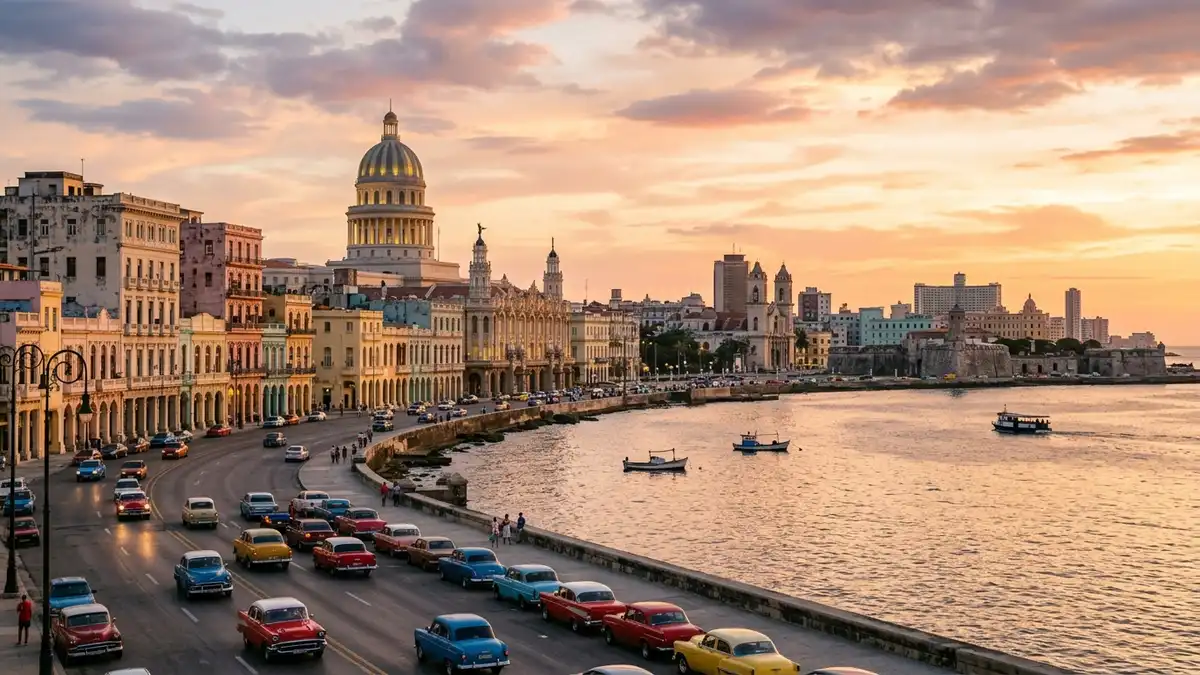
The city will hit you immediately. Classic American cars from the 1950s cruise the Malecón seawall, salsa drifts out of open doorways, and the architecture — crumbling, pastel, magnificent — tells the story of a place that has been frozen and fermenting all at once. Havana's historic center, La Habana Vieja, is a UNESCO World Heritage Site, and wandering its plazas and colonnaded streets feels less like tourism and more like stepping into a living museum. The food scene has evolved considerably in recent years, with privately owned restaurants called paladares offering some genuinely excellent Cuban cooking.
Timing matters enormously on this route. Peak season runs December through March, when Seattle winters make the Caribbean especially appealing and fares climb accordingly. If you can travel outside that window — late spring or early fall — you'll find softer prices and fewer crowds, though Cuba's hurricane season runs roughly June through November, so factor that in. A roundtrip under $500 is a genuinely good deal here; standard fares push $700 to $900 or more, so booking three to five months out is strongly advised. Availability on U.S.-Cuba routes is limited, and prices move fast.
One critical practical note: U.S. travelers must travel under an authorized category — "support for the Cuban people" is the most commonly used — so make sure you understand the current regulations before booking. This isn't bureaucratic noise; it's a real requirement.
On arrival at José Martí International Airport, taxis are the most straightforward way into the city center. Bring cash — U.S. dollars are exchangeable, but having some on hand from the moment you land makes everything smoother, since card infrastructure for American travelers remains limited.
The single best tip for Seattle travelers: treat the connection city as a mini-layover opportunity rather than a nuisance. A few extra hours in Miami before crossing to Havana lets you decompress, stock up on any supplies you want, and arrive in Cuba genuinely ready to enjoy one of the most singular cities in the Western Hemisphere.