


Route Briefing: Amsterdam to Santorini
There are few flights in Europe that feel quite as rewarding as the one that ends with a volcanic island rising out of the Aegean Sea below you. Amsterdam to Santorini is a journey between two of the continent's most beloved destinations, and while it takes around four and a half hours with a connection, the payoff waiting at the other end makes every minute worthwhile.
The most reliable way to make this trip is by connecting through Athens on Aegean Airlines, which tends to offer both competitive pricing and smooth onward connections to Santorini's small airport. KLM and easyJet also serve this route, so it's worth comparing across all three before booking. A roundtrip under $350 is genuinely a good deal here — standard fares climb to $550 and beyond, especially once summer demand kicks in. The golden rule for this route is simple: book four to six months before you travel. Santorini is one of the most visited islands in the Mediterranean, and fares start rising sharply after March. If you're dreaming of a June, July, or August trip, get your tickets sorted by February at the latest.
Once you land at Santorini's Thira airport, taxis and buses connect you to the main towns. Fira, the island's capital, and Oia, famous for its sunsets, are both reachable without too much hassle, though renting a car or quad bike gives you the freedom to explore at your own pace.
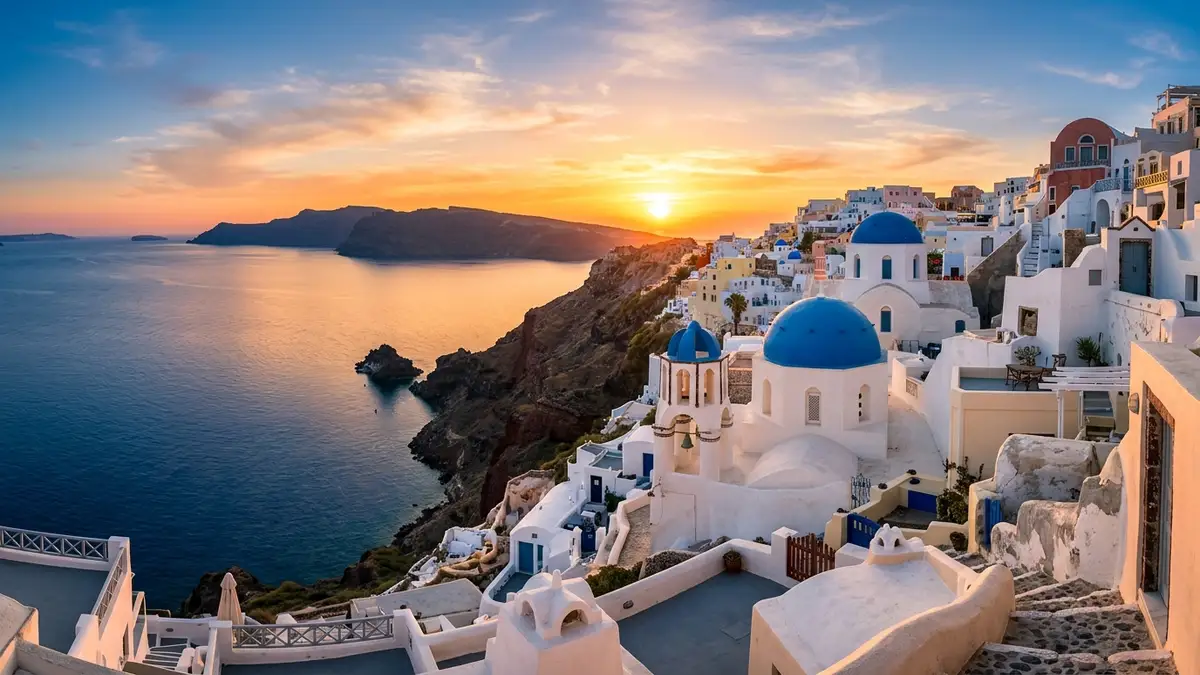
And there is so much to explore. Santorini is built on the rim of an ancient volcanic caldera, which means the landscape is genuinely unlike anywhere else in Greece — dramatic cliffs, black and red volcanic beaches, and those impossibly blue-domed churches that seem designed specifically to make you feel like you've stepped inside a postcard. The sunsets from Oia are world-famous for good reason, but if you want to experience them without the crowds, position yourself slightly away from the main viewpoint and you'll get the same sky with a fraction of the chaos.
The island's cuisine leans into its volcanic soil beautifully — local wines made from Assyrtiko grapes grown in the mineral-rich earth have a crisp, distinctive character you won't find elsewhere. Fresh seafood and fava dishes made from the island's own yellow split peas are worth seeking out at any taverna along the caldera edge.
If budget is a concern, shoulder season — May or September — offers warm weather, calmer seas, and noticeably lower prices on both flights and accommodation. The island is quieter, the light is softer, and you'll actually be able to hear yourself think while watching the sun dip into the Aegean. For a place this beautiful, that kind of peace is priceless.