


Route Briefing: Atlanta to Luxor
Few routes from Atlanta carry you quite so dramatically across time as this one to Luxor — a city where the ancient world isn't buried in a museum but spread across the landscape in staggering, sun-bleached abundance. Yes, you're looking at roughly 20 and a half hours of travel with two stops, but when you step out into the warm Egyptian air and realize the Valley of the Kings is just across the Nile, every layover hour earns its keep.
Getting there affordably takes a little planning. Fares under $900 roundtrip represent genuine value on this route — standard pricing climbs past $1,300, so the gap between a good deal and a missed opportunity is real. EgyptAir, Turkish Airlines, and Qatar Airways are your main carriers, with connections typically routing through Cairo or Istanbul. Both are excellent hub cities for a brief layover stretch, but seats fill fast, especially into peak season. Book three to six months out and you'll be in a much stronger position.
Timing matters enormously in Luxor. The Egyptian tourism high season runs October through February, when temperatures are genuinely pleasant — warm and dry rather than the punishing heat that settles over the Nile Valley in summer. If you want comfortable conditions for walking through Karnak Temple or descending into royal tombs, aim for that window. Shoulder periods just outside peak season can offer slightly lower fares while still delivering manageable weather.
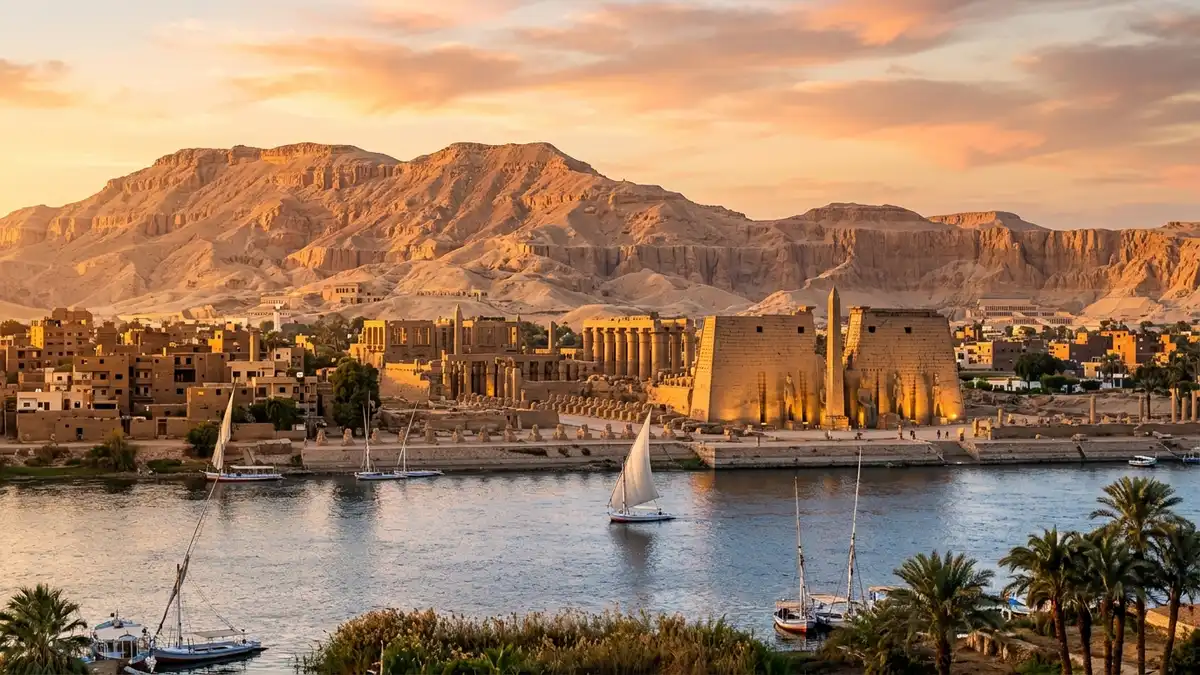
Luxor itself is compact and navigable. The city sits on both banks of the Nile, with the main temples — Karnak and Luxor Temple — on the east bank, and the necropolis sites including the Valley of the Kings on the west. Taxis and organized tours are the practical ways to move between them, and felucca rides on the Nile offer a slower, genuinely memorable way to cross between banks at sunset.
The Valley of the Kings alone justifies the journey. Dozens of royal tombs are carved into the limestone hills, their painted walls remarkably vivid after three thousand years. Karnak is one of the largest religious complexes ever built — walking its hypostyle hall, with columns rising higher than most buildings, recalibrates your sense of what ancient civilization was capable of.
One tip worth taking seriously: hire a licensed local guide for at least your first full day. The context they provide transforms what might otherwise feel like a series of impressive ruins into a coherent, living story — and it supports the local economy directly. Luxor rewards the curious traveler who arrives prepared to slow down and look closely.