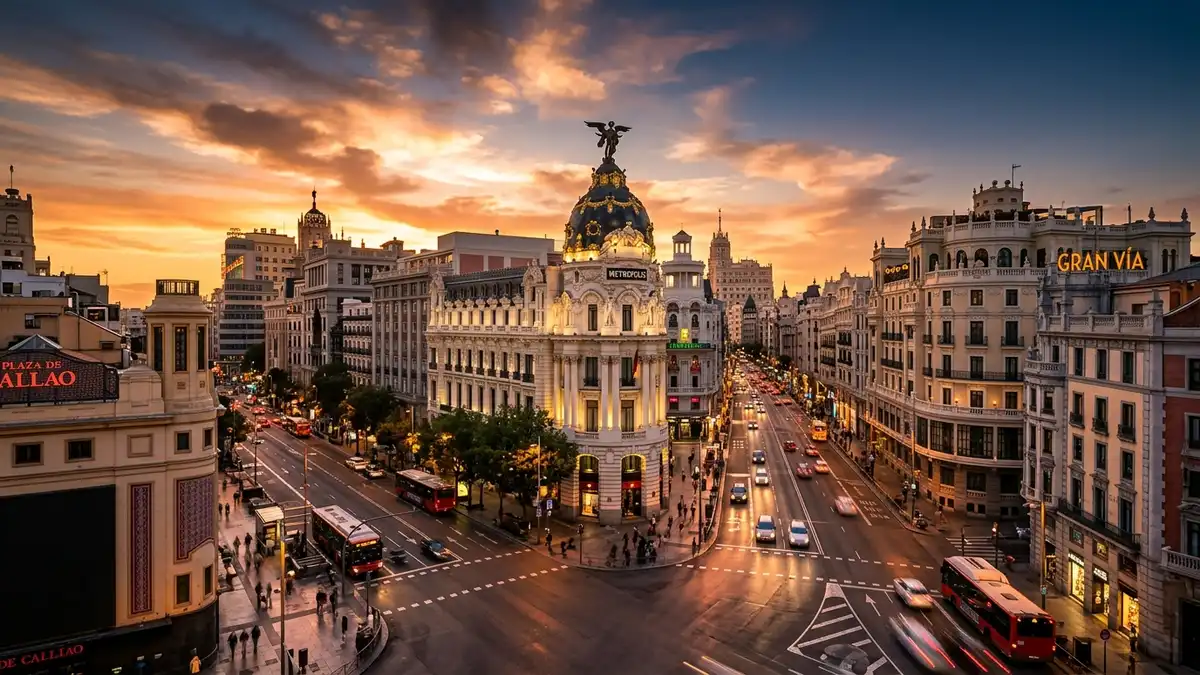



Route Briefing: Boston to Madrid
Boston to Madrid is one of those transatlantic routes that genuinely rewards the effort — a direct flight of just 7 hours and 45 minutes puts you in one of Europe's most electric capitals without the exhausting layovers that plague so many long-haul journeys. Iberia, TAP Air Portugal, and American Airlines all serve this corridor year-round, which means competition keeps fares honest and scheduling flexible.
If you can snag a roundtrip under $500, you're looking at exceptional value for a direct transatlantic crossing. Standard fares climb above $800, so timing your booking matters enormously. Aim to lock in tickets three to six months ahead, particularly if you're targeting summer, when Madrid fills with visitors and prices reflect it. Flying mid-week rather than Friday or Sunday can shave a meaningful chunk off the fare — somewhere in the range of 15 to 25 percent — which in transatlantic terms translates to real money back in your pocket for tapas and museum tickets.
Madrid rewards visitors in every season, but the shoulder months of April, May, September, and October offer a particularly sweet combination of mild weather, manageable crowds, and lower prices than the peak summer rush. That said, June through August has its own appeal — long golden evenings, outdoor terraces buzzing until midnight, and the city's legendary nightlife operating at full throttle.
From Adolfo Suárez Madrid-Barajas Airport, the city center is easily accessible by metro — the Línea 8 connects the terminals directly to the city, making it one of the more straightforward airport arrivals in Europe. Skip the expensive taxis unless you're traveling with heavy luggage and a group.
Once you're in, Madrid has a density of world-class experiences that's hard to match. The Prado Museum alone — home to Velázquez, Goya, and El Bosco — could consume an entire day without you noticing the hours pass. The Reina Sofía houses Picasso's Guernica, one of the most powerful paintings you'll ever stand in front of. Between museums, the city's tapas culture is genuinely participatory: bar-hopping through neighborhoods like La Latina or Malasaña, ordering small plates and a glass of something cold, is less a dining strategy and more a way of life here.
The one tip that separates seasoned Madrid visitors from first-timers: adjust to local time immediately and embrace the late schedule. Lunch at 2pm, dinner at 9 or 10pm, and a city that doesn't fully wake up until after midnight. Resist the urge to eat on a tourist schedule and you'll find yourself welcomed into a rhythm that makes the whole city feel like it belongs to you.