


Route Briefing: Boston to Rome
There's a reason people say Rome ruins you for every other city — once you've wandered its streets, nowhere else quite measures up. From Boston, you're looking at roughly nine and a half hours in the air with a typical connection, often through Frankfurt or London, though the occasional direct flight shaves that down to around eight and a half hours. Either way, the moment you step off the plane at Fiumicino, you'll feel the shift — the light is different, the air smells faintly of espresso and stone, and history is simply everywhere.
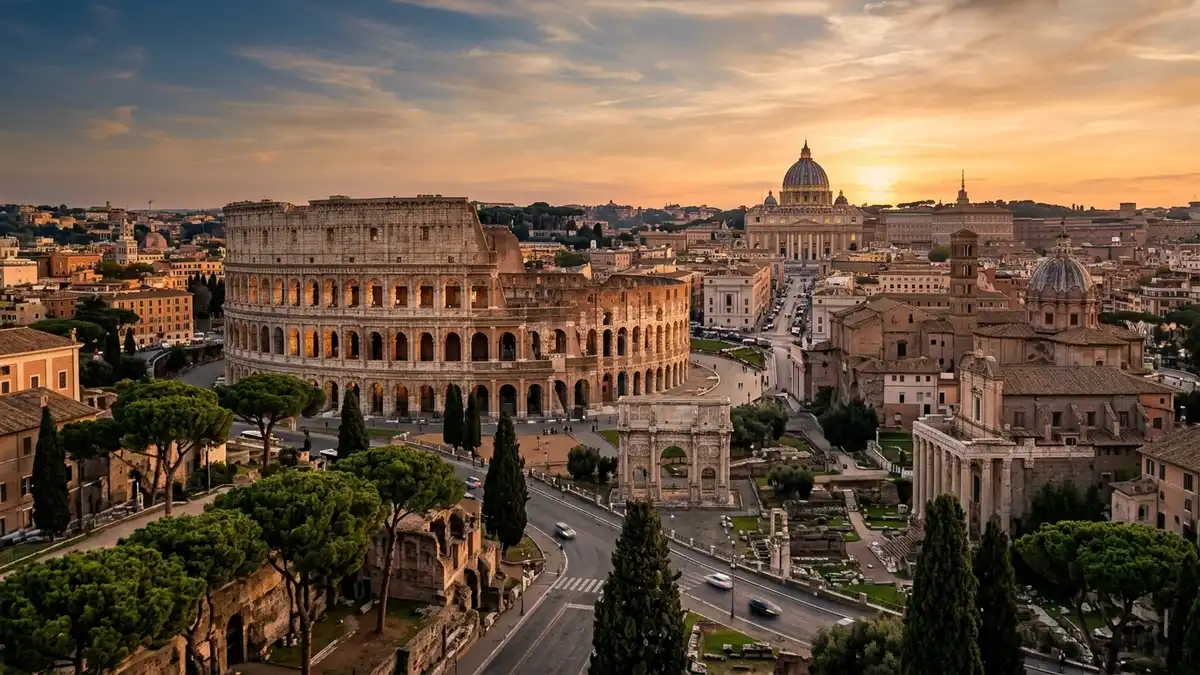
Rome rewards the curious. The Colosseum alone could occupy an entire afternoon, and the Vatican Museums — home to the Sistine Chapel — genuinely require advance booking to avoid crushing crowds. The Trevi Fountain is best visited early morning before the tour groups arrive, and tossing that coin feels surprisingly meaningful even if you've done it before. Beyond the headline attractions, Rome's neighborhoods do a lot of the heavy lifting: Trastevere is cobblestoned and atmospheric, Testaccio is beloved by locals for its food market and no-nonsense trattorias, and the centro storico is endlessly walkable.
On the food front, Roman cuisine is its own distinct tradition — cacio e pepe, carbonara, and coda alla vaccinara are local staples, not tourist inventions. Gelato quality varies wildly; look for places where the product is stored in covered metal containers rather than piled high in colorful mounds, a reliable sign of the real thing.
From Fiumicino airport, the Leonardo Express train runs directly to Roma Termini, the city's central rail hub, in about thirty minutes — it's efficient, affordable, and far less stressful than navigating traffic in a taxi during busy periods.
Timing matters enormously on this route. June through August is peak season, and fares from Boston can climb well above a thousand dollars roundtrip. A good deal sits under six hundred dollars, and that's genuinely achievable if you book three to five months out and travel midweek. Shoulder seasons — April through May and September through October — offer a compelling combination of pleasant weather, thinner crowds, and more competitive fares. Winters are mild by New England standards and the city is far quieter, though some outdoor sites feel different without the summer buzz.
One tip worth taking seriously: connecting through Frankfurt or London often unlocks more competitive pricing than routing through US hubs, so when you're searching fares, check those European connection options deliberately rather than defaulting to whatever comes up first. Rome has been drawing travelers for two thousand years — a little strategic flexibility on your routing is a small price for getting there.