


Route Briefing: Seattle to Rome
Flying from Seattle to Rome is one of those trips that genuinely earns every hour in the air. At around 11 and a half hours with a connection, you're looking at a full travel day — but stepping out into the Roman sunshine makes the journey feel instantly worthwhile. Lufthansa, British Airways, and Air France are your most reliable options on this route, typically routing you through Frankfurt, London Heathrow, or Paris Charles de Gaulle. Those European hub connections are worth embracing rather than avoiding — they tend to produce the best fares, and if you snag a roundtrip under $700, you've done very well. Standard pricing runs $1,000 to $1,400 or more, so booking three to six months ahead for summer travel is genuinely important, not just boilerplate advice.
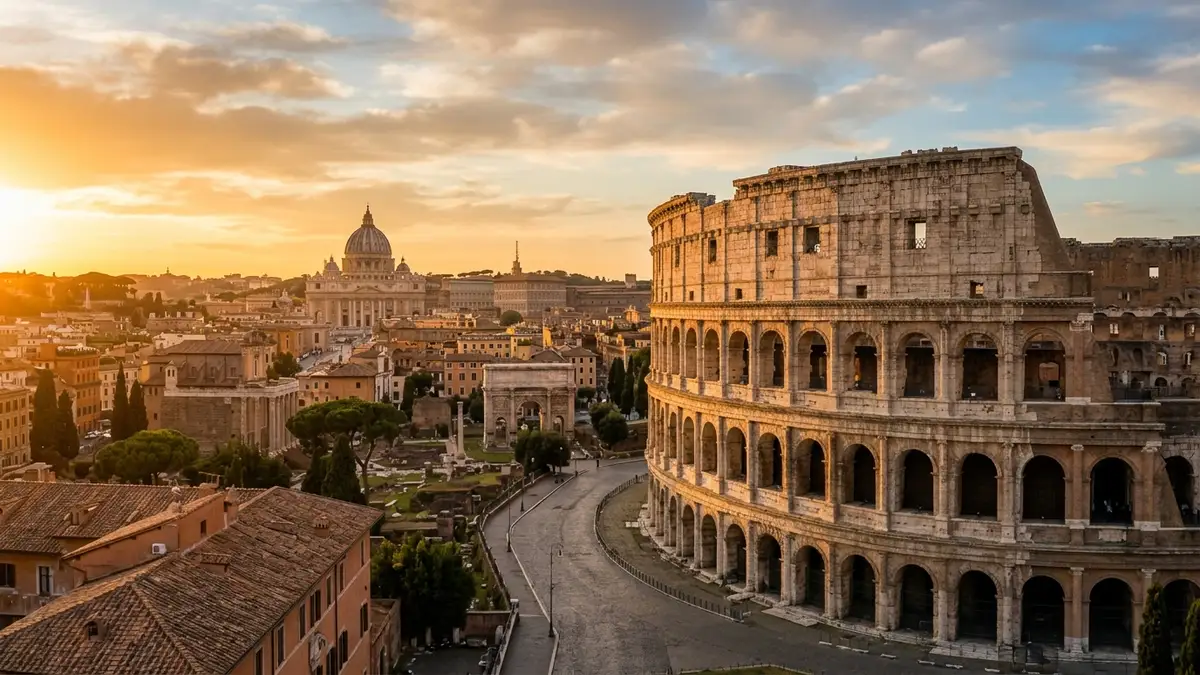
Rome rewards you the moment you arrive. The city operates on a scale that's almost impossible to prepare for — two and a half thousand years of history stacked on top of itself, still very much alive and in use. The Colosseum is as staggering in person as you'd hope. The Vatican Museums and the Sistine Chapel require patience with crowds but deliver something genuinely moving. The Trevi Fountain is smaller than most people expect and more beautiful than any photo suggests. Wander the Trastevere neighborhood on a weekday evening and you'll find the Rome that locals actually inhabit — narrow cobblestone streets, trattorias spilling onto the pavement, the smell of wood-fired cooking drifting through the air.
Eat pasta here without apology. Cacio e pepe, carbonara, and amatriciana are Roman classics, and the versions you'll find in the city bear little resemblance to what gets exported abroad. Gelato from a quality gelateria — look for natural colors and gelato stored in covered metal containers rather than piled high in fluorescent mounds — is one of the great simple pleasures of Italian travel.
From Fiumicino Airport, the Leonardo Express train runs directly to Roma Termini, the city's central rail hub, and it's fast, reliable, and straightforward to navigate even with luggage. It's the smartest arrival move you can make.
Peak season runs June through August, when the city is hot, crowded, and fully alive. If you can travel in April, May, or October, you'll find more comfortable temperatures, shorter queues at major sites, and a city that feels slightly more like itself. Rome in winter is genuinely underrated — cool but rarely harsh, and remarkably uncrowded at the monuments.
The one tip worth repeating: book the Vatican Museums in advance online. The queue without a reservation can consume an entire morning. With one, you walk straight in.